Lesson #
55
• FROM
Jacqueline Kennedy
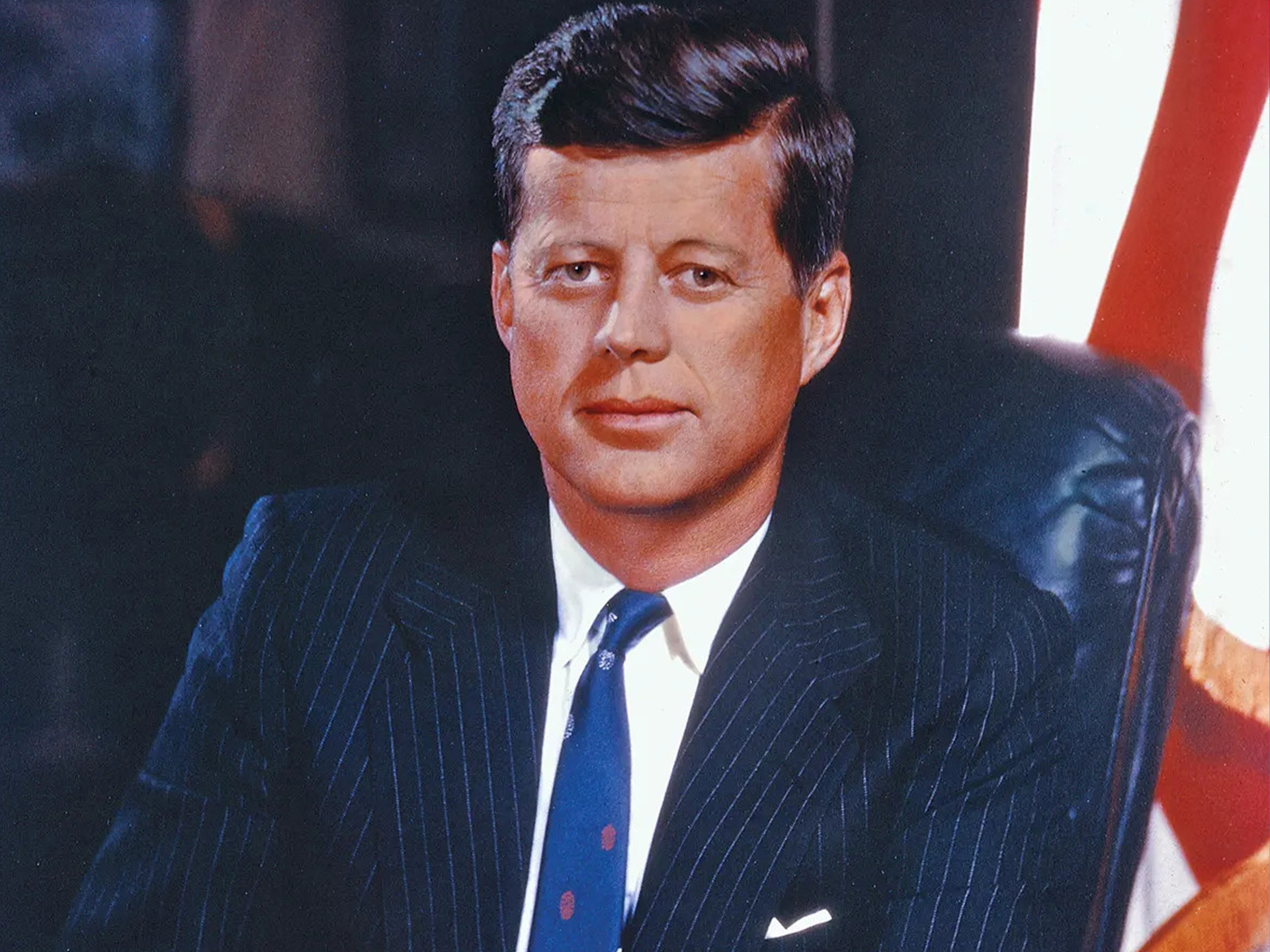
In January of 1961, Cold War tensions, nuclear brinkmanship, a lagging economy, a justifiably impatient Civil Rights movement, and all the trappings of an inauguration greeted the Kennedy family as they moved into the White House. The day would be filled with the legendary “Ask Not” speech at the swearing-in ceremony, a jovial parade, and a series of celebratory balls.
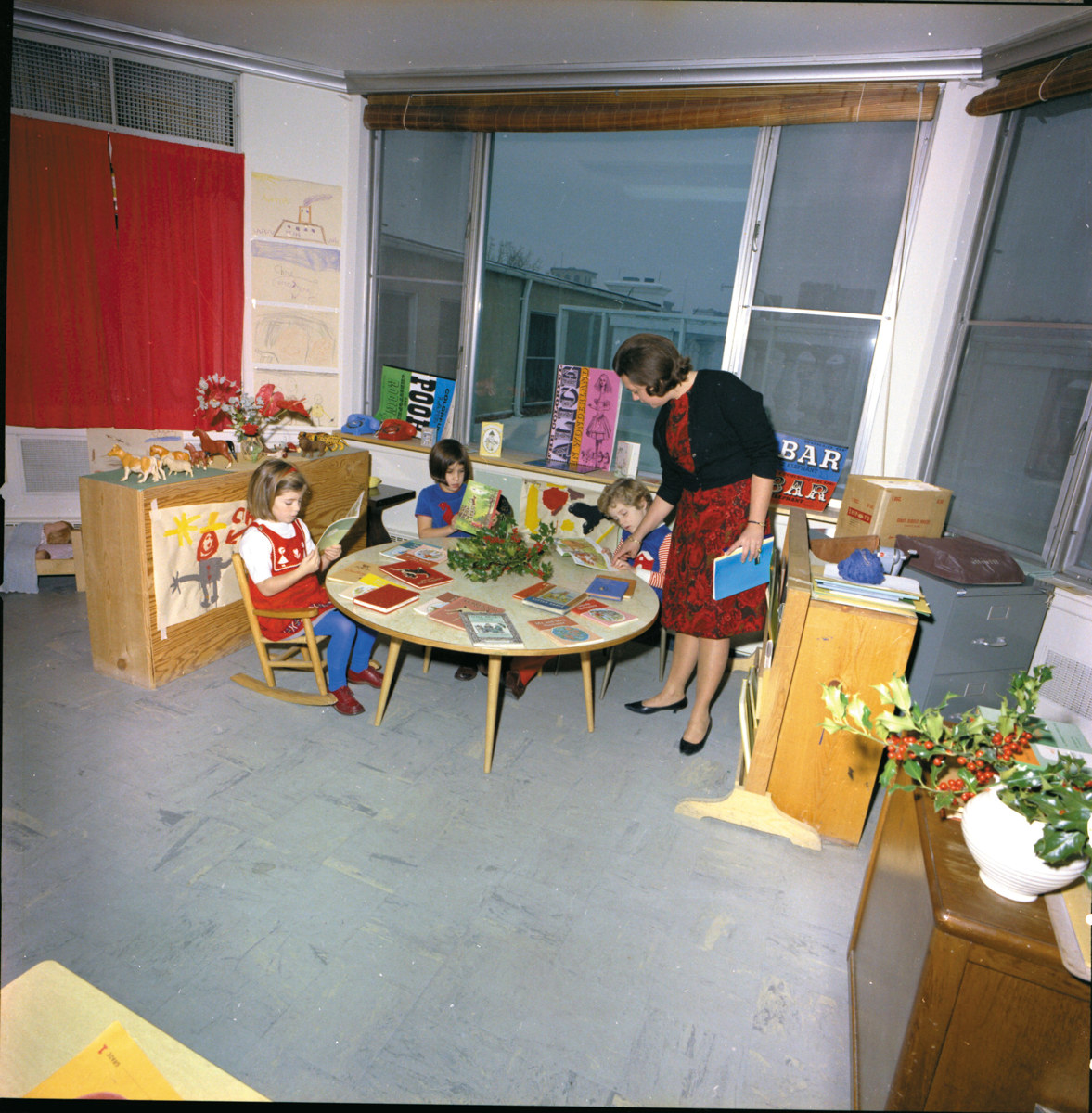
It wouldn’t be long before 31-year-old Jacqueline Kennedy turned her attention to a collection of child-size tables and chairs. Her goal was to transform the White House’s Solarium into a functioning classroom. She wanted to make sure her three-year-old daughter, Caroline, could learn and play, surrounded by other young children, rather than become too accustomed to a life surrounded by men in suits with guns.
“If you bungle raising your children,” Mrs. Kennedy once said, “I don’t think whatever else you do well matters very much.”
Not long after that historic inauguration, the third floor of the White House hosted its first organized play group for Caroline. Later that fall, an official nursery school would open, full of children’s books, finger-painted artwork, two teachers, and around 20 other children — cousins and friends, the children of administration officials and staff. All expenses were paid out-of-pocket by the Kennedys and the other parents, and it complied with District of Columbia academic guidelines. A year later, the kindergarten would welcome the son of Andrew Hatcher, a Black associate press secretary, making the classroom a little more reflective of the American people.
So often, Mrs. Kennedy is understood in the popular imagination for her beauty and style, her magnetic charisma that added to the mystique of “Camelot.” Fluent in French, Spanish, and Italian, she used her extraordinary gifts to transform American diplomacy and the White House. But I’ve come to see her as someone who designed her life at the world’s most famous address around being a mother.
“If you bungle raising your children, I don't think whatever else you do well matters very much.”
- Jacqueline Kennedy
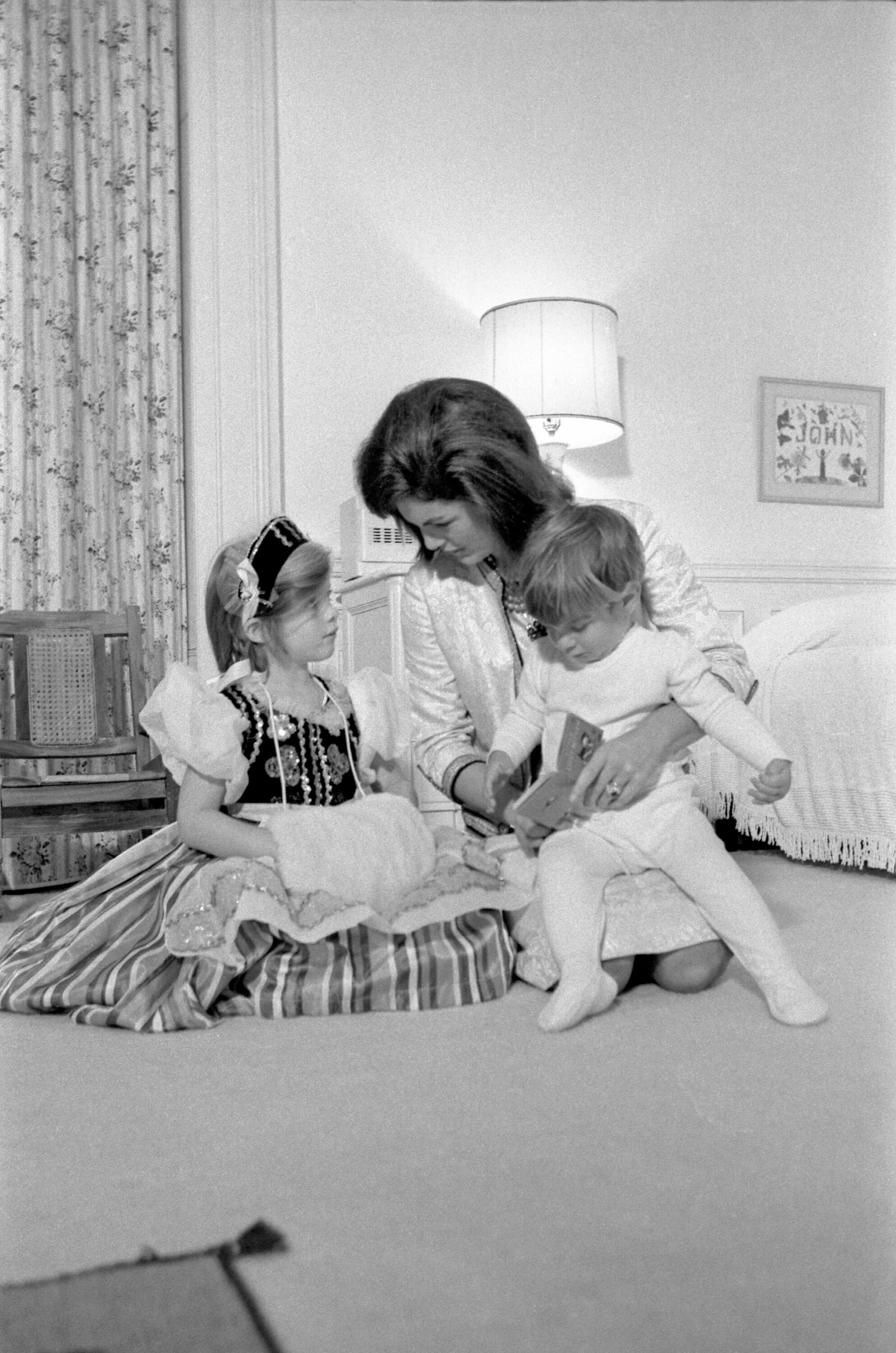
She bristled at being overly scheduled because it meant less time with her children. Those who knew her well spoke often about how attentive and affectionate she was with them. She designed a nursery for her infant son and directed the Secret Service not to pamper Baby John or his older sister Caroline — as they grew older, they were expected to tidy up after themselves and carry their own bags.
“It isn’t fair to children in the limelight to leave them in the care of others and then expect that they will turn out all right,” she said. “They need their mother’s affection and guidance and long periods of time alone with her. That is what gives them security in an often confusing new world.”
She understood what all parents do — that a sense of security breeds a sense of confidence, and confidence breeds independence. We can care for them and guide them, but we cannot control them or own them. In the end, our children aren’t truly ours. All we can do is hope to leave an imprint on them, a foundation of integrity that they can carry forward and apply to whatever comes their way.
Mrs. Kennedy’s parental instinct guided her approach in other areas as well, most clearly in her timeless, dignified restoration of the White House.
Every First Family learns to navigate the multifaceted nature of their new home. Public and private. Practical and ceremonial. A place where world history is written — but so are book reports for history class.
Mrs. Kennedy’s design choices reflected both. In addition to the classroom and the nursery, she added touches of familiarity to the private residence: the West Sitting Hall included the warmth of her home in Georgetown, and Caroline’s room was tailored for a young horse-loving girl.
But the public rooms were the primary focus of her careful stewardship. When she’d visited the White House in 1941, she noticed how little of the building’s own story was showcased. Two decades later, returning as First Lady, she had the foresight and humility to revitalize The People’s House not as an extension of herself, but as a tribute to our nation’s history. She recognized that First Families come and go. It’s the beauty of the nation they serve that lasts.
“Everything in the White House must have a reason for being there,” she said. “It would be sacrilege merely to ‘redecorate’ it — a word I hate. It must be restored.”
Almost immediately, she created the White House Fine Arts Committee and packed it with historians and preservationists from across the country. Then she went rummaging through old inventories and storage rooms for pieces that had belonged to Washington, Lincoln, Madison, and others. With the guidance of scholars and artisans, she restored The People’s House in a way that would make any American proud.
She restored the Blue Room to the French Empire style with some of the furnishings of President Monroe, who was the first to live in the rebuilt White House after it burned in the War of 1812. The Red Room and Green Room each honored the country’s first decades, including the work of early American craftsmen.
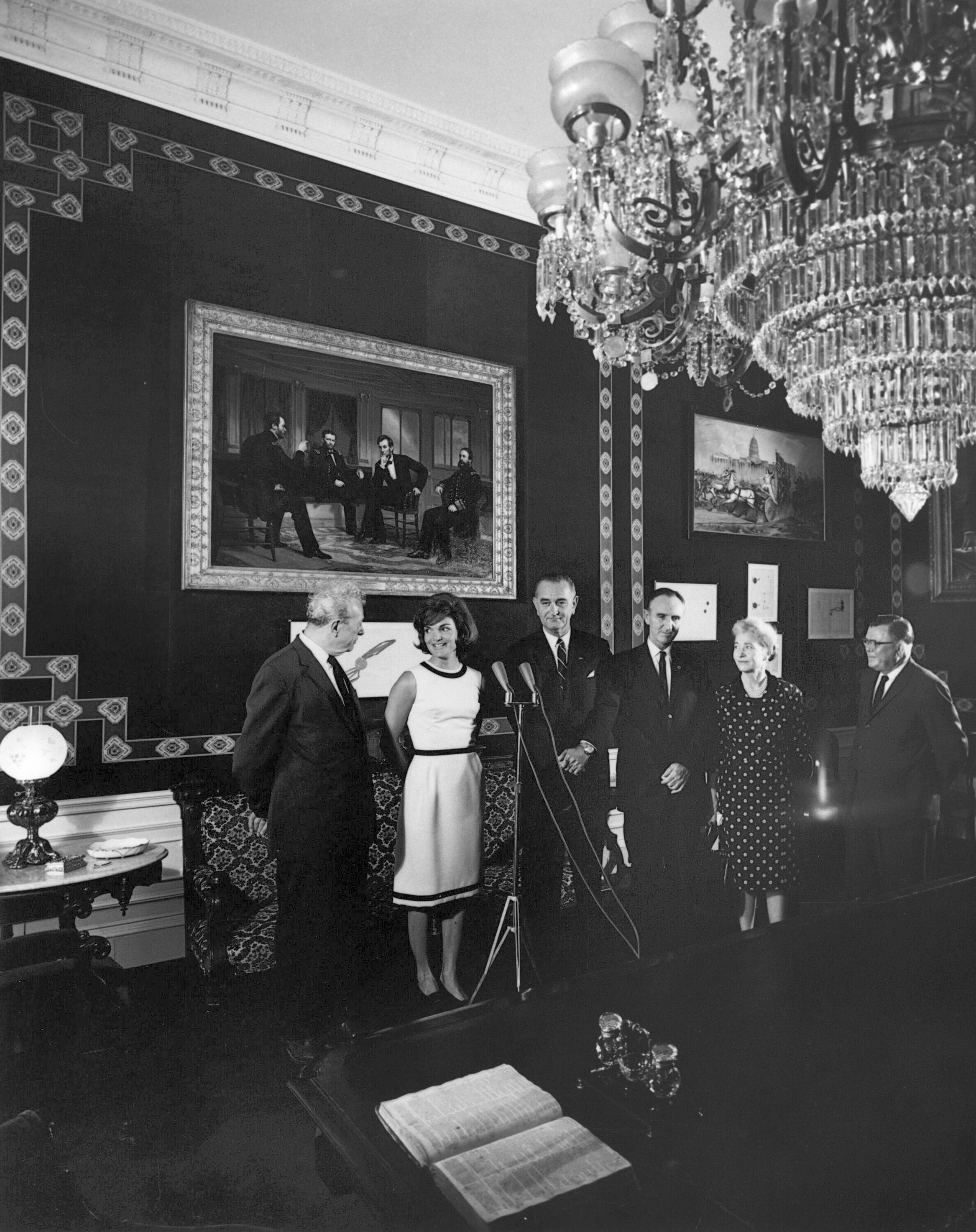
Mrs. Kennedy wasn't making design choices based solely on her personal taste or her family’s traditions. No matter the party or background of the family that followed hers — or the thousands of visitors she’d invite inside — her goal was to celebrate America and its people.
Perhaps most importantly, Mrs. Kennedy welcomed the whole country inside. She invited CBS cameras in for a televised tour of the finished renovation — more than 50 million people watched. In doing so, she reminded us that even stately rooms like these belong to everyone.
Her guiding hand also extended beyond the White House walls to support this work in the future. In addition to the Fine Arts Committee, she founded the White House Historical Association — a nonpartisan, privately funded institution designed to raise funds so that this kind of work wouldn’t depend on the size of the First Family’s bank account or the party in control of Congress.
In the years ahead, First Families of both parties, including ours, leaned heavily on the historical association as well as the Committee for the Preservation of the White House, which President Johnson formed to formalize Mrs. Kennedy’s earlier fine arts committee. Mrs. Nancy Reagan admired Mrs. Kennedy’s process and style, reintroducing items from the earliest American administrations like President Monroe’s French Empire sofa. Mrs. Pat Nixon, Mrs. Hillary Clinton, and Mrs. Laura Bush all made considered, thoughtful updates to the Blue or Green Rooms that built upon Mrs. Kennedy’s design. Mrs. Jill Biden’s expansion of the White House tour built upon her example of welcoming the public inside.
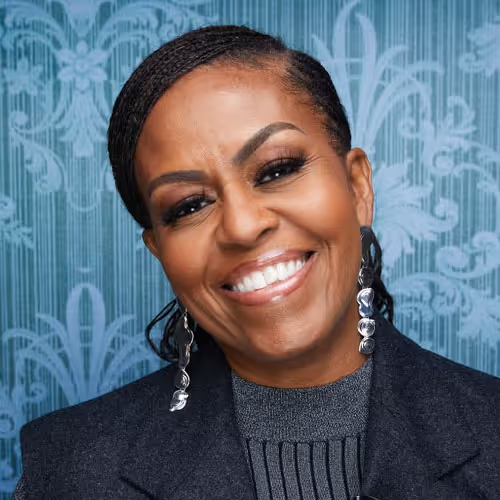
“we were just temporary stewards of a home that belonged to the nation”
- Michelle Obama
Regardless of party, our families understood that winning an election didn’t grant us the deed to a few acres of prime real estate to remake in our own image. We recognized that we were just temporary stewards of a home that belonged to the nation, even as we also recognized that like any 200-year-old house, updates were often sorely needed — especially considering the demands of a modern presidency. So, we worked closely with the preservation committee, historians, and world-class designers to advise on and approve our plans.
I thought of Mrs. Kennedy during the process of renovating the Old Family Dining Room, following the example she’d set a half-century earlier: reflecting on our country’s past, present, and future; lifting up the best American craftsmen and artists; drawing funds from the nonpartisan organization she brought to life, and instilling the room with understated dignity and boundary-breaking color — perhaps best exemplified by Alma Thomas’s “Resurrection.”
And like Mrs. Kennedy, I understood that even the demands of the White House paled in comparison to my most important role as Mom-in-Chief. We, too, had our girls make their own beds, learn to cook, and do their own laundry. We had dinner together as a family, and my husband and I both attended conferences, sports, and other activities to give the girls a sense of normalcy, even as we balanced other responsibilities. It was an example to the girls, and to the country, that parents can have ambition while also ensuring that their kids are whole. Because one day — a day that comes far too quickly for any parent — they’ll be walking through life on their own.
For First Families, that double responsibility — to your children and to your country — shows itself again and again. And that’s why, for me, Mrs. Kennedy’s parental model of caring for something without taking ownership is more timeless than any design choice she made within the White House walls. Her example reminds us that, no matter our station, our job is to love and care for this country as we would our own children. It’s ours to nurture, protect, and strengthen for those who come after.
Check out the lesson on Substack to be part of the discussion. Share your views, respond to others, and help deepen our understanding.
View on Substack