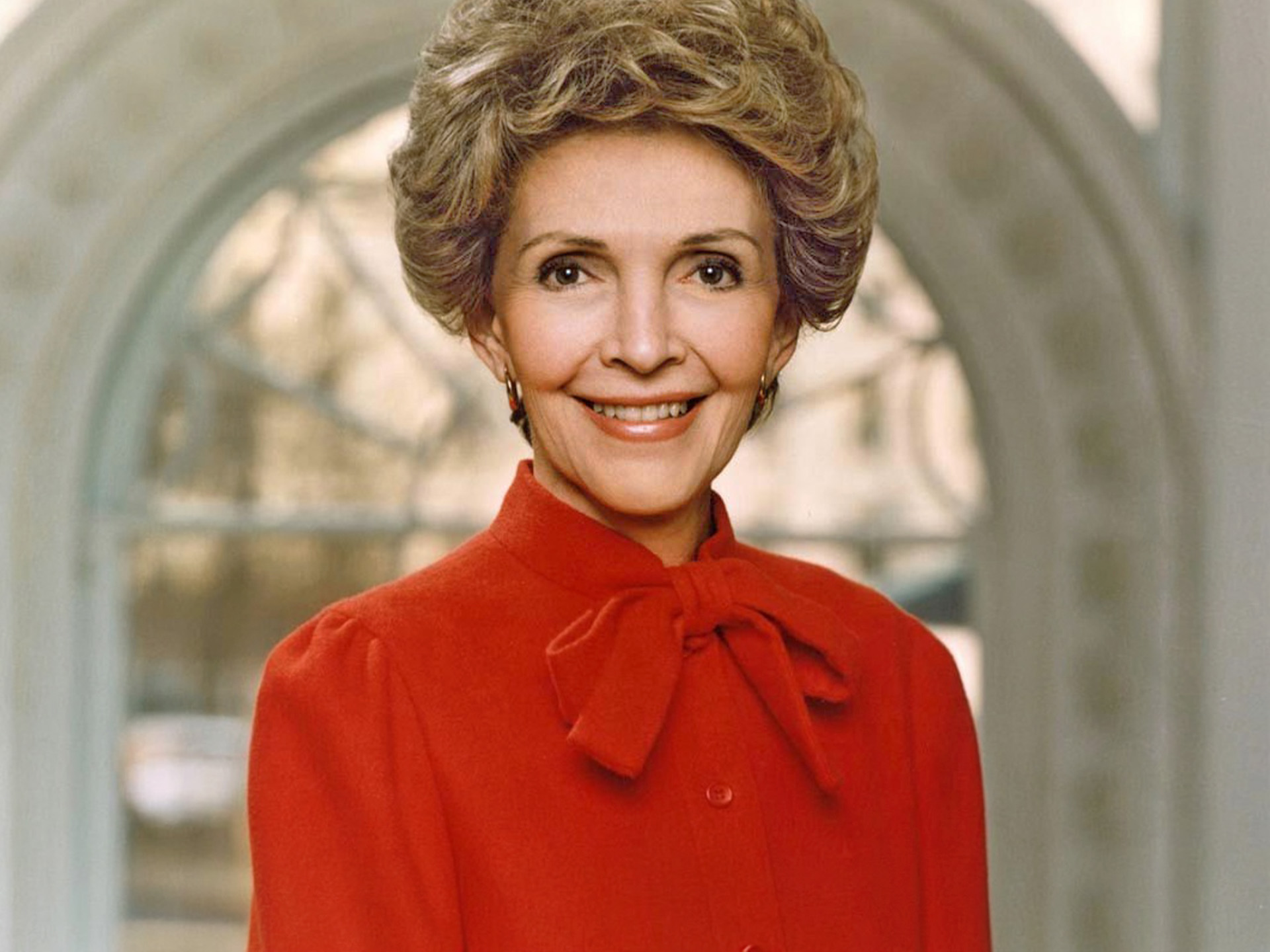
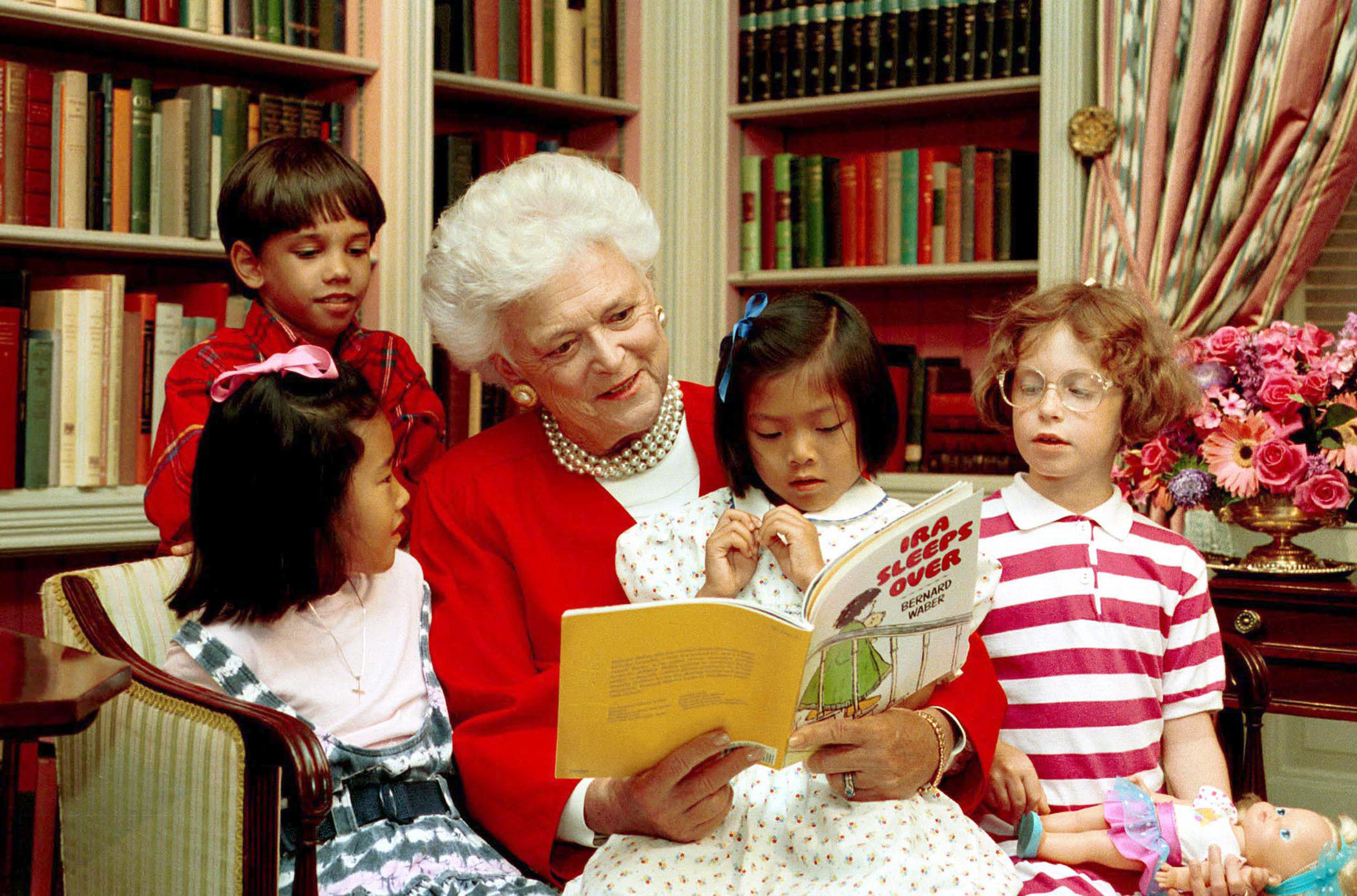
Barbara Bush was perfectly clear what her “cause” was, the focus that the spouses of America’s top leaders typically identify as their own. When her husband decided to seek the 1980 Republican presidential nomination, she knew she would be expected to identify one, and she felt some strictures. “I’ve got to have a cause, and I want a cause that…will not cost money for the government and is not controversial.” she told me decades later, recalling her personal checklist. She didn’t want to do anything that might create complications for George Bush, who would end that campaign as Ronald Reagan’s vice president before winning the White House himself eight years later. She considered combatting teenage pregnancy or drug abuse. “And then it came to me: If more people could read and write and understand, these things would be taken care of. That was what made me decide.”
No government cost? Check.
Not controversial? Check.
Indeed, it would be hard to find a less controversial cause. There was no anti-literacy lobby in Washington. For the rest of her life, she championed libraries, adult-education programs, and the value of reading aloud to children. Even after leaving the White House and even after her death in 2018, the Barbara Bush Foundation for Family Literacy continued her efforts.
But that was not the issue on which she left her largest legacy.
Barbara Pierce Bush played a significant role in pushing the country to confront the emerging HIV/AIDS/ health crisis and in reducing the stigma the disease held. It was a masterful demonstration of the “soft power” that came with the platform she had gained courtesy of her husband’s political position. She influenced public opinion by cuddling a baby, by attending a funeral, by lighting a candle. Behind the scenes, she raised the awareness of her husband, and later her son, and then her granddaughter. Her quiet advocacy contributed to the genesis of PEPFAR in 2003, the most successful public health-campaign in world history.
She did it without ever making a speech or announcing a campaign. It wasn’t what she said. It was what she did.
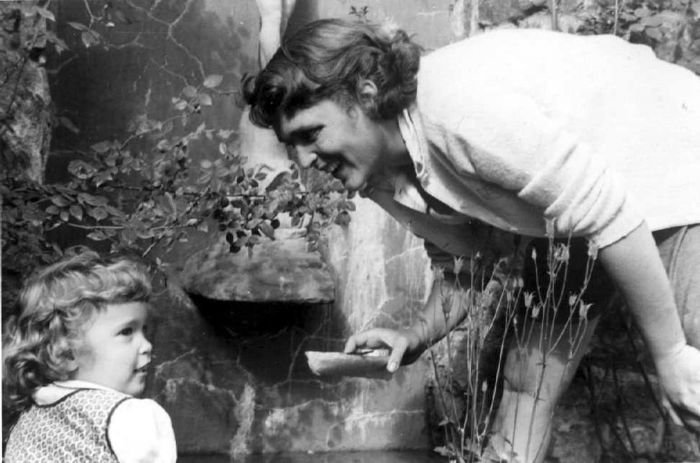
Barbara and George Bush had their own heart-breaking experience with a mysterious, terrifying disease and the stigma it could carry. In 1953, when he was a rising Texas oilman and she was the mother of three young children, their giggly daughter, Robin, was diagnosed with leukemia. It was a disease neither of her parents had ever heard of before. At that point, there was no record of anyone diagnosed with the disease surviving more than a few months. After six brutal months of treatment at New York’s Sloan Kettering hospital, Robin would die at age three. When the end was near, the Bushes brought her home to Midland for a brief visit, a chance for family and friends to see her one last time, to say goodbye. But many shied away, afraid that leukemia might be contagious. “When Robin got sick, people avoided us like the plague,” Barbara told me. “Even my close friends.” She would never forget the pain that caused her.
There were echoes of that searing experience with the emergence of a mysterious, terrifying disease in 1981, one that was striking gay men. It got a medical name in 1982: AIDS, for acquired immunodeficiency syndrome. Even as the disease exploded in San Francisco and New York, researchers struggled to get federal funding. President Ronald Reagan did not say the word “AIDS” until three years later, and then only in response to a reporter’s question. By the time he made a speech about the epidemic, in 1987, more than 20,000 Americans had died. It was derided as the “gay plague,” and some religious conservatives called it God’s vengeance on homosexuals.
But during the 1988 presidential campaign, Barbara encouraged her husband in private to address the issue in a more forthright way. Asked then by a reporter for the Atlanta Journal-Constitution how she influenced him on policy, she replied, “I go home and tell George about seeing babies with AIDS and soup kitchens.” He was still skittish; he didn’t mention the epidemic in his speech to the Republican National Convention in New Orleans, a statement of his priorities.
After he won the White House, she would do more.
During the first one hundred days of the new administration, she had a staff member call Grandma’s House. When a local housing organization in Washington, D.C., wanted to open a group home for abandoned babies and young children who had been diagnosed with the virus that causes AIDS, no landlord would rent to them. They finally bought a house but kept the address secret, to avoid becoming a target. The staffer asked: Could Barbara Bush visit?
She arrived with a few aides and a clutch of reporters and photographers. When an infant in a crib began to whimper and one of the workers picked him up, she demanded to hold him. She pressed his flushed cheek against hers and stroked his back. Donovan would die not long afterwards, but the photograph of him being comforted by the First Lady would ricochet around the country and the world. Later during the visit, after meeting privately with adults with AIDS, she made a point of hugging one of them before the cameras, too. Without saying a word, she had made the point that it was safe to hold a baby infected with HIV, or to hug an adult who had AIDS, or to go to school or work alongside someone with the disease.

The next year, Barbara Bush attended the funeral of Ryan White, a young hemophiliac who had contracted AIDS after a blood transfusion. He and his mother had fought a landmark court battle to force his public school to allow him to attend classes. Later, when activists held a worldwide candlelight vigil to keep alive the memory of those who had died of AIDS, Barbara placed a candle in every window of the White House facing Pennsylvania Avenue, then lit them at dusk.
During George H.W. Bush’s presidency, Barbara helped convince her husband to endorse anti-discrimination legislation and to increase funding for research. She would help shape his first major speech on AIDS, in March 1990, when he called on the federal government to go “on a wartime footing” to combat the disease., Her son, George W. Bush, would launch PEPFAR, the President’s Emergency Plan for AIDS Relief. It would be credited with saving the lives of more than twenty-five million people, most of them in sub-Saharan Africa. “She was an activist in her own way,” her son told me. “I’m confident it affected me.” A generation after that, her granddaughter and namesake helped found the Global Health Corps, a nonprofit that worked on HIV/AIDS and other health issues. The younger Barbara Bush would get emails from those who remembered her grandmother’s visit to the home for children with AIDS, where she had cuddled Donovan.
Watch what she did.
Check out the lesson on Substack to be part of the discussion. Share your views, respond to others, and help deepen our understanding.
View on Substack