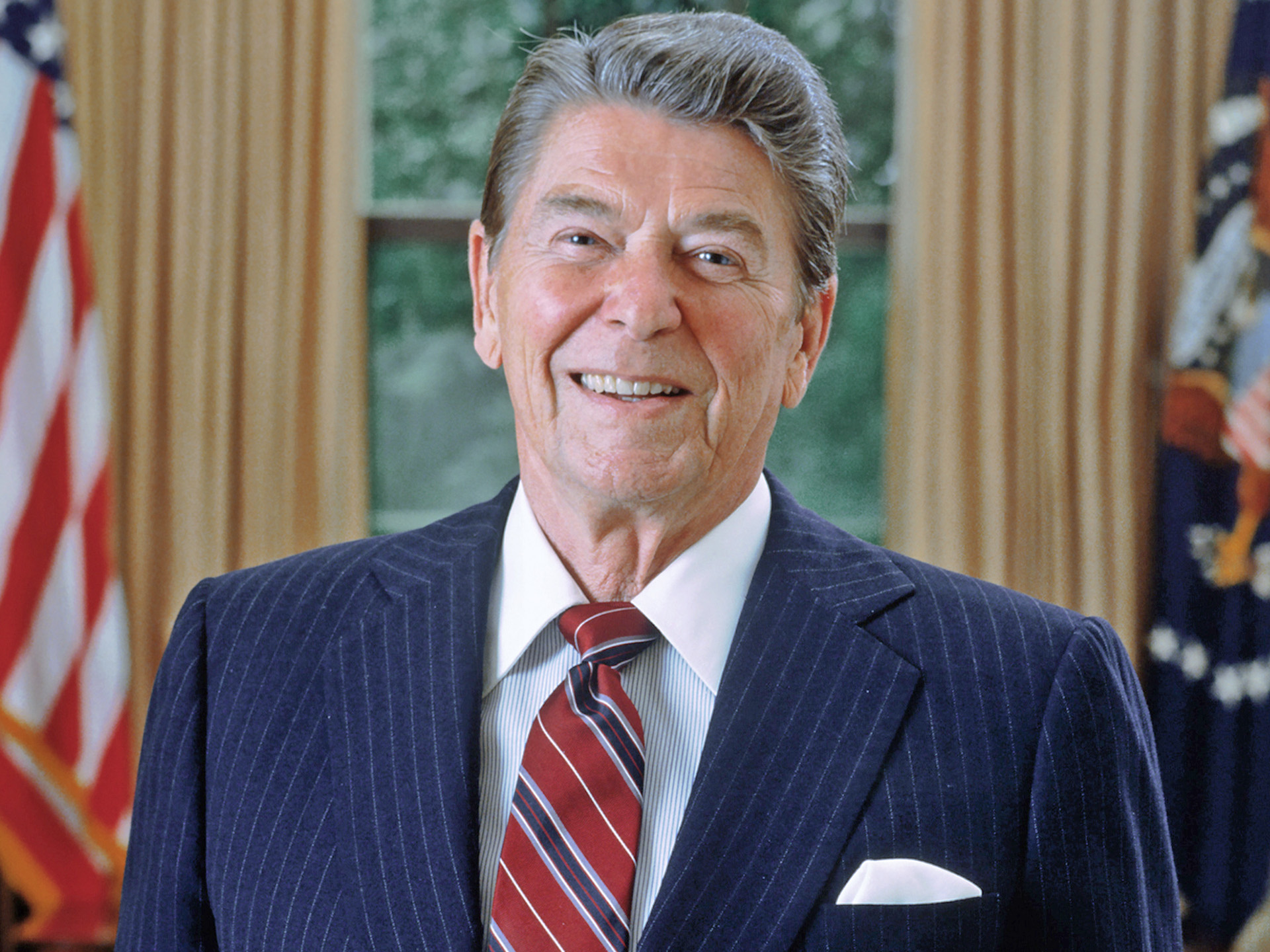
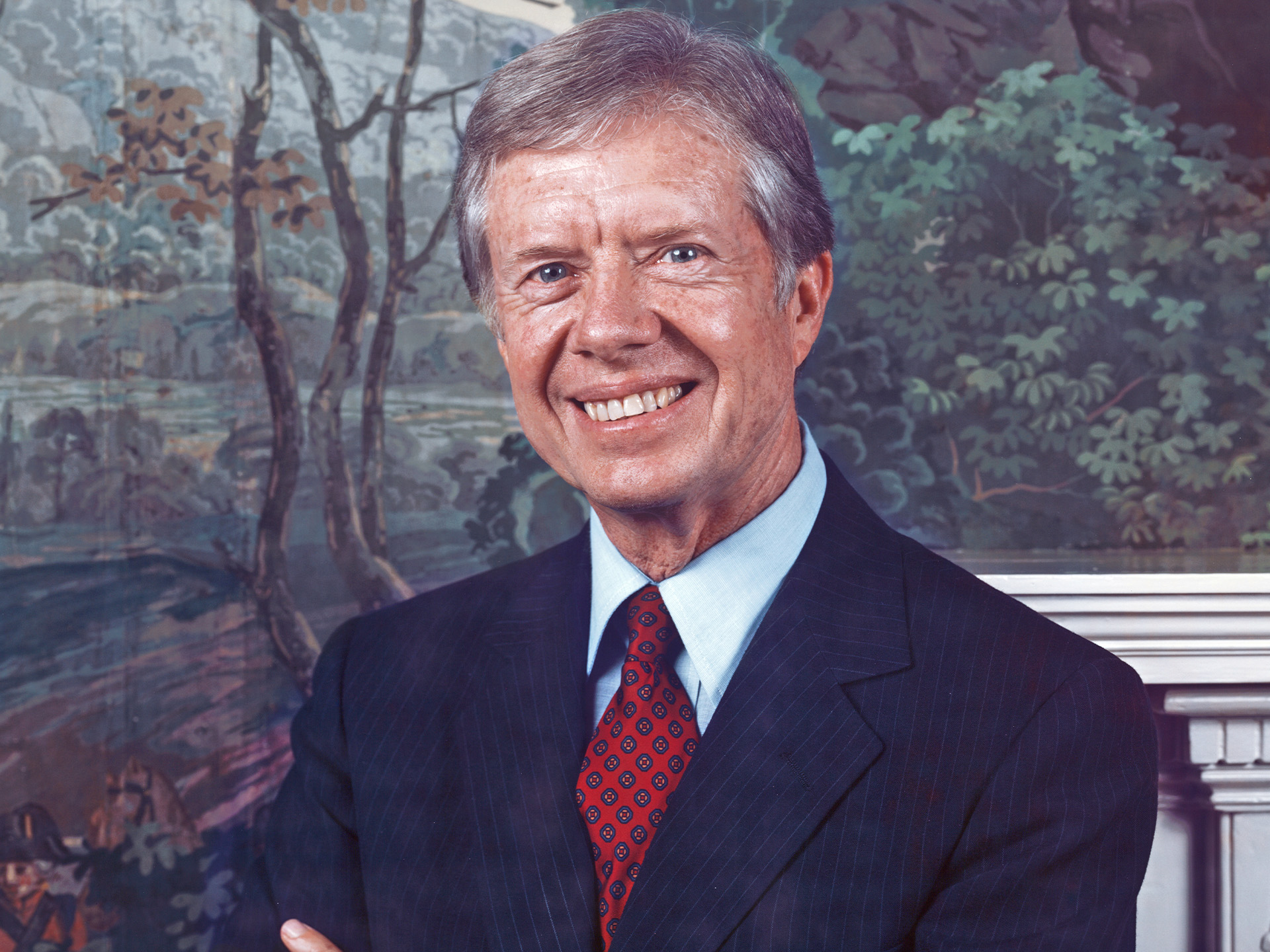
When Ronald Reagan’s years of campaigning finally triumphed in 1980, and he was sworn in as the oldest man elected to the presidency, Nancy Davis Reagan knew exactly what her role should be – his protector. It was just days before his seventieth birthday and age had been a campaign issue. Two months later, the unthinkable happened: the President was shot by a lone gunman as he was departing from a speech downtown. Three others were grievously wounded. At the hospital, doctors struggled but could not initially remove the shattered bullet lodged next to his heart. Back at the White House, a terrified Nancy Reagan demanded to be rushed to her husband’s side and to be let into the emergency room. She was insistent and forceful, declaring, “They don’t know how it is with us. He has to know I’m here.” For the next twelve days she slept in the next room at the hospital until the President was discharged.
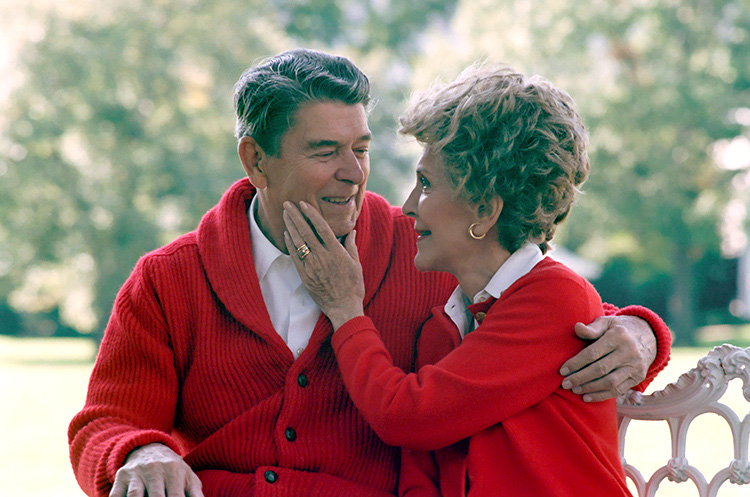
Married by then for twenty-eight years, the Reagans were inseparable. He was the affable former Hollywood star and two-term Governor of California, and she was his constant companion. His friends said as a politician Reagan always saw the best in folks. But his protective wife called him “naive about the people around him.”
Nancy Reagan had the sharper radar. “She could smell fear a mile off,” an aide remarked about the First Lady’s relations with some White House staff. “In private she would tell him ‘They aren’t good for you.’” The First Lady never hesitated to intervene when she felt staff were letting the President down.
“I was the only person in the White House who had absolutely no agenda of her own—except helping him,” she wrote in her memoirs, defiantly titled My Turn. “Most of my suggestions were about personnel. I don’t know much about economics or military affairs, but I have strong instincts about people, and I’m a good judge of character.”
Even before the election, campaign strategists recall her profoundly significant move convincing her husband he would be best served by having a White House Chief of Staff with solid Washington experience and pragmatic instincts. He chose the respected James Baker over the conservative Californians on his team.
In the White House, Nancy Reagan fumed when his budget director publicly called their economic policy “a joke.” She railed against the Secretary of Labor caught in a scandal. She eventually cost one Chief of Staff his job, although she said it took her months of private nagging for the President to finally fire the domineering Donald Regan.
“In many ways, I think I served as a lightning rod.”
- Nancy Reagan
It was Nancy Reagan’s own reputation which suffered in the intense public focus on the Reagan presidency. She knew it, calling her own public standing “a higher disapproval rating than any other First Lady of modern times.” In the East Wing, she ordered a pricey new set of State Dinner china in her favorite color, red, while his West Wing top advisors were proposing painful cuts in spending for school lunch programs. Donors eventually stepped in to pay for the dishes, but the damage had been done. The media zeroed in on Mrs. Reagan’s high style fashion, the ball gowns borrowed from designers for formal affairs, and her circle of wealthy friends.
Nancy Reagan understood that intense scrutiny could be the price of being his protector: “In many ways, I think I served as a lightning rod” shielding the President. She did, however, win a significant reprieve when she surprised a white-tie Gridiron press dinner appearing in a skit while dressed up in rags and singing a parody of her own high style.
On official government policy, the First Lady kept her distance. She found a cause of her own when a young school girl asked what to do if offered drugs. “Just say no,” Mrs. Reagan responded, launching a crusade that spread nationwide to educate young people about drugs and alcohol abuse. The “Just Say No campaign” even endured as a foundation long after the Reagan years came to a close.
On another health issue the administration and the Reagans themselves were stiffly criticized for their reluctance to acknowledge the dawn of the nightmare AIDS epidemic. Public fears were spreading and the earliest casualties were among gay men. President Reagan never even mentioned the words HIV/AIDS until his second term years later.
There was one defining turn in foreign policy where Nancy Reagan emerged as a decisive but discreet voice. These were the Cold War years of nuclear weapons proliferation, with global stakes rising ever higher. The President famously demonized the communist Soviet Union as “an evil empire.” Nancy Reagan thought that was a mistake. “I felt it was ridiculous,” she later wrote, “for these two heavily armed superpowers to be sitting there and not talking to each other.” “Yes,” she added, “I did push Ronnie a little.” And she came to believe the evolving strategy “turned out to be an enormous success.”
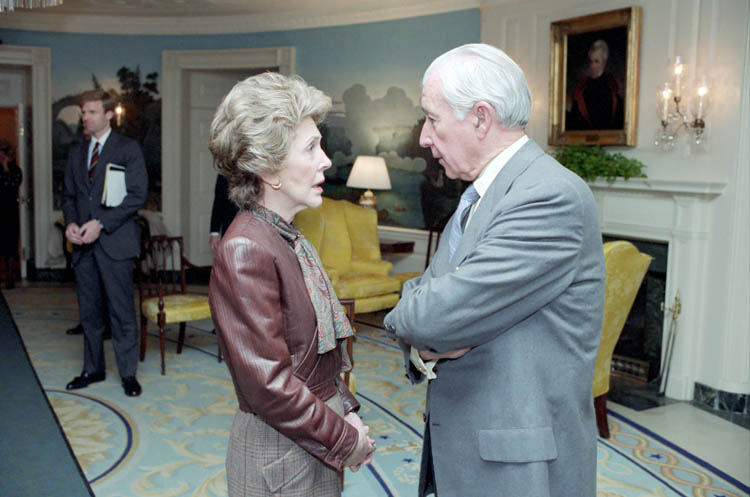
After his 1984 re-election mandate when he swept forty-nine of the fifty states, President Reagan moved boldly. He held four summits with Mikhail Gorbachev, the young new Soviet leader who appeared open to reform. Nancy Reagan took on her highest profile diplomatic role by reaching out to Gorbachev’s diffident wife, Raisa. Theirs remained a fraught detente. Mrs. Reagan admitted she “bristled” at Mrs. Gorbachev’s lectures about the superiority of communism and her domineering personality, but the First Lady endured the tense relationship for the sake of diplomacy and her husband’s legacy in significantly improving US-Soviet relations.
Late in his presidency, standing by Berlin’s heavily armed border, President Reagan famously demanded, “Mr. Gorbachev, tear down this wall.” Indeed, the wall finally did fall, just months after the Reagans retired from Washington. Four years later, Gorbachev resigned on Christmas Day and the Soviet Union was dissolved, redrawing the map of the globe.
Despite her protective instincts some things loomed beyond the First Lady’s control. The world was changing in the 1980s, and with the new impact of 24-hour-a-day cable news there was no way for his wife to protect President Reagan’s privacy during his surgery for colon cancer which drew graphic medical coverage on television, as did Nancy Reagan’s own surgery for breast cancer which left her feeling a deep loss of privacy for both of them.
“They don’t know how it is with us. He has to know I’m here.”
- Nancy Reagan
The most difficult challenge to protect her husband came in their final years back home in California. Five years into retirement, Ronald Reagan at age eighty-three was diagnosed with Alzheimer’s disease. On November 5, 1994, he penned a poignant message sharing the news with the nation, and he added “I only wish there was some way I could spare Nancy from this painful experience.” For ten long years at home, Nancy Reagan shielded his privacy again, turning even the President’s closest friends away. President Reagan died in 2004. Nancy Reagan survived one decade more.
Every President ages in office. The strain and constant pressures are unrelenting. Ronald Reagan was seventy years old when he entered the Oval Office. But Nancy Reagan never wavered, believing there was value in protecting his health and his strength. During those years, she had insisted on their many quiet weekends alone at Camp David and peaceful weeks at their mountaintop ranch on the Pacific Coast. And she maintained her “lightning rod” role to take some of the hits until the very end.
Check out the lesson on Substack to be part of the discussion. Share your views, respond to others, and help deepen our understanding.
View on Substack