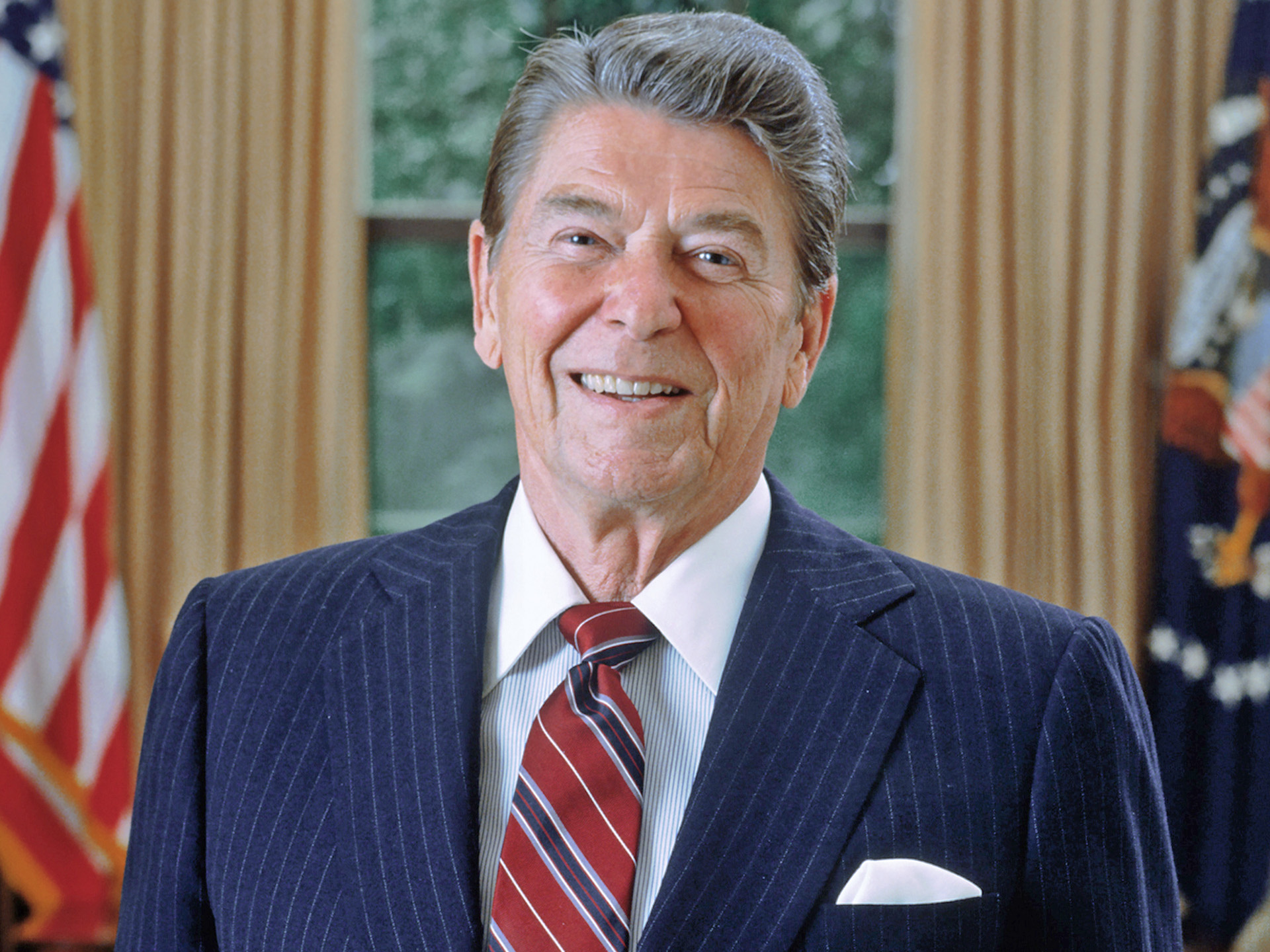
On the day the Berlin Wall fell, in November 1989, those of us who worked for President George H.W. Bush rushed to the Oval Office. “You must go to Berlin,” we urged him, “for Truman, Kennedy, and Reagan.” For 45 years, American presidents had made historic visits to Berlin. Now the wall was finally falling. It seemed inconceivable that an American president would not claim his place on the world stage after vindication.
“What would I do?” he asked. “Dance on the wall? This is a German moment, not an American one.” I have thought about that answer for nearly 40 years.
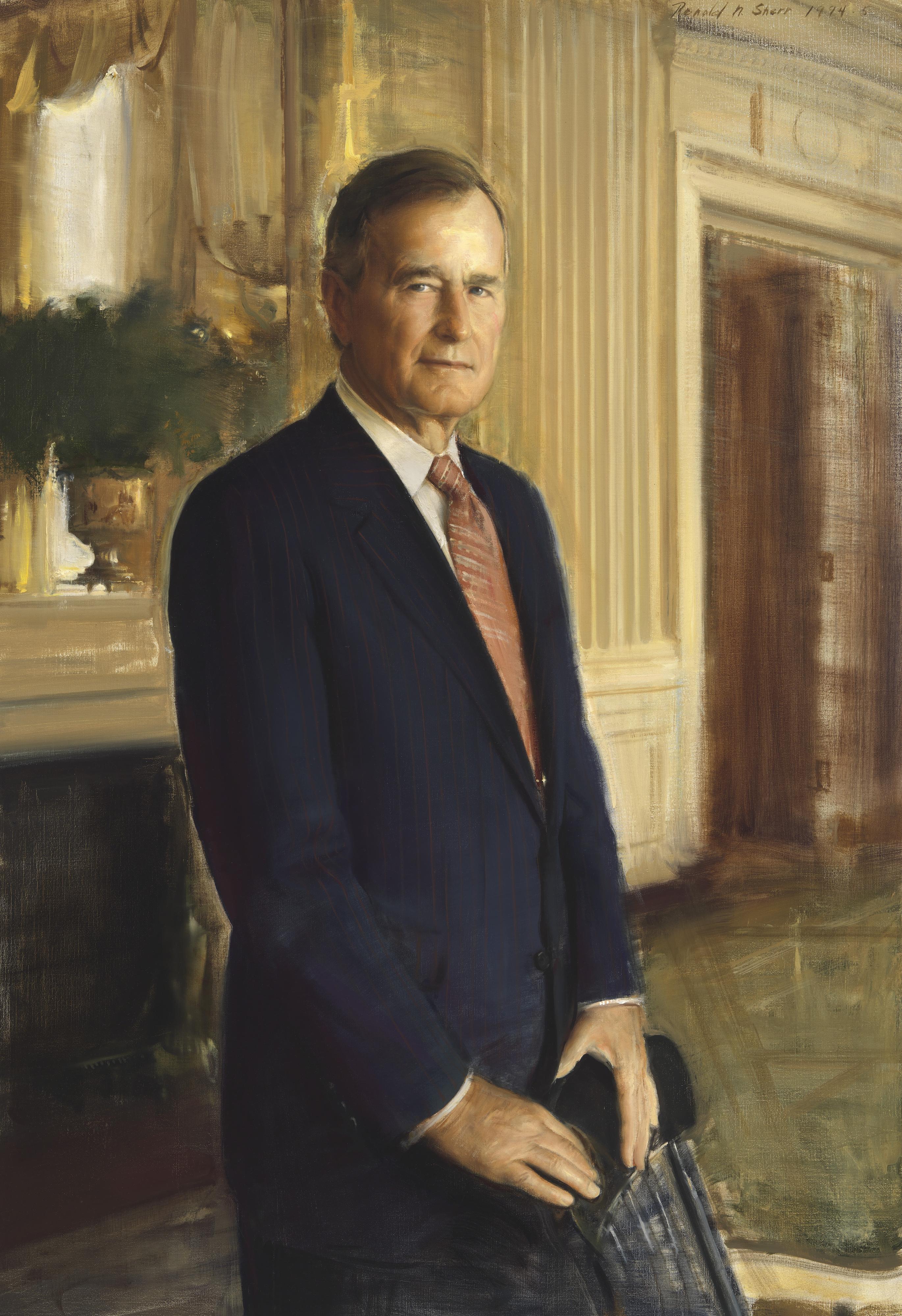
The temptation to celebrate was enormous. The American cause had prevailed. The Soviet empire was receding. The wall that had divided a city—and symbolized a divided world—was coming down. Critics called Bush’s response passionless, even weak.
But the president understood something his critics did not: victory often calls for restraint. By refusing to turn the fall of the wall into an American spectacle, President Bush preserved the dignity of Mikhail Gorbachev and the Soviet Union. He understood that a great power can afford generosity toward a vanquished rival—and that tomorrow’s diplomacy often depends on how you treat adversaries today. That restraint helped to seed what followed: the peaceful end of the Cold War, the reunification of Germany, and a Europe whole and free.
Bush learned the value of restraint long before the Berlin Wall fell. He practiced it throughout his life. Over his career, he wrote thousands of handwritten notes—personal, encouraging, funny, sincere, reflective, and gracious. He noticed people, shared in their suffering, offered comfort, and expressed gratitude. He often wrote to foreign leaders not to ask for anything, but to build relationships. He understood that people should hear from the American president before he needed them to do something difficult.
Trust is built before it is needed and George H.W. Bush knew that he would have to build trust with Gorbachev in order to end the Cold War.
“What would I do? Dance on the wall? This is a German moment, not an American one.”
- George H. W. Bush
At the Malta summit, aboard a ship in seas so rough entire sessions were canceled, the president began to build that trust in earnest. He walked Gorbachev down a line of advisers and stopped when he reached me. “This is Condoleezza Rice,” he said. “She tells me everything I know about the Soviet Union.” Gorbachev looked at the 35-year-old staffer and replied, “I hope she knows a lot.” Consider what kind of president tells his superpower rival that a junior aide is the source of his understanding. Bush was never interested in taking credit. He was interested in getting the job done.
What followed was delicate diplomacy conducted at the speed of light to make history. Less than a year after the wall fell, Germany was united inside NATO—an outcome almost unimaginable only months before.
Bush’s restraint, however, was never softness. When Saddam Hussein invaded Kuwait in 1990, Bush declared the aggression “will not stand.” He assembled one of the broadest international coalitions since World War Two and liberated Kuwait. The military campaign was swift and decisive: five weeks of bombardment followed by four days of ground combat. Then Bush stopped. His objective had been achieved.
At the Berlin Wall and in the Persian Gulf, Bush demonstrated the same discipline: knowing not only when to act, but when enough had been accomplished. That kind of judgment does not come easily. It is usually a product of character.

Much of the president’s character was formed at home. Prescott and Dorothy Bush taught their second son that “from those to whom much is given, much is expected.” His father instilled a powerful sense of duty; his mother, a deep sense of humility. In George Bush, those virtues became inseparable.
His commitment to service began early. On his 18th birthday, he enlisted in the U.S. Navy and became one of the youngest naval aviators in American history. During World War II, he flew 58 combat missions in the Pacific. On September 2, 1944, his plane was shot down after completing a bombing run. He was rescued and later decorated for valor. A man who had experienced the cost of victory had little need to boast about it. “There can be no definition of a successful life that does not include service to others,” he often said and George H.W. Bush lived that conviction.
Over more than three decades, he served as congressman, ambassador to the United Nations, chairman of the Republican National Committee, chief of the U.S. Liaison Office in China, director of Central Intelligence, vice president and president of the United States. It is difficult to imagine a more varied résumé of public service. Yet he carried all of those titles with little self-importance.
In domestic policy, his commitment to what he called a “kinder and gentler nation” helped produce the Americans with Disabilities Act, the Clean Air Act, and the Civil Rights Act of 1991. He supported the North American Free Trade Agreement, creating the largest free trade zone in the world at the time.
And he believed that citizenship was not something Americans merely possessed. It was something they practiced. “I have spoken of a thousand points of light,” he said in his inaugural address, “all the community organizations that are spread like stars throughout the Nation, just doing good.” He believed the strength of America rested not only in Washington, but in the countless acts of service performed every day by ordinary citizens.
President Bill Clinton, who defeated George H.W. Bush in 1992, later became one of his closest presidential friends. President Clinton recalled that Bush only asked him to preserve the Points of Light initiative. Even at the end of his presidency, Bush was thinking less about his own legacy and more about the service acts of others. After the Indian Ocean tsunami in 2004, Bush joined Clinton to raise money and support relief and reconstruction through the Freedom Corps, an initiative of George W. Bush. They did it again after Hurricane Katrina and the earthquake in Haiti. Former political rivals had become partners in service.
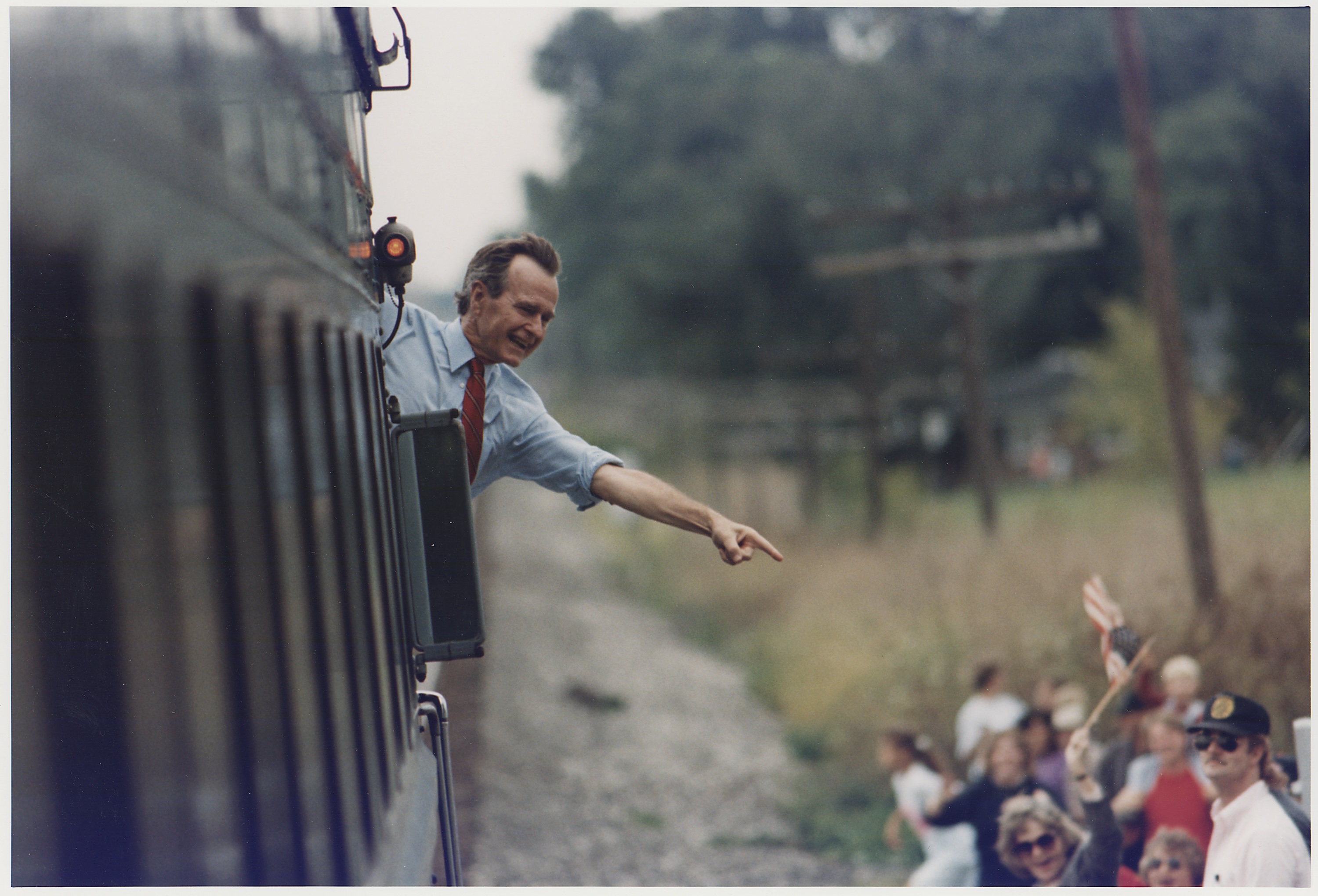
That, too, was Bush. He understood that the presidency was not a possession. It was a trust. The president represented something larger than himself: an office, a constitution, and a country.
That sense of responsibility shaped his personal relationships. He was a devoted husband, faithful son, father and grandfather, and a loyal friend. He was comfortable with himself—and comfortable giving others room to be themselves. He could befriend people with whom he had once disagreed fiercely. James Baker, his friend for more than six decades, called him “a truly beautiful human being.” Those who knew George H.W. Bush well reached for similar words.
He was not perfect. He of course broke his pledge not to raise taxes. His presidency confronted a savings and loan crisis and a recession. And he struggled to explain his larger vision to the public, a challenge he wryly called “the vision thing.” Bush could laugh at his own shortcomings – once joking, “Fluency in English is something that I’m often not accused of.”
But his imperfections should not obscure the demanding standard by which he lived. In a letter to his mother, Bush described his own code: “Tell the truth. Don’t blame people. Be strong. Do your best. Try hard. Forgive. Stay the course.” It is a good description of the man.
Jon Meacham called Bush “America’s last great soldier-statesman” and “a 20th-century Founding Father.” Those are large judgments. But Bush’s life provides a persuasive reason for them: he understood that leadership is ultimately about character. He knew that power without restraint can become reckless. Victory without humility can become humiliation. And public service without a sense of duty can become merely public ambition.
George H.W. Bush understood that the greatest victories are secured not only by what a leader does, but also by what he chooses not to do. Victory often calls for restraint. His monument is not a speech on the fallen wall in Berlin. It is the peace that followed.
“Power without restraint can become reckless. Victory without humility can become humiliation. And public service without a sense of duty can become merely public ambition.”
Check out the lesson on Substack to be part of the discussion. Share your views, respond to others, and help deepen our understanding.
View on Substack