Lesson #
10
• FROM
Louisa Catherine Adams
Louisa Catherine Adams was raised as many young, wealthy women in London at the end of the eighteenth century were raised: to be a domesticated songbird, pretty in voice and plumage. Had the cage been better gilded, she might not have noticed it. But when she and John Quincy arrived at the White House, in January 1825, they found it in disrepair. The furniture was threadbare and rooms drafty, with naked plaster for walls. Some parts of the building were closed off, unrepaired a decade after the British had burned it. After years in the courts of Europe as a diplomat’s wife, Louisa was shocked to find the president’s house so undignified. But what made her feel trapped in a terrible situation wasn’t the condition of the building. It was the sense of isolation. “There is something in this great unsocial home which depresses my spirits beyond expression,” she wrote to her son, “and makes it impossible for me to feel at home or fancy that I have a home anywhere.”
Louisa’s new life in that depressing White House was a world away from her cosmopolitan upbringing. The house she’d grown up in was on Tower Hill, above the River Thames. Louisa spoke French, played the harp, attended parties, and was known for her fine soprano voice. John Quincy Adams met her as a young diplomat visiting London from the Hague and fell in love with her – though he tried to deny himself. There was too much pleasure in her company, he grumbled to his diary. They were an odd fit: he distrusted society; she was built for it. It turned out he would need her, however much he sometimes might have wanted to deny that too.
“She was far from a nobody, and more than just a songbird in a cage.”
Louisa was crucial to John Quincy’s ascent. She navigated the complexities of being a young republican’s wife in the opulent courts of Prussia, St. Petersburg, and England. In the United States, while John Quincy was Secretary of State during the Monroe administration, she was sought after and admired. This was important: John Quincy judged himself “a man of reserved, cold, austere, and forbidding manners,” and many of those who met him agreed. He wanted to believe he did nothing to put himself in position to become president – that it was merely a question of merit, of disinterested duty well executed. That was what his parents, John and Abigail Adams, had preached. But the country was changing. Democracy was expanding. More men could vote, and fewer had the kind of classical education in civic duty that John Quincy took for granted. John Quincy needed allies in Washington. Relationships mattered. That was not his strength, but it was his wife’s. And so he encouraged her social life.
In Washington, Louisa made her parlor a power center, through her balls and Tuesday “tea parties.” In her diary, she would count the senators who came through the door and list the Cabinet members. She denied any influence, and accepted the idea, common to her time, that women should stay out of politics. But she called her parties in the years before the 1824 election “my campaigne.” When she spent a summer in Philadelphia, generals and senators would come by to discuss the latest news. In her reports back to her husband she tried to help him understand that the public wanted a leader people could relate to, not merely a tribune. “You are under a great error as it regards the interest of the late correspondence; the personal part of it has been the only part which has really occupied the publick mind, and it has placed you before the world in the character of a private individual, suffering under an unjust and ungenerous persecuted,” she wrote after one episode in which he’d been wronged. “In this light alone it is viewed and in this light it is powerfully felt, because every man can understand it and make the case his own.” He had done well to show himself “not as a negotiator of treaties alone,” she wrote, “but as an able man.” John Quincy understood the power of feelings to move people. He had also grown up in an age of sensibility. But often he wore, his son Charles once wrote, “an iron mask.”

John Quincy’s presidency was doomed almost before it began. The 1824 election was a disaster – narrowly won by John Quincy in a vote decided by the House of Representatives. Andrew Jackson’s supporters were already organizing and planning for his defeat in 1828. But as President, John Quincy refused to do anything that might smack of “electioneering.” When Louisa encouraged him to meet with his supporters, he chided her. “My journeys and my visits wherever they may be shall have no connection with the Presidency,” he wrote. “I am sincerely sorry for it,” she replied—with more frustration than sympathy. While he struggled to push through his agenda, she wandered the northeast or lay sick in her bed.
As president, determined to show his independence, without strong allies, and under the increasing pressure from his political opponents, John Quincy’s ambitious program faltered.
Louisa felt herself faltering too. In the White House, her parties, which had been at the center of Washington’s social life, were replaced by a series of formal “drawing room” gatherings. Once praised for her conviviality, she was criticized for her stiffness. Aware of her constrained position, she seems to have disliked those events herself. Only when Adams lost the 1828 election, the prospect of departure from the White House revived her. In her last “drawing room,” the doors of the East Room were opened, a band was hired, and for the first time since the Adamses had arrived in the President’s House, there was dancing.
Louisa never wanted to be used merely as an instrument for her husband’s political ambitions. She never believed that women should involve themselves directly in politics. She could be melodramatic and felt uneducated. She was not like her mother-in-law, Abigail, who was John Adams’s wise counselor throughout his life. But Louisa was resourceful, a voracious reader, and had remarkably varied experiences for her time. She was a sharp and witty observer of people and their passions, their follies, their ambitions. “Now I like very well to adopt my husband’s thoughts and words when I approve them,” she wrote to John Quincy at the age of seventy, “but I do not like to repeat them like a parrot, and prove myself a nonentity. When my husband married me, he made a great mistake if he thought I only intended to play an echo.” Indeed, she was not a nonentity – and perhaps John Quincy would have had a more successful presidency if he had done more during those years to appreciate that.
“When my husband married me, he made a great mistake if he thought I only intended to play an echo.”
- Louisa Adams
Not long after leaving Washington, Louisa was brought back to the city against her will. John Quincy allowed himself to be elected to Congress, apparently without telling her. But his last act in politics was different – for both of them.
While John Quincy Adams led the crusade against slavery in the House of Representatives, Louisa began to question the limits put upon her as a woman and to assert more of herself – her hopes, her regrets, her sense of humor, her sense of injustice. John Quincy found his great calling, and in surprising ways, she found her voice. She wrote not only letters but poetry, plays, and several drafts of memoir sketches, in a vivid style. Her “Narrative of a Journey from Russia to France” (1835) recounted the harrowing tale of her travel through Europe during the Napoleonic Wars. Later, she began a letter to her son Charles that soon became an honest, at times painful, memoir that she called “Adventures of a Nobody” (1840). But in her writing Louisa discovered that she was far from a nobody, and more than just a songbird in a cage. She wanted to show, she wrote, that she was “one, who was.”
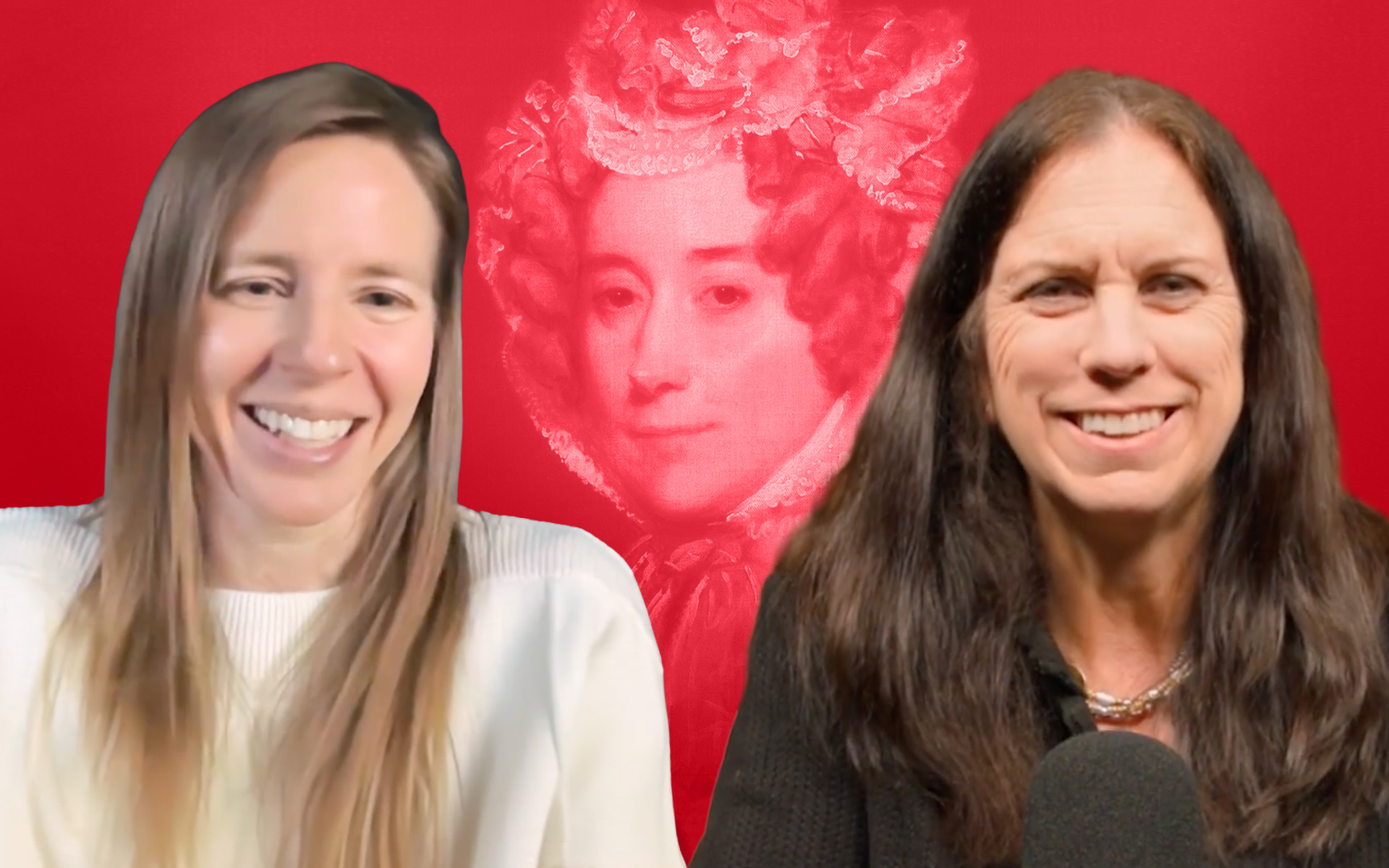

Check out the lesson on Substack to be part of the discussion. Share your views, respond to others, and help deepen our understanding.
View on Substack