Lesson #
17
• FROM
Zachary Taylor
Zachary Taylor spent most of his life in service to the United States. His responsibilities in government posts, including the presidency, sometimes conflicted with his own opinions and interests. Like prior and future leaders, he had to choose between those two imperatives. At key moments, Taylor subordinated his private preferences to what he believed to be his public duty.
Born in 1784 and raised in Kentucky, Taylor pursued careers in agriculture and the military. He acquired plantations and enslaved people to work them in Kentucky, Louisiana, and Mississippi. Meanwhile, he joined the army in 1808 and served for four decades, rising to the rank of major general.
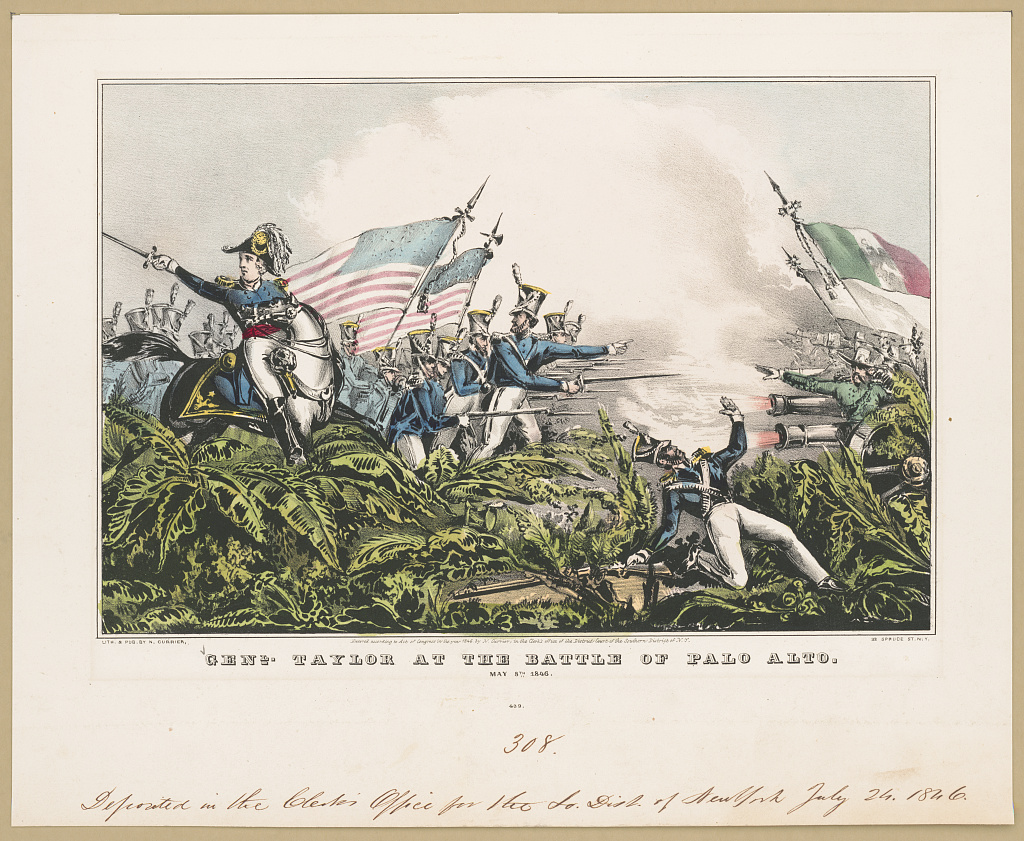
The Mexican-American War made him famous. In 1836, residents of Mexico’s province of Texas declared the region independent and asked the United States to annex it. Congress did so in 1845. But Mexico still claimed Texas, and the countries even disagreed over where Texas ended and the rest of Mexico began. President James K. Polk sent General Taylor to establish U.S. control. In April 1846, just north of the Rio Grande—on land that the United States considered Texan and American but that Mexico considered part of another Mexican state—Mexican troops attacked Taylor’s. War began.
Taylor disagreed with some of Polk’s reasons and methods for the war. He opposed Texas annexation, believing that the U.S. government had not followed proper constitutional procedure. He opposed the deployment abroad of “Volunteer” troops raised by states—similar to militias—believing that the Constitution restricted their use to domestic law enforcement and defense.
Taylor also detested his commander-in-chief. After hearing a false report that President Polk had died, Taylor wrote to his son-in-law Robert Wood, on November 2, 1847, “while I regret to hear of the death of anyone, I would as soon have heard of his death if true, as that of any other individual in the whole Union.”
Despite his misgivings, Taylor did his job. In Texas he led forces defending the annexation he thought unconstitutional. In Mexico he commanded the volunteers he thought should not be there. Through it all, he followed the orders of the president he disliked. He wrote to Secretary of State James Buchanan on August 29, 1847, “Although I did not approve the plan of said campaign . . . no one ever entered on the performance of any duty than I did in this, with greater zeal, better spirit and determination to carry it out to the very letter.”
Having chosen to follow orders despite legal and personal objections, Taylor accomplished his government’s goals. His forces won battle after battle. In 1848, Mexico agreed to sell half its territory—Texas, including the disputed section, plus everything from there to California—to the United States. This was the third-largest territorial acquisition in U.S. history, behind only the Louisiana and Alaska Purchases.
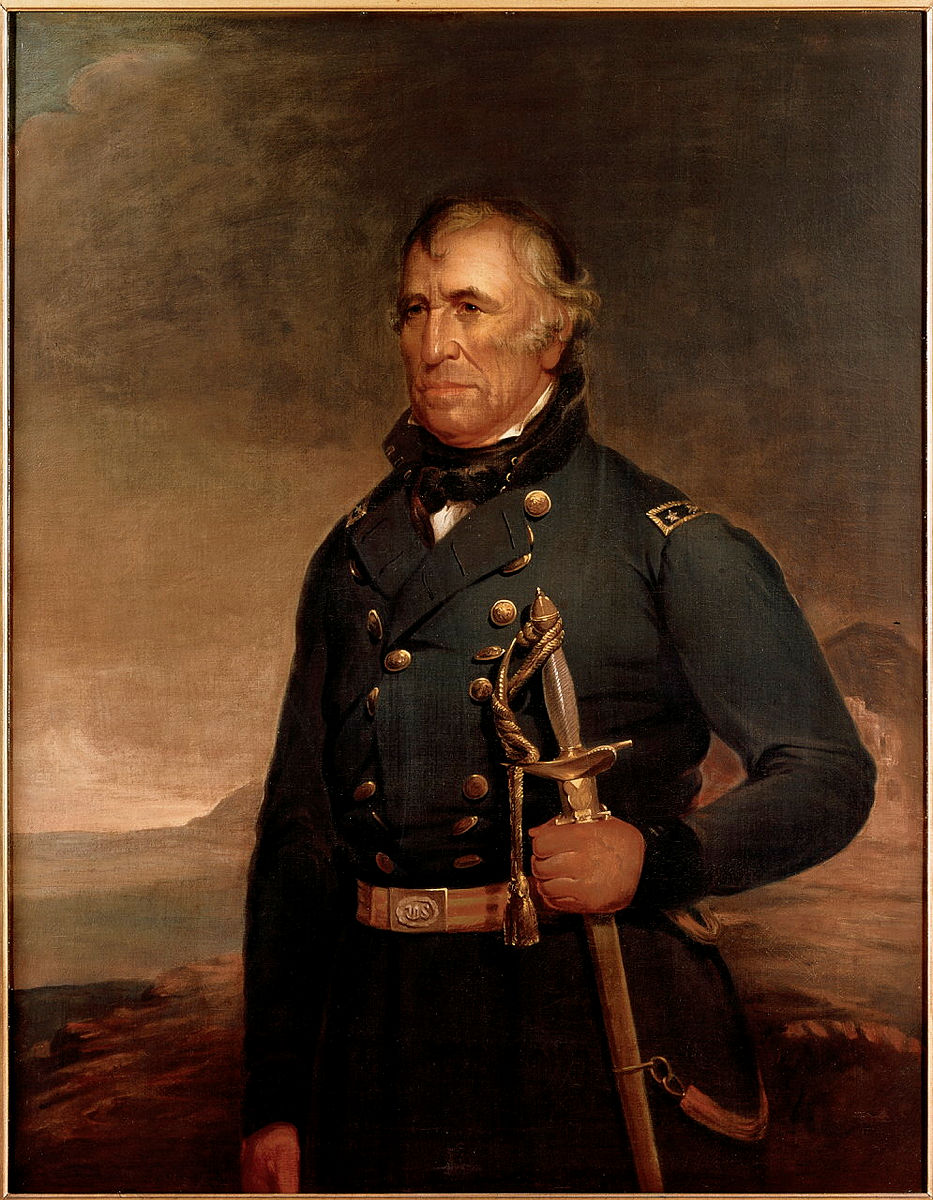
Taylor’s military leadership also helped make him president. In mid-1846, as the victories mounted, Americans began urging him to seek the White House. Members of three political parties courted him.
But Taylor insisted that he did not want to be president. He gave several reasons: He wanted to retire to his home and plantation. He did not wish to be identified with a party. He believed a military leader should not become president. He had thought little about political questions and—having spent his life in the army at a time when soldiers could not vote absentee—had never even voted.
Eventually, however, Taylor chose to serve the people. His refusal to run thawed to reluctance, then indifference, then acceptance. On December 10, 1846, he wrote to Robert Wood, “I will not say I would not serve if the good people were to be imprudent enough as to elect me.” On October 5, 1847, he told Wood, “I do not care a flint whether I am electe[d] or not.” Finally, in June 1848, he consented to the Whig Party’s nomination.
On November 7, 1848, Zachary Taylor was elected the nation’s twelfth president.
One political issue overshadowed all others during the Taylor administration: slavery. The ownership of human beings, always oppressive to its victims, had long divided free Americans. Some condemned or defended it on moral grounds; others accepted or questioned it for economic, political, and cultural reasons. The controversy intensified in the 1840s with the acquisition of Mexican land that Taylor’s military success had made possible. Mexico had banned slavery west of Texas. Now U.S. citizens heatedly debated whether to legalize it there.
This discord among White Americans disturbed Taylor even before his election. In an August 16, 1847, letter, he described “Slavery as the most important [existential question] now or that has ever been before the country.” Noting “the intemperate zeal” on both sides, he feared that the slavery debate would cause the breakup of the Union.
Taylor himself enslaved more than one hundred Black men, women, and children. Chiefly by growing cotton, they made him a wealthy man. As a budding politician concerned about disunion, he wanted free Americans to discuss their differences peacefully. As a Southern enslaver, however, he was not willing to sacrifice his financial interests for unity and peace. If antislavery Northerners went too far, he wrote in his letter of August 16, “let the South act promptly, boldly & decisively with arms in their hands if necessary, as the union in that case will be blown to atoms, or will be no longer worth preserving.”
Taylor wrote that letter to one of his sons-in-law: Jefferson Davis. A future U.S. president was promoting armed rebellion, under certain conditions, to the man who, during the Civil War, would serve as president of the Confederacy.
“A future U.S. president was promoting armed rebellion.”
After becoming president, however, Taylor tempered his proslavery stance. As a general and a candidate, he had placed his public duty—in those cases, his superiors’ orders and the voters’ wishes—above his private preferences. As president, when it came to slavery, he did the same.
In 1849 and 1850, Taylor and Congress weighed whether to admit California and New Mexico—parts of the land acquired from Mexico—as states. Taylor supported doing so, even though both states’ proposed constitutions would ban slavery. While still profiting from the labor of Americans he enslaved in Mississippi, he believed the West inhospitable to growing cotton and accepted White male westerners’ antislavery decision.
Many Southerners in Congress disagreed. Several visited the White House to protest Taylor’s plan. They implied—as Taylor had earlier—that enacting an antislavery measure would prompt Southern states to secede. Taylor retorted that he would suppress any such rebellion—possibly leading the army in person—and would execute traitors.
President Taylor, in short, put the Union first. Perhaps his personal support of slavery had softened. Perhaps he thought western bans a fair concession to slavery’s opponents. In any case, he again subordinated an expressed private conviction to the responsibilities of his office. Despite his earlier conditional support for secession and civil war to defend slavery, he now upheld his presidential oath to defend the Constitution.
Taylor did not get the final word on slavery in the West. In July 1850, he fell ill and died. Congress and the new president, Millard Fillmore, found a compromise. California became a state and banned slavery, while the rest of the West attained territorial status with slavery legal.
Taylor’s brief presidency is rarely remembered today. In his military and political careers, though, he showed himself to be a committed servant of the United States. By doing what he believed his duty even when that diverged from his own opinions and interests, he highlighted a key choice that future leaders would continue to face.
“President Taylor, in short, put the Union first.”

Check out the lesson on Substack to be part of the discussion. Share your views, respond to others, and help deepen our understanding.
View on Substack