Most presidents don’t evolve; they get retrofitted by biographers eager for an uplifting redemption arc. To be fair, it’s a setup: Presidents—and the handlers polishing their reputations—know a streamlined myth travels light-years farther than a story weighed down by complexity. But legacy-building takes time, the one luxury life never allowed John F. Kennedy. His clock was perpetually unreliable—fragile, erratic, seemingly wired for failure even before Lee Harvey Oswald intervened. And after that, Jackie, history lover turned mythmaker, made Camelot the default JFK filter in less than a week. His natural sheen helped, too.
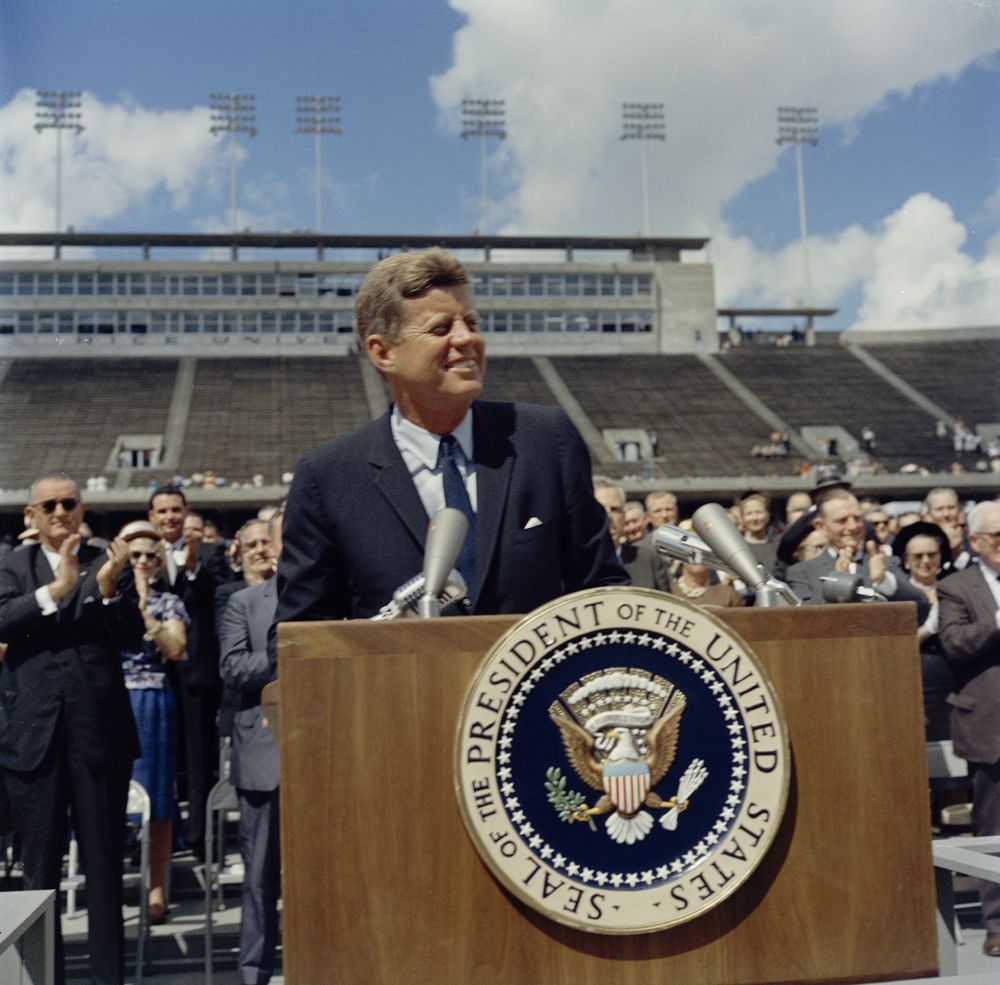
Too many biographers adopted Camelot’s framework, mistaking radiance for rigor, nostalgia for narrative. It’s hard to see the man when the light is near blinding; others over-corrected, cutting the power entirely. But as I sifted through his papers for my forthcoming biography, the usual suspects—money, tragedy, rarefied charm—explained the conditions around Kennedy, not the current running through him. They didn’t show how, in just 43 years, a sickly, insulated child became a leader who asked a fractured nation to sit in discomfort with his Catholicism, civil-rights agenda, and nuclear brinkmanship—and they did. He launched a Peace Corps and a space race, summoning a new generation of Americans to public service. His approval hit 83 percent.
And then, years into my research, a throughline snapped into view: Kennedy revised himself neither through pageantry nor proclamations. Potholes became springboards. He was always becoming.
Illness shaped Kennedy the way sand shapes glass. Scarlet fever nearly killed him at two, the first in a string of ailments that kept knocking him off course. Biographers long sentimentalized those sickrooms, casting him as a plucky patient who, they’d begrudgingly concede, “matured.” But to my mind, he appeared to be a strategist forged by pain. Solitude trained him to learn for curiosity’s sake, to charm nurses into care money couldn’t buy, and to draw close those who were never quite within reach—family, caretakers, classmates, lifelong anchors like Lem Billings, whose sexuality he knew and accepted before they roomed at Choate. He turned humiliation into humor, pain into performance—not to be heroic, but to survive. And in surviving, he rehearsed the discipline that later passed for instinct.
“Kennedy's thousand days were a forge, not a fable.”
Young Jack’s body was forever rerouting him; blunt‑force adaptability the only map. When illness forced him to leave Princeton, Harvard—the family’s alma mater—was the fallback. By all logic, he should have shrunk into Joe Jr.’s shadow. He didn’t. Every milestone the golden boy was supposed to reach, he missed—and Kennedy hit. He got into the final club, despite the old excuse of Irish exclusion. He earned his tutors’ esteem for thinking independently. And his senior thesis, Why England Slept, became a 1940 bestseller.
The pattern held in World War II. Kennedy wrangled a Navy commission through persistence and a complicit doctor, and landed an office job that outranked Joe Jr., who opted for flight school glamor. Both wound up in the Pacific. Only Jack returned—with a Purple Heart and headlines for hauling his crew to safety after a Japanese destroyer split his PT-109 in two. “They sank my boat,” he said, turning wreckage into wit. Joe Jr., still chasing distinction, took a high-risk mission. It killed him.

Loss kept teaching Kennedy the brutal cost of impulsiveness. Inga Arvad—Kennedy’s first great love, introduced to him by Kick—has long been flattened into a “sex tutor,” despite being the architect of his emotional education. The young son of America’s recently departed ambassador to the Court of St. James fell for a Danish beauty queen who had once interviewed Hitler, and the romance summoned the full American machinery: FBI surveillance, paternal fury, heartbreak. She moved on. Jack took years. Tragedy kept circling. He lost one sister to a surgical gamble, another to a plane crash in France. Risk without calculation no longer looked romantic. It looked fatal.
Most biographies skip this stretch—as if Joe Sr. couriered Jack to the White House in a briefcase full of cash. But his rise was built, not bequeathed. He entered Congress in 1947 alongside other veterans—including Richard Nixon—but Capitol Hill wasn’t a 14-year warmup. It was the workshop floor—messy, loud, vital. His path wasn’t a prefab—it was built, choice by bruising choice. His record had its evasions, too; most glaringly his convenient hospitalization while the Senate voted to censure Joe McCarthy. It also had substance: he rooted out union corruption, pushed Massachusetts’s economic development, and backed self-determination for the nations of Africa and Asia.
The process looked familiar—sickbeds, bestsellers, a dazzling dating life—but the trajectory wasn’t cosmetic. Now he had scaffolding: Kennedy women working the campaign trail, a congressional staff to work on his second book, and a cadre of women who were also more than debutantes—and sometimes, like a war buddy’s widow, not that at all. With it, he kept rising—elections, the Pulitzer Prize, Jackie’s hand, a daughter, a son bearing his name. He lost more, too: more children, more days swallowed whole by a body that kept betraying him and, in 1956, a shot at the vice presidency. Kennedy’s thousand days were a forge, not a fable. The Bay of Pigs debacle produced the discipline of the Cuban Missile Crisis; his relative indifference to Black Americans yielded, finally, to a more resolute embrace of civil rights. Failing upward was a birthright, but learning from it wasn’t. Kennedy apologized. Adapted. Sharpened. Experience didn’t sand him down—it left him with new edges.
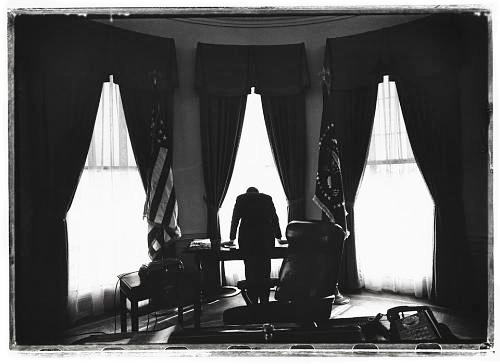
But then the story stopped mid‑sentence. No curtain‑call, no sign‑off, no chance to revise the ending. Here I am—with a Kennedy book forthcoming and a George Washington biography already behind me—arguing we’ve credited the wrong man with evolution. It wasn’t Washington, who pivoted from enslavement to emancipation only as he lay dying. It was Kennedy, who never made it to 73, the average age presidents die.
As America marks its 250th year, there’s no better time to see his unfinished story as a prompt. Like Kennedy, it’s a project that urges us to revise, risk, and refuse to settle. He never stopped becoming, and neither should we.
“He never stopped becoming, and neither should we.”
Check out the lesson on Substack to be part of the discussion. Share your views, respond to others, and help deepen our understanding.
View on Substack