Edith Roosevelt was in the room where it happened—because she designed it that way. After decades of neglect, the Executive Mansion, as it was then known, needed serious improvement. Edith contracted McKim, Mead & White, famed Gilded Age architects, to transform the space. She created what became the West Wing and a Colonial Garden that became the Rose Garden, curated a gallery featuring portraits of the first ladies and the celebrated White House China collection. She was the first to hire a social secretary and entertained over 40,000 guests a year, often in East Room concerts that became the inspiration for Jacqueline Kennedy six decades later. She and her husband even decided the president’s home needed a more relatable name, so the President changed it and the new name stuck: The White House.
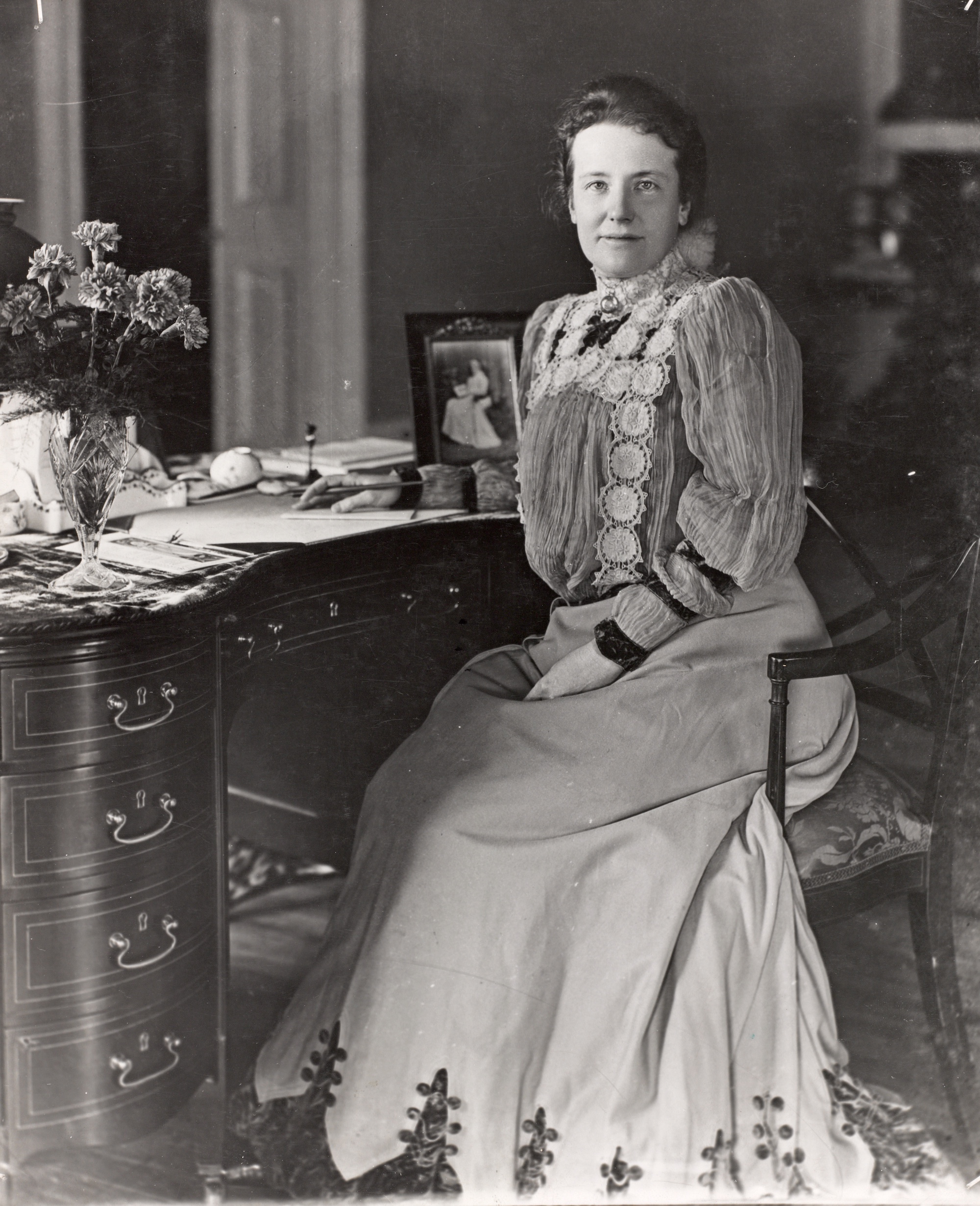
One seemingly cosmetic change had a profound impact. Edith’s library on the second floor of the White House was next to her husband’s private office. The proximity let her slip easily between domestic duties and high-level political conversations. Side by side, Edith and Theodore debated and discussed every topic. Influence, in Edith’s case, came from being listened to, not from holding a formal title.
“Whenever I go against my wife’s judgment, I regret it,” Theodore Roosevelt said, and he wasn’t alone in that opinion. Henry Stimson, who served in the administrations of six presidents including as the secretary of war who advised President Truman on the use of atomic bombs to end World War II, said, “In many of my conversations with [Theodore Roosevelt], Mrs. Roosevelt was present. Her judgment of men was nearly always better than his. Her poise as to events in which they were both concerned was nearly always better than his.” James Amos, Theodore’s bodyguard and personal valet who later became one of the first Black men to serve in the FBI, recalled, “I have heard them talking together and discussing various subjects hundreds of times.” Amos called Edith “a woman of an independent mind” and observed, like Stimson and the President himself, “She was very much shrewder than the President in her judgment.” There is one instance, however, when President Roosevelt did not abide his wife’s better judgment: forgoing running for a third term and hand picking his successor, William Howard Taft.
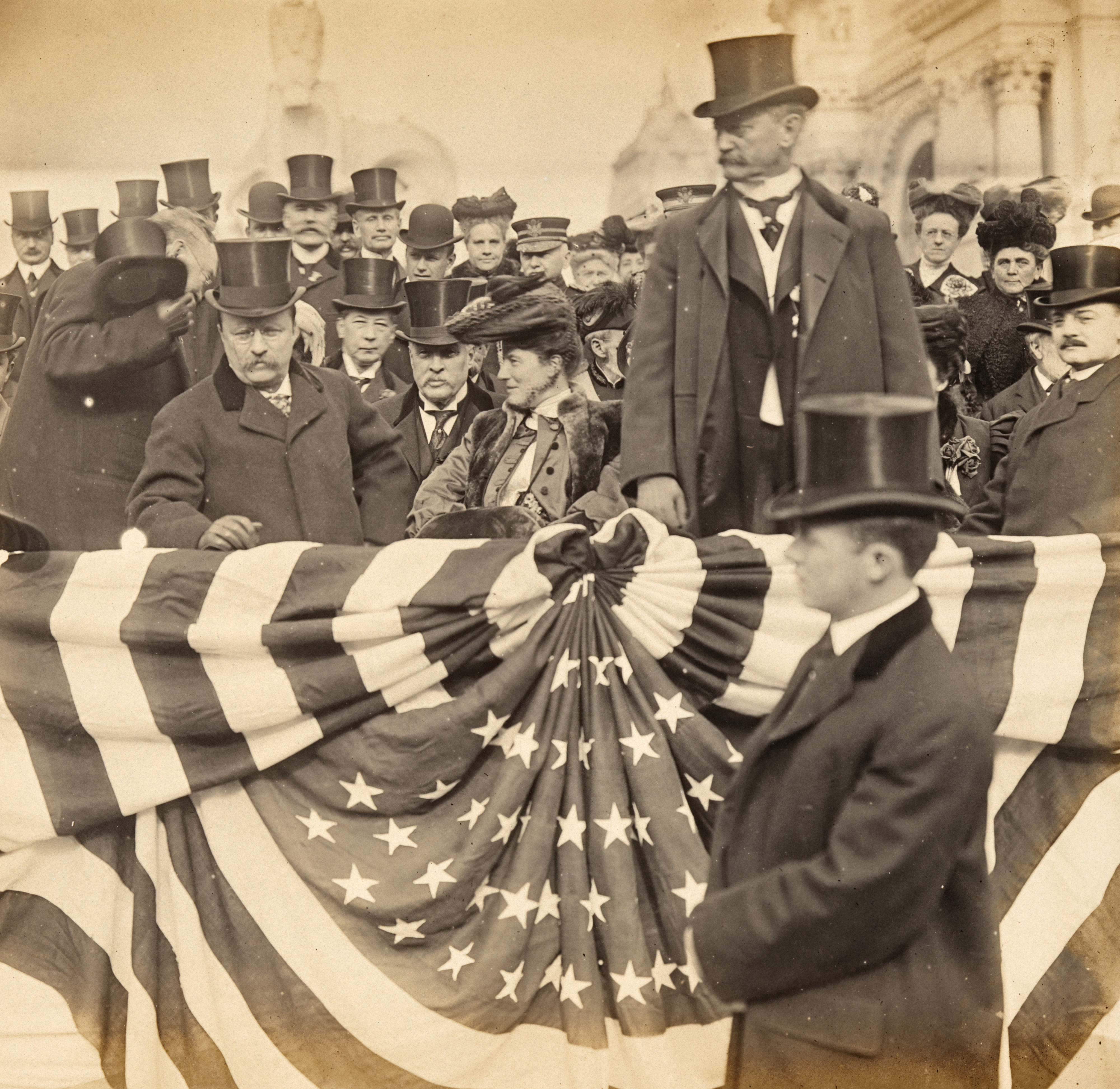
In the 1904 election, Theodore Roosevelt claimed a decisive victory. TR rose to the presidency upon the assassination of William McKinley, but now he had been elected in his own rite and was subject to term limits only by custom and not by law. Flush with victory, immensely popular, and only forty-six years old, Theodore Roosevelt stunned the world – and Edith – on election night. “The wise custom which limits the President to two terms regards the substance and not the form. Under no circumstances will I be a candidate for another nomination,” TR said.
Edith winced.
Had Edith been consulted, she undoubtedly would have advised her husband against ruling out a third term. Edith, unlike her husband, was not a political animal. At the end of her husband’s presidency, she would famously say, “I am so glad it is all over.” But she knew ruling out a third term was the worst political mistake of Theodore Roosevelt’s life. Roosevelt was a rabble-rouser, an outsider, a trust-busting conservationist and populist. He was beloved by Republicans, Democrats, and Independents alike for precisely the same reason the party bosses didn’t like him: he couldn’t be controlled. Edith knew what her husband didn’t or couldn’t imagine: once Theodore Roosevelt voluntarily gave up power, he would never get it back.
“Whenever I go against my wife's judgment, I regret it.”
As Roosevelt reached his self-imposed term limit in 1908, he hand selected a surprising successor: William Howard Taft, Roosevelt’s mild-mannered secretary of war, a lawyer, who, unlike Edith, rarely disagreed with TR. Edith distrusted Taft, believing he was too much of a ‘yes-man’, who was cowed by Roosevelt’s strong personality. With Roosevelt’s help, Taft was nominated and easily elected. “A new man is in the saddle, and there can’t be two presidents,” TR said. His irrepressible daughter, Alice Roosevelt Longworth, known as “Princess Alice,” begged to differ and buried a voodoo doll resembling incoming first lady Nellie Taft in Edith’s White House Garden. Roosevelt self-isolated in Africa, fulfilling a childhood dream on a year-long scientific hunting expedition.
Edith’s judgment, at least through the eyes of Roosevelt’s commitment to a progressive presidency, proved prophetic. Taft hesitated to use executive power as boldly as TR (Roosevelt issued 1,081 executive orders in seven and a half years, just short of the total of 1,262 executive orders issued by all twenty-five of the presidents before him), backed corporate interests more than his predecessor, and did not consider conservation a priority. The calls for TR to openly challenge the sitting president of his own party grew.
Edith, more pragmatic and politically astute than her husband, understood the distinction between mere celebrity and the path to political victory. “Put it out of your mind, Theodore,” she told him. “You will never be President of the United States again.” When leaders stop listening to the people who know them best, they often mistake confidence for wisdom.
On September 30, 1911, Edith went horseback riding with her husband and son. A superb horsewoman, she loved—not unlike her husband—to gallop full out. When an automobile spooked her horse, Edith was thrown from the saddle and knocked unconscious. Edith was in a coma for thirty-six hours and, when she revived, she had no memory of the accident. In the first stages of the emergency, Roosevelt attended Edith faithfully, never leaving her side. As her recovery became increasingly protracted, he turned her tragedy into his opportunity. “Her always restraining hand no longer held him back from what she knew was a quixotic path,” observes Dr. Kathleen Dalton. Without Edith’s counsel, TR conspired with his supporters, culminating in his famous declaration, “My hat is in the ring!”
“Politics are hateful,” Edith wrote her son, Kermit, when she began to fully recover. She told her favorite son that her husband’s decision made her “gloomy”. Edith and her daughter Ethel left on a month-long trip to South America. Historian Geoffrey Cowan captures the scene: “When several hatboxes arrived in the room, [a] reporter asked Ethel: “Is any one of those hats to go into the ring?” “Father’s hat is not among them,” Ethel said tartly. “I guess he has that one with him.”
The election year of 1912 introduced the presidential primary for the first time in U.S. history. “Let the people rule,” proclaimed Roosevelt. But that’s not how the party bosses saw it. Roosevelt was denied the nomination, bolted the party, and ran as a progressive Bull Moose independent. Edith was especially glad to see her husband become the first major party candidate to formally endorse suffrage and grew increasingly optimistic as the election neared. But, her initial instinct and her better judgment, ultimately proved true. Though still one of the most successful third-party candidates in U.S. history, Roosevelt lost, split the Republican vote with Taft, and elected Woodrow Wilson, a Democrat.
“I don’t believe I have been forced into the ‘first lady of the land’ model of my predecessors,” Edith later reflected. Though her husband, often to his detriment, didn’t always listen, Edith Kermit Roosevelt paved the path for every first lady to come: advisor, strategist, insider, and confidante, proving that to understand how someone leads, you should pay attention to who has their ear.
“When leaders stop listening to the people who know them best, they often mistake confidence for wisdom.”
Check out the lesson on Substack to be part of the discussion. Share your views, respond to others, and help deepen our understanding.
View on Substack