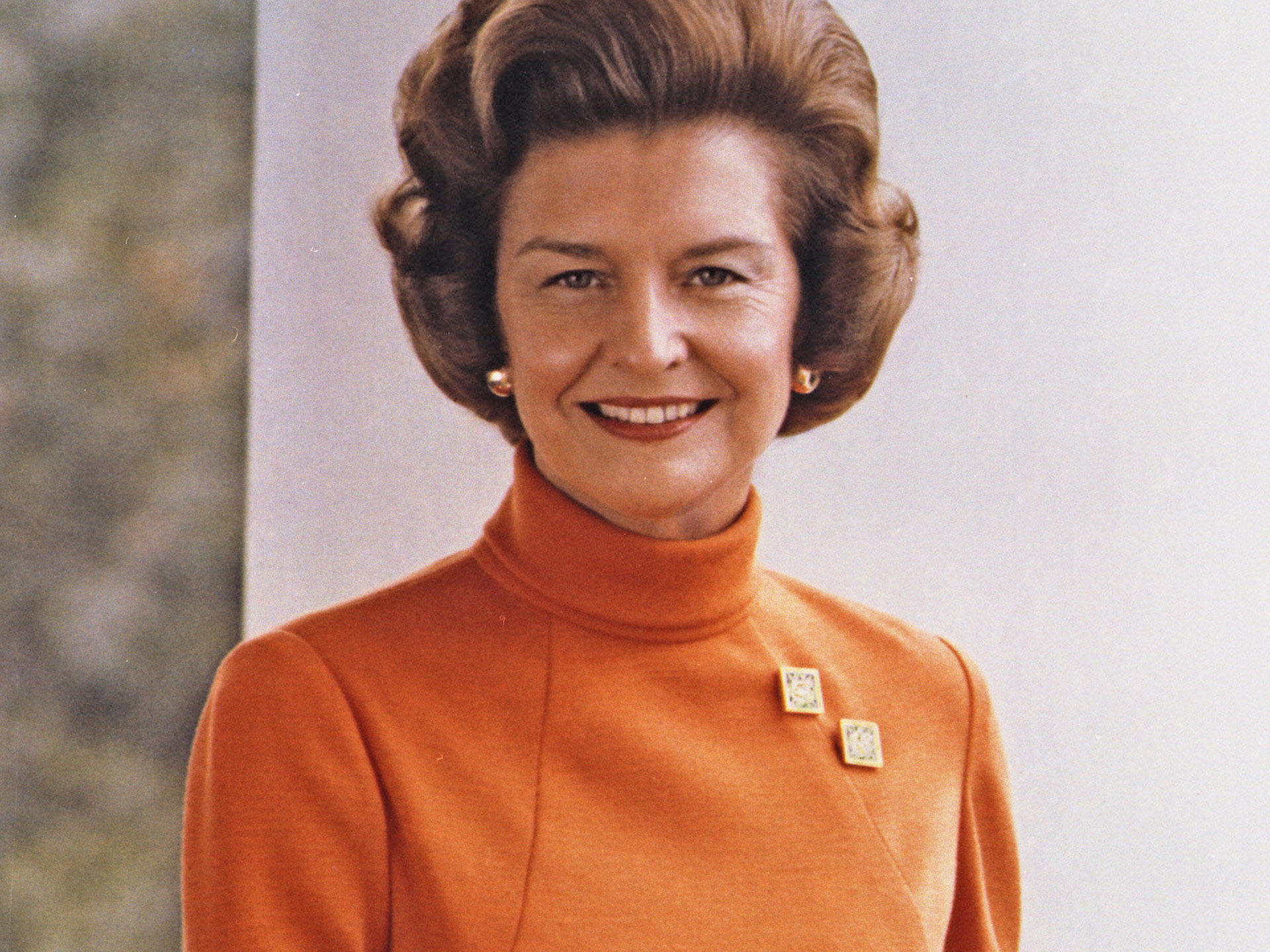
Rosalynn Carter’s story is the classic American story: a small-town girl from humble beginnings becomes the nation’s First Lady. What she accomplished over the course of her life, however, and her legacy of service and caring for others, is much larger. It’s the story of America’s promise, what it can be at its best.

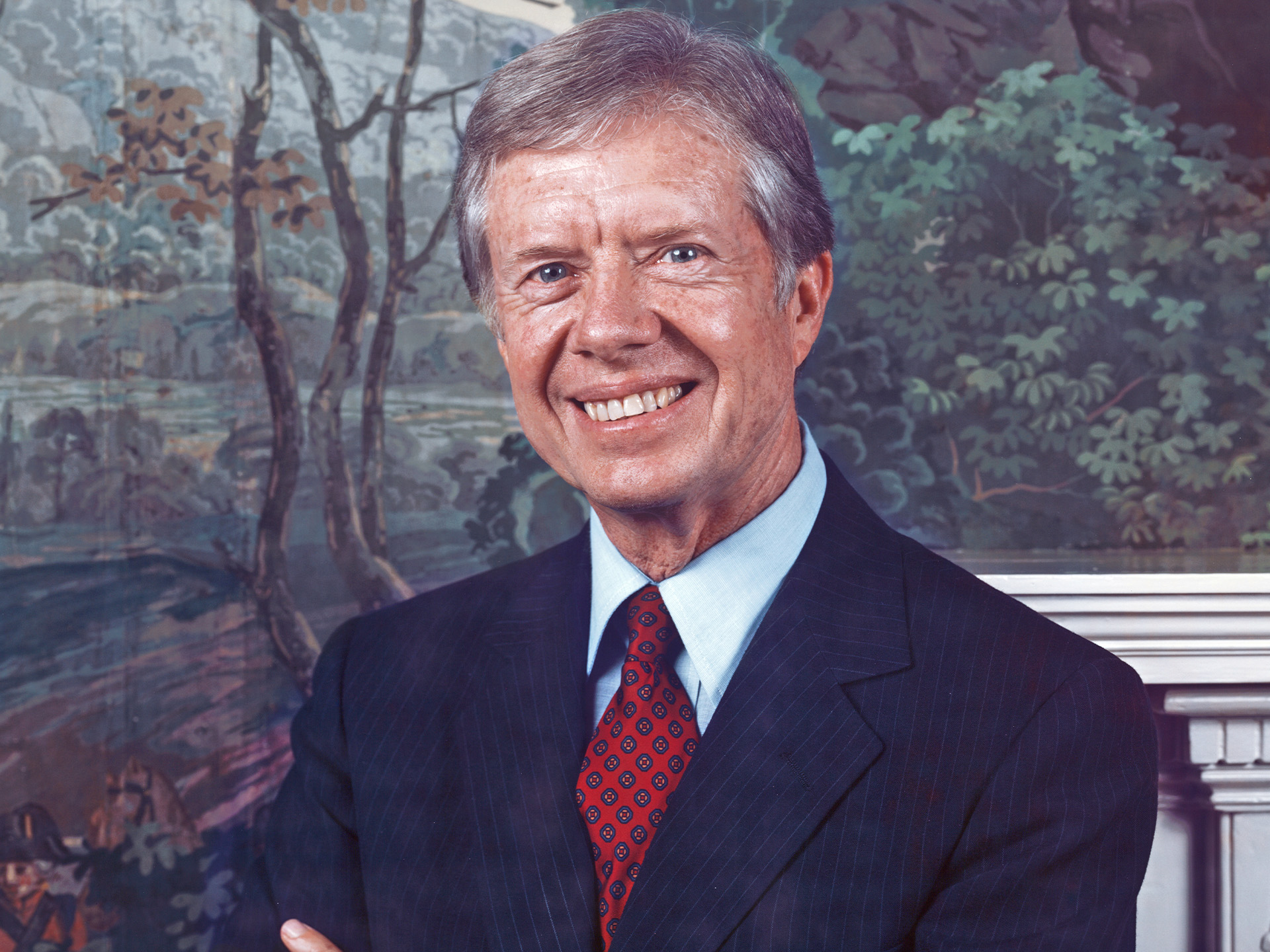
To those who didn’t know her, Rosalynn Smith Carter was the quiet, unassuming presence in the shadow of her constantly-in-motion husband. Jimmy Carter served four years as President of the United States after four years as Governor of Georgia, but throughout his century-long life he set an ambitious pace that would exhaust a normal person. Rosalynn not only kept up with him, raised four children, and advised and actively supported him as First Lady in both offices, but she also carved out a role for herself as a fierce advocate: speaking up for those less fortunate, whether due to economic hardship, mental illness, disease, or the stresses of caregiving.
The seeds for this were sown early: she grew up in a family that prized hard work and her father pushed her to excel. After his death when she was thirteen, she began to raise her sights beyond the tiny town of Plains. Just four years later, she married hometown sweetheart Jimmy Carter, fresh out of the Naval Academy, and they were off on an adventure from one U.S. Navy base to another. Postings in San Diego, Norfolk, and New London were hard on a young military spouse but served as her first exciting windows on the world.
So much so that when her husband decided to return to Georgia and his family’s peanut business, she resisted, only to excel at running it, and later, to acclimate to the role of political spouse. She grew to understand that what others might see as tiring, unglamorous round-the-clock campaigning was for her, a gift – a chance to hear from hundreds, even thousands, of people about what was on their minds and what they wanted their elected leaders to do for them. Early on, she recognized what she called a constant refrain, as a surprising number of Georgia voters spoke to her about having a child or family member at home with mental illness or special needs, asking, “What will your husband do to help me if he’s elected governor?”
In 1971, after he was sworn into office as governor, she threw herself into working on mental health. On multiple visits to state hospitals, she couldn’t help crying – and was once unable to speak – as she interacted with children and adults with profound developmental delays. After a hospital superintendent advised her to “get over” the tears, “Don’t let it get the best of you. We need you,” she successfully pushed to quintuple the number of community-based care facilities in Georgia and reduce the number of patients in large institutions.
She also pushed hard to enlist more Georgia children with intellectual or developmental disabilities into the Special Olympics, and actively fought for prison reform, especially for women. When she learned many female prisoners were being fleeced by their lawyers, promising help in exchange for monthly payments, she turned evidence over to the state bar association and personally called one lawyer to ream him out.
“She grew to understand that what others might see as tiring, unglamorous round-the-clock campaigning was for her, a gift.”
In the White House, her advocacy expanded. In March of 1977, she gave her first interview as First Lady of the United States, saying that her goal in that role was “for every person who needs mental health care to be able to receive it close to his home, and to remove the stigma from mental health care so people will be free to talk about it and seek help.”
In addition to traditional first lady responsibilities and diplomatic assignments like her trip to seven Latin American capitals in 1977, Rosalynn quickly moved, in her words, “to take mental illnesses and emotional disorders out of the closet.” As the honorary but actively engaged chair of a new President’s Commission on Mental Health, she oversaw research leading to recommendations, and ultimately, to legislation passed by Congress in 1980, marking the first major reform of federal, publicly funded mental health programs in decades. Along the way, she was in frequent contact with congressional leaders, including Senator Ted Kennedy, who was focused that summer on his campaign to take the Democratic presidential nomination away from her husband. “I had to swallow some pride for the cause,” she later wrote.
She would soon lament that President Reagan, who succeeded her husband, removed the bulk of funding for the program. But in the more than forty years that followed her time in the White House, Rosalynn doubled down on her advocacy for those with mental illness, lobbying decision-makers and becoming a frequent public voice. She played an instrumental role in the passage of the Mental Health Parity and Addiction Equity Act, passed by Congress in 2008. Her work went global, including with the World Health Organization, which partnered with the Carter Center on initiatives to eliminate neglected tropical illnesses like Guinea-worm disease. In 2021, the WHO honored her for fifty years of mental health advocacy. Today, the international work she set in motion continues at the Carter Center.

As if that weren’t enough, she took on another critical issue after she left the White House: caregiving. Recognizing that it’s usually family members, or poorly paid workers, who bear most of the responsibility for taking care of those with mental, developmental, and physical disabilities, Mrs. Carter in 1987 helped launch the Rosalynn Carter Institute for Caregivers at her alma mater, Georgia Southwestern University. In so doing, she helped put this overworked and often overlooked sector of society on the map. Like her work on mental health, this was a cause she remained devoted to for life.
A little less than two years after Rosalynn Carter’s death in November 2023, the Carter Center in Atlanta announced the merger of her two main initiatives, folding the Institute for Caregivers into the Center’s domestic and international work on mental health, calling her “a visionary” who recognized early that “these two issues were fundamental to the health and well-being of families and communities.”
From the young wife who dreaded making campaign speeches – to the point of being physically ill – Rosalynn Carter drew courage from her husband and from the ordinary people who asked for their help. She grew into a lifelong advocate for some of the most vulnerable, at the same time she carried on the work they were best known for: building houses for Habitat for Humanity, promoting human rights, and seeking conflict resolution. Theirs was a never-tiring approach to some of the most challenging problems of this era. When Jimmy Carter was running for president the first time, a reporter asked Rosalynn why she was campaigning five days a week, twenty hours a day. Her answer: “It’s a labor of love. Besides I won’t have any regrets if he loses, because I am doing everything I can possibly do.”
It was the same mindset she brought to her advocacy for the mentally ill and for caregivers. Hers was a life of service. When it would have been so easy to slip into a life of leisure after an intense few years under the hot lights of American politics, Rosalynn Carter chose instead to fight for those who couldn’t fight for themselves.
“Rosalynn Carter chose instead to fight for those who couldn’t fight for themselves.”
Check out the lesson on Substack to be part of the discussion. Share your views, respond to others, and help deepen our understanding.
View on Substack