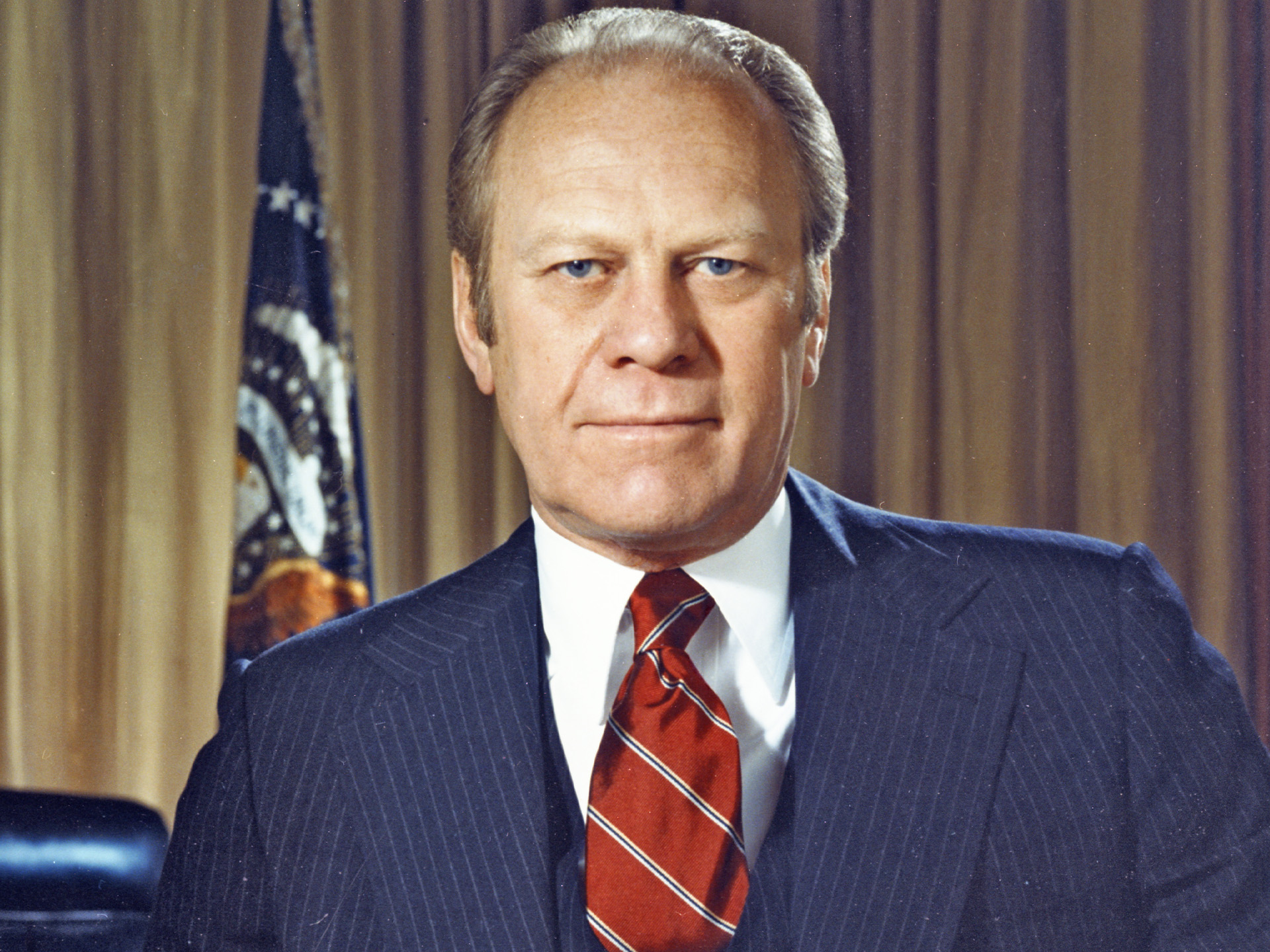
To Americans tired of the Watergate scandals and the humiliating exit from Vietnam, the election of former one-term Georgia governor Jimmy Carter seemed like a new beginning for the country. He was a fresh face, unencumbered by years of Washington infighting and free of the ethical and criminal taint of the Nixon Administration. The modest man from Plains, Georgia – population 600 – had been unknown to most Americans, dubbed “Jimmy Who?” in the early days of his long-shot bid for the Democratic presidential nomination. Yet, defying all odds and early predictions, Carter caught his better-known Democratic rivals flat-footed, then bested the incumbent President Gerald Ford to narrowly win the presidential election of 1976.
As Carter took office, the world seemed to be changing before Americans’ eyes. Could a former nuclear submariner, peanut farmer, and born-again Christian from the Deep South solve America’s many challenges – the Cold War, the environment, the Middle East, and the emerging economies and geopolitical aspirations of Asia, Latin America, and Africa – and still live up to his promise to provide a “Government as good as the American people”?
The answer, sadly, was no. Yet even as Carter’s presidency fell short of its early promise, his post-presidency – the longest in U.S. history – was arguably the most successful of any American president before or since. Never one for pomp, Carter showed that sometimes the most consequential work begins long after the spotlight has moved on.
Few one-term presidents have faced as much misfortune as Jimmy Carter. His presidency was marked by the fall of the Shah of Iran and the rise of Ayatollah Khomeini; a prolonged hostage crisis and a failed rescue mission; the Soviet invasion of Afghanistan; soaring inflation and interest rates; oil shortages that produced hours-long gas lines.
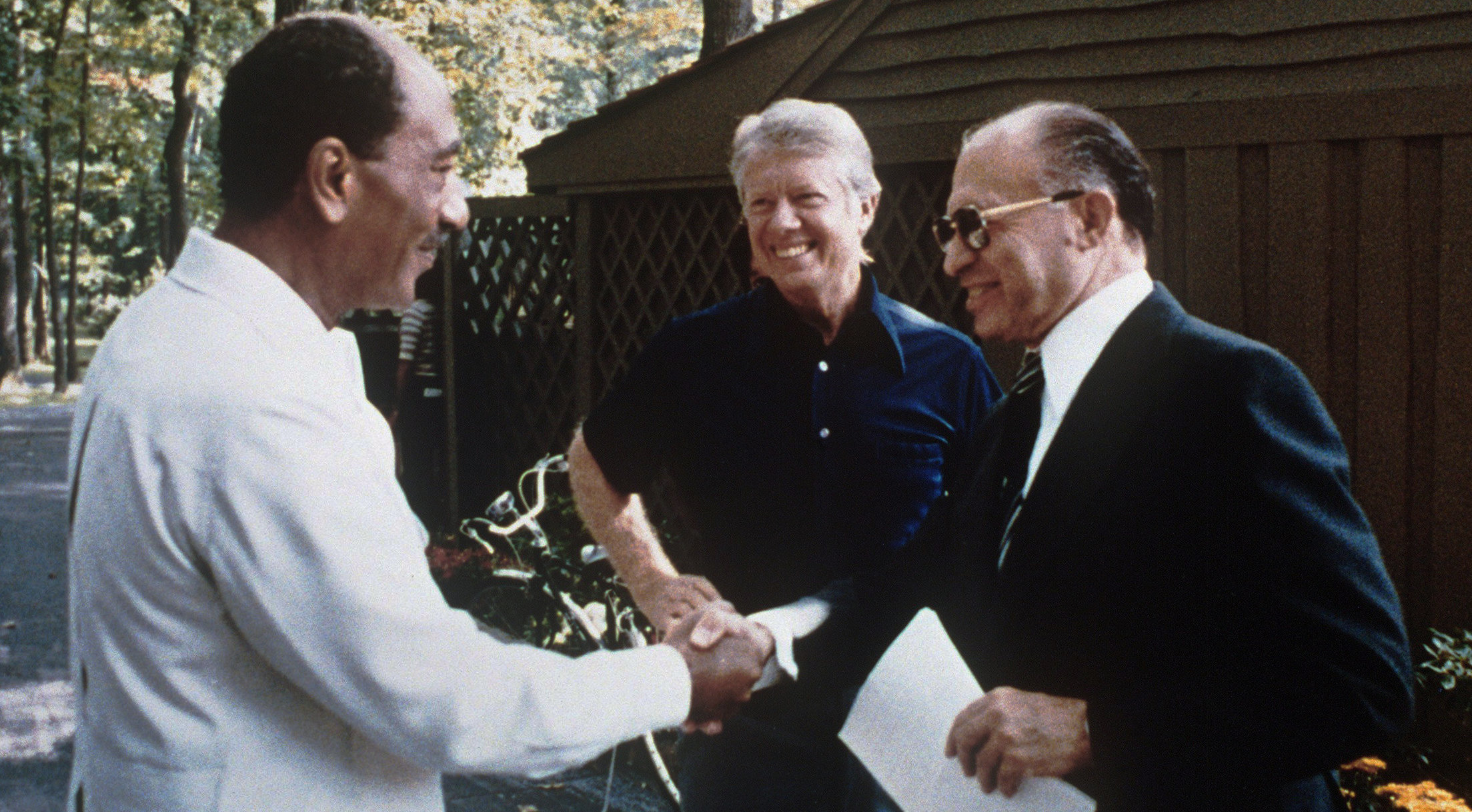
Carter applied his considerable intellect and unrelenting drive to solve these seemingly unsolvable problems. While he at times accomplished what had once seemed impossible – like the Camp David Accords between Israel and Egypt – a great many expected and unexpected challenges came to overwhelm much of what Carter did accomplish. After overcoming a serious and bitter intra-party challenge for the Democratic Party nomination from Senator Ted Kennedy, Carter went on to lose the 1980 election in a historic landslide. The sunny and charismatic Ronald Reagan would sweep aside the so-called “malaise” of the Carter years and end the bright hopes many had for Carter’s presidency when it started.
Yet despite the challenges that came to define his legacy, Carter reinvented modern presidential life before, during, and after his actual presidency.
He began by reimagining the presidential campaign, focusing on the Iowa caucus first and setting the pattern for virtually all subsequent presidential campaigns. His emphasis on grassroots campaigning – Carter made a habit of staying at supporters’ homes, both to cut costs and engage with voters – proved that candidates did not need to be national figures taken seriously by the national media or party insiders to win a major party nomination. Since 1976, many other similarly long-shot candidates have followed in Carter’s footsteps – among them Bill Clinton, Barack Obama, and Donald Trump.
“Carter almost single-handedly elevated human rights as a central tenet of American foreign policy.”
As president, Carter approached intractable problems by personally designing solutions and overseeing their implementation. He didn’t believe in bottom-up management; his style was top-down and getting involved in all details. He likewise willfully ignored political consequences when he believed a higher human good was at stake. Indeed, Carter’s advisors knew that telling him a particular decision would be politically perilous would only ensure he would do it.
Carter’s micromanagement and stubborn certainty often stymied his agenda – even with his own party controlling Congress. He alienated would-be allies by attempting to cancel pet water projects he viewed – rightly, in many cases – as wasteful. His plans for universal health care fell victim to his tense relationship with Senator Kennedy. After closely studying the tax code himself, Carter sent Congress a proposed overhaul without consulting with key legislators. It went nowhere. One powerful committee chair fumed, “If that son of a bitch tells me to ‘do the right thing’ one more time, I’m gonna kick his ass.”
At the same time, Carter’s approach yielded real results. Against the advice of his closest aides, Carter personally negotiated a landmark peace agreement between Israel and Egypt at Camp David – the first peace treaty between Israel and an Arab state. He resolved the status of the Panama Canal, negotiating with Panama and persuading the Senate to ratify the treaty that returned the Canal to Panama. When the Soviet Union invaded Afghanistan, he protested by imposing a boycott of the 1980 Olympics in Moscow. Most significantly, perhaps, Carter almost single-handedly elevated human rights as a central tenet of American foreign policy. While these actions did not always help Carter politically, they were, in his view, the appropriate way for the U.S. to conduct itself morally.
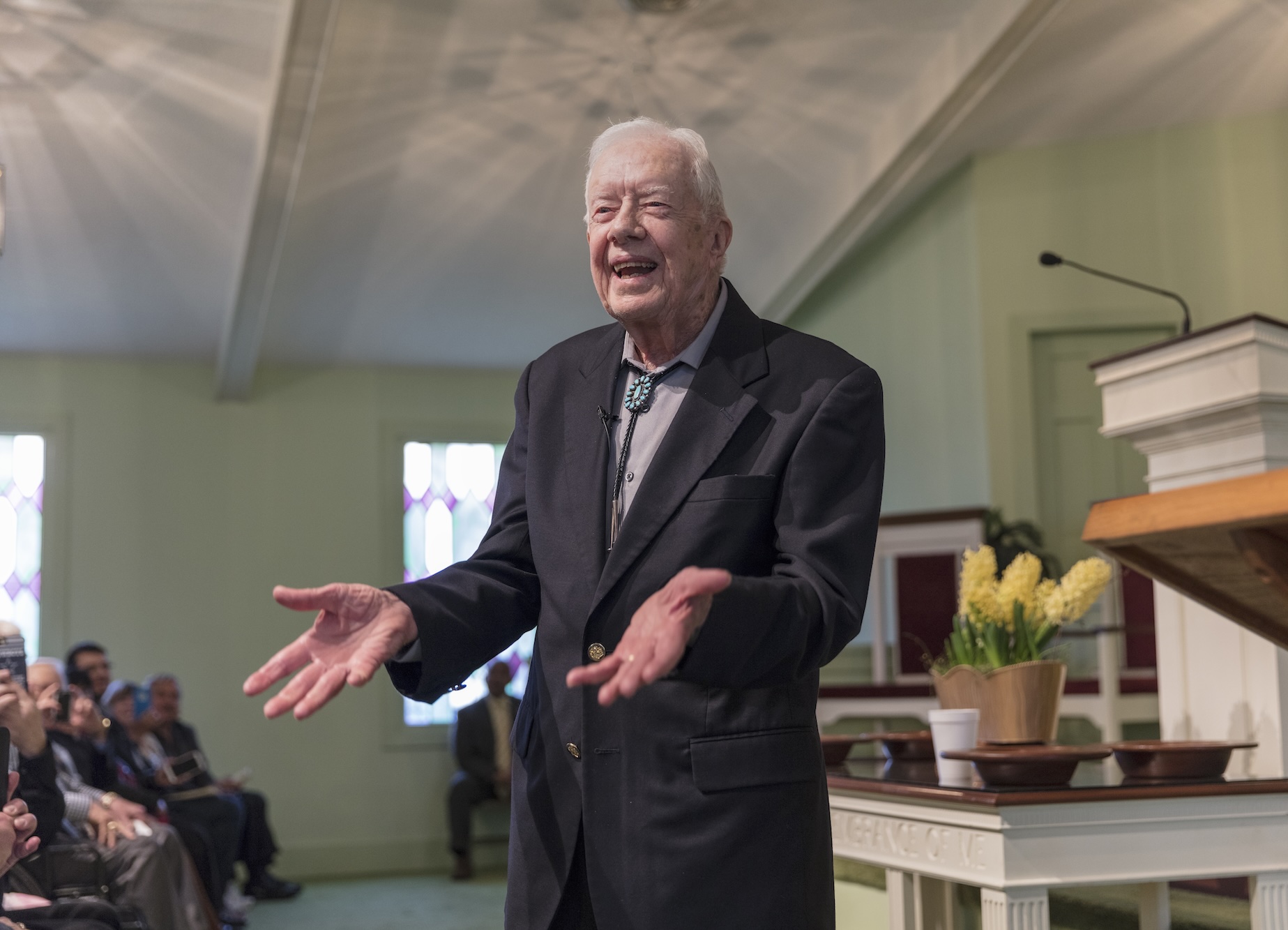
But reinventing how presidents get elected and how they conduct themselves in office pales beside how Carter transformed the post-presidency. President Carter left office at 56 years of age. He lived another 44 years. During that period – 11 times the length of his presidential term – he showed how a former president, with no formal powers, could solve problems that no one else could or would even try to solve. Carter’s work led to the elimination of Guinea worm and river blindness in Africa. He helped monitor over 125 elections around the world and led significant peace missions to Haiti and North Korea. If the defining image of Carter’s presidency was a rescue helicopter downed in the Iranian desert, the defining image of Carter’s post-presidency was the former Commander-in-Chief building houses with Habitat for Humanity.
For these efforts, Carter earned the Nobel Peace Prize. And he left behind a legacy even greater than the Nobel: a Presidential Center in Georgia, which has become a model for presidents seeking to remain engaged in public affairs long after their years in office.
These many reinventions were the product of Carter’s unrivaled perseverance and work ethic, which came in part from his deep religious faith and the belief that he was doing God’s work here on Earth. Few individuals have matched Carter’s drive, determination, and commitment to completing the tasks he set for himself – even when those tasks proved politically damaging.
In many ways, Jimmy Carter was truly a simple man. For 77 years, he remained married to Rosalynn, his best friend and true love, whom he’d known almost since birth. Remarkably, he was uninterested in making money from his presidency, content to live for more than 60 years in the house he helped to build in Plains.
As simple and plainspoken as Carter was in personality and character, however, he was also a modern-day Renaissance man. He was a painter and woodworker; an author of more than 30 books and a poet; a Sunday School teacher and fly fisherman; an engineer, mountain hiker, farmer, skier, and home builder; and, above all, a devoted family man – the father of four, grandfather of eleven, and great-grandfather of fourteen.
How could someone from such humble roots rise to the presidency and continue trying to improve the world until his final days at 100 years of age? The answer was perseverance: never accepting “no,” never worrying about political consequences, and always guided by a moral code centered on improving human life.
Carter’s longtime naval mentor, Admiral Hyman Rickover, asked Carter in their initial meeting whether Carter had done his best at the Naval Academy. Carter confessed that he hadn’t always – despite ranking 59th out of 820 midshipmen – but resolved to always be able to say “yes” in the future. That became Carter’s mission: always do your best. His remarkable life and career were testaments to that effort.
“He showed how a former president, with no formal powers, could solve problems that no one else could or would even try to solve.”
Check out the lesson on Substack to be part of the discussion. Share your views, respond to others, and help deepen our understanding.
View on Substack