Every morning, I begin my day with Betty Ford.
There is a small book I keep in my bedroom – a reading a day, written specifically for women. It's called Each Day a New Beginning: Daily Meditations for Women, from the legendary meditation series published today by Betty's own beloved recovery center.
Betty gave it to me, signed, in 1989, when I interviewed her for a television hour on addiction. "This is a really important book to me," she said, "and I wanted to share it with you."
I have read from it nearly every morning since. For more than 35 years, one of the first voices of my day has been hers. This essay is my chance to tell you why.
When I think of Betty Ford, I think of how brave she was. How brave she was to step forward at a time when people did not openly discuss addiction. How brave she was to be openly vulnerable when almost no one was. How brave she was to say out loud that she had failed in her life – that she had not met her moments.

She was very ladylike, but also very strong. She had a Midwestern comfort to her, a nurturing presence. She was the kind of woman you would see in the carpool line at school. And she was also the First Lady of the United States.
Nobody had voted for her husband, let alone for her, when she arrived in the White House in August of 1974. Weeks later, she was diagnosed with breast cancer – and she told the country, at a time when the word "breast" barely appeared in newspapers. "There are women all over the country like me," she explained later. "If I don't make this public, their lives will be gone or in jeopardy." Thousands of women went and got screened. Some found their cancers in time.
That alone would have been a legacy. It turned out to be a beginning.
On the first day of April, 1978 – the White House behind her now – her husband and her four children gathered in the living room of their home in Rancho Mirage. One by one, they told her the truth about what the pills and the alcohol were doing to her, and to them. Her daughter Susan told her mother – a former dancer – that she wasn't graceful anymore. Her son Jack admitted he didn't like to bring friends home.
Betty was blindsided. "I was so hurt," she remembered. "I felt I had spent my whole life devoted to them, and they were telling me I was failing them."
I've seen interventions in my own family, and I know how badly these interventions can go. I know mothers who did not take it well, who refused treatment, who ended up furious and estranged from their kids forever. Betty took the opposite approach. She listened. She was open. Her husband was in the room – he would call it "the only thing that saved Betty's life."
Days later, she turned 60. Two days after that, she checked herself into the Long Beach Naval Hospital – into a shared four-bed room with three other women, two young naval enlistees and an admiral's wife closer to her own age – because, she was told, a first lady was like everybody else.
“There are women all over the country like me. If I don’t make this public, their lives will be gone or in jeopardy.”
- Betty Ford
As my friend, historian Mark Updegrove wrote, "She attended lectures, meetings, physical therapy, and group therapy, where, in a haze of cigarette smoke, she eventually confessed her worst sins about her condition. She ate in the same cafeteria, wore a name tag stating her first name, and saved quarters for the soda machine. She realized she was very much like the women she met, sharing not only their condition, but also their hopes."
And then she did the thing that changed everything. From the hospital, she released a statement to the entire country, in her own words: "I have found I am not only addicted to the medication I have been taking for my arthritis but also to alcohol."
No euphemisms. No "exhaustion." No hiding behind a prescription pad – pills, she made clear, count. She went overboard, she said. She was an addict.
I remember reading that back then and thinking, "Whoa." We all did. Here was a woman you thought had it all, saying: I don't have it all. I can't do it all. I haven't been able to do it all.
And this is how I've been coping with it all.
Addiction, back then, lived in the basements of churches and Lions Clubs. With one statement, Betty Ford brought it up to White House level. She took the shame out of it. She showed that people you didn't think had struggles, had struggles – that it didn't matter who you were or what job you had. It happened to a woman who had lived in the White House. It happened to women in single-room apartments in rural America. It happened to all of us.
The people around a first lady always say the same things. Don't say that. Don't reveal that. It won't be good for your husband, for your children, to be cast in a negative light. It turned out keeping it quiet would have been worse.
Proof came quickly. People began coming to her with their own struggles – among them a close friend whose recovery she helped guide. She saw what her honesty could do at scale.
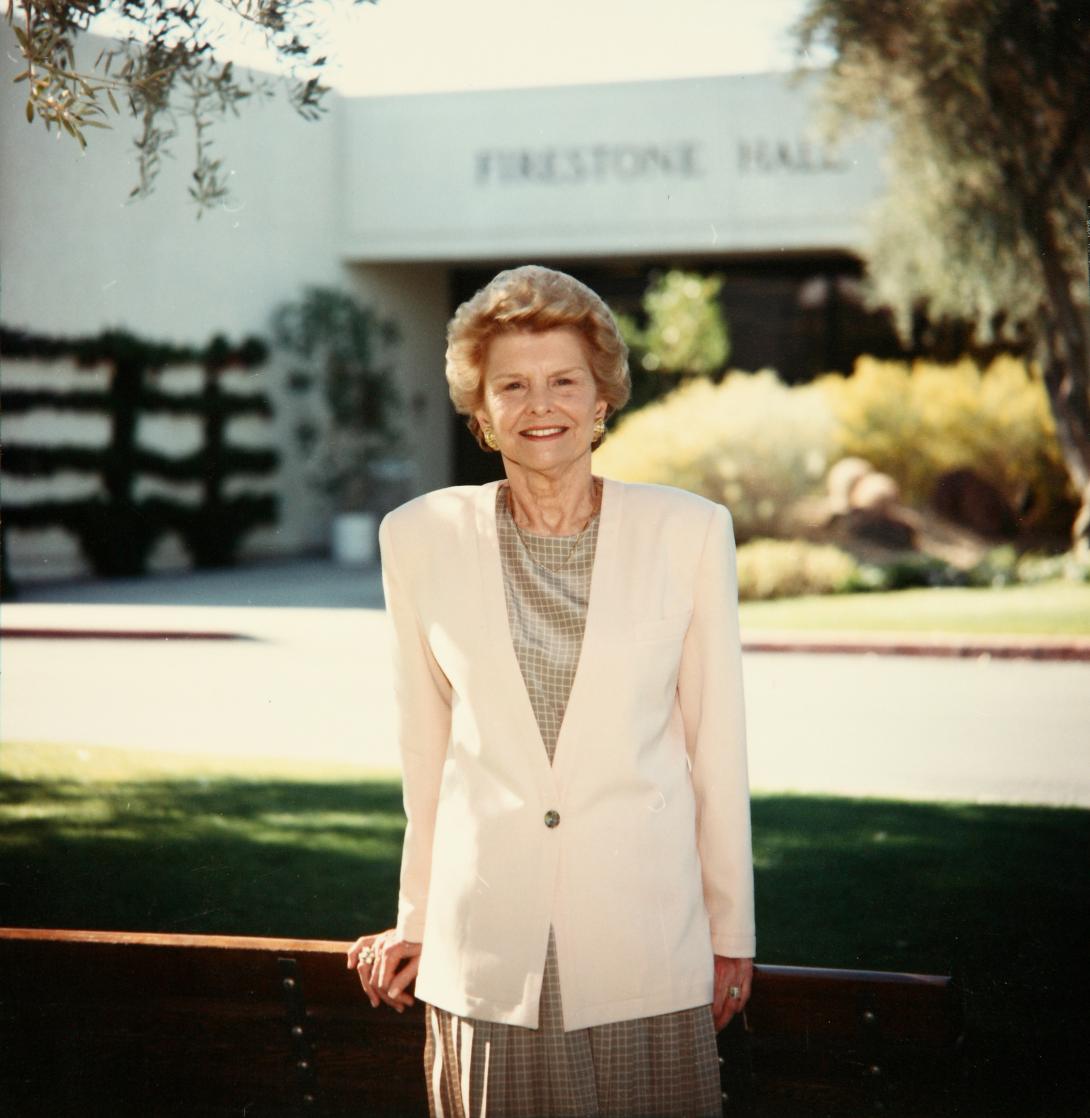
So in 1982, she built the place: the Betty Ford Center. She raised the money herself and reluctantly agreed to put her name on the door. She chaired the board and greeted patients personally – "I'm just one more woman who has had this problem." She insisted the rooms have four beds, like hers at Long Beach, because recovery has no VIPs. Tens of thousands of people have walked out of that place and back into their lives.
She has helped millions, and she continues to help millions in her death. Her mission was bigger than her. It still is.
There was more to her bravery than illness. She was ahead of her time – politically outspoken, personally outspoken, outspoken on behalf of women who wanted equality, dignity, and lives lived bravely and openly. And her husband stood behind every bit of it. He said it himself: "When the final tally is taken, her contributions to our country will be bigger than mine."
I know how rare that is, because I lived a version of it. When I became first lady of California, with my own opinions and my own life, I looked to the women who had navigated our public square with grace and with class and with strength. Betty Ford was that to me. At my Women's Conference in California, before an arena filled with thousands, I gave her the Minerva Award – named for the goddess of wisdom and courage. Now you know why.
And I was hardly the only one she inspired. When Nancy Reagan told the country about her breast cancer, she walked through a door Betty opened. When Tipper Gore spoke about her depression. When Michelle Obama wrote about her miscarriage and her marriage counseling. When a United States senator checked himself in for depression and said so plainly.
“Her mission was bigger than her. It still is.”
Every leader since who has stood before us and admitted to being human is Betty Ford's heir. Each has discovered what she proved first – that honesty like that is met with compassion, and something close to awe. People may not think this lesson applies to them yet. But when it does, they remember it always.
I am one of them. When my own marriage collapsed in front of the whole world – when I was suddenly the woman who did not have it all together, and everyone knew it – Betty was a source of strength for me. I had to reveal my humanity too, whether I wanted to or not.
Her example convinced me that honesty would be met with compassion. More than that, it reminded me that true leadership is not having it all together – it's the willingness to still show up when it's all falling apart.
Revealing our humanity, in other words, is what moves humanity forward. And hiding it is what holds us back.
Check out the lesson on Substack to be part of the discussion. Share your views, respond to others, and help deepen our understanding.
View on Substack