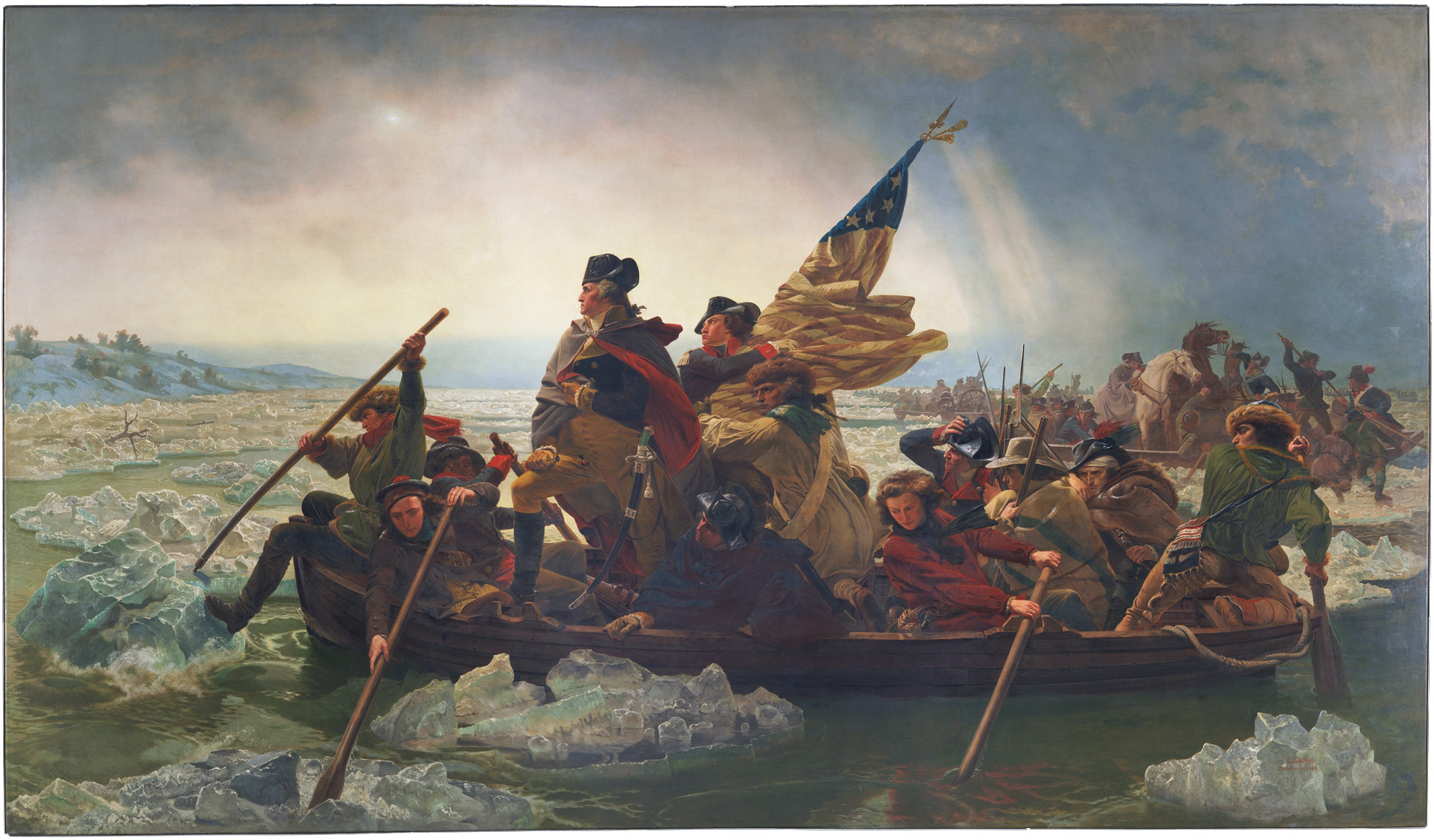
In Emanuel Leutze’s iconic painting of Washington Crossing the Delaware, James Monroe is depicted standing next to George Washington, holding high an American flag. Though Leutze took several artistic liberties—Monroe and Washington didn’t share a boat, and the flag Monroe hoists in the painting would not be designed for another decade—Monroe did indeed serve with distinction in the Revolutionary War. He survived a serious wound at the Battle of Trenton in 1776 and earned commendations for his bravery. Monroe’s legacy, however, owes less to his military exploits during the Revolution than to his role steering the early republic after the battles had been won.
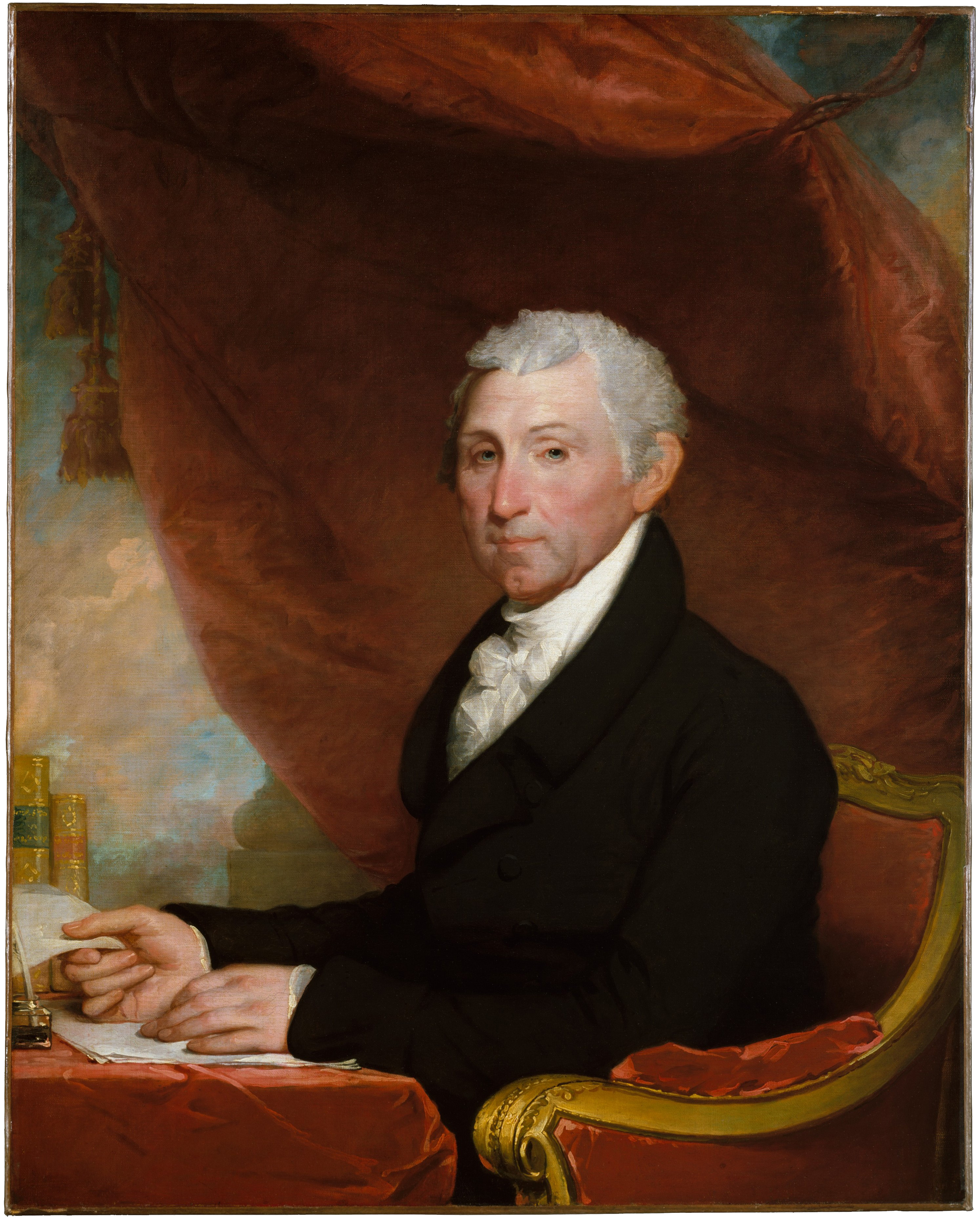
Born in 1758, and coming of age under the direct tutelage of Thomas Jefferson and James Madison, Monroe was an important bridge between the Founding generation and the post-independence era. If the Revolution secured American independence, Monroe helped secure its durability. His efforts underscore that the hardest work of leadership often comes after victory—when ideals must be translated into institutions, unity must be preserved without an obvious enemy, and a fragile republic must be steadied for the long haul.
Monroe’s rapid ascent reflected not only his ambition, but a country learning how to govern itself. By twenty-five, Monroe sat in the Virginia House of Delegates; by twenty-seven, he was a delegate to the Congress of the Confederation; by thirty-two, a United States senator. It would take him until the age of forty-one to become governor of Virginia, which he did twice, his terms bookending diplomatic service as the United States’ minister to France and then to the United Kingdom. Additional stints as secretary of war and secretary of state followed before Monroe was elected the nation’s fifth president in 1816.
The so-called “Era of Good Feelings” Monroe ushered in posed its own test. The decline of the Federalist Party had left Monroe’s Democratic-Republicans dominant, producing a period of relative national unity; when Monroe stood for reelection in 1820, he swept every state in the Union. But governing without a robust opposition required restraint and vigilance, as well as a steady hand to balance individual liberty with collective strength.
“Monroe helped secure its durability.”
Perhaps nowhere was the challenge of post-revolutionary leadership more fraught than with the issue of slavery. Monroe had helped negotiate the Louisiana Purchase from France—doubling the size of the United States. Expansion, however, magnified a problem independence had left unresolved. When Missouri became the first state from the Louisiana Territory to petition to join the union, the question of whether to allow slavery into the new territories threatened to upset the delicate sectional balance between free and slave states and potentially sunder the infant nation. By admitting both Missouri and Maine into the union—one slave, one free—the Missouri Compromise of 1820 shelved the dispute long enough to buy time for the fragile nation.
Even with many of the Framers still living, the United States under Monroe grappled with how to apply the blueprint of the Constitution to the evolving needs of the nation. Projects such as the Cumberland Road—the country’s first-federally funded highway—promised to bind the republic together by facilitating westward expansion and economic integration yet also surfaced unresolved questions about the scope of federal power. Believing that Congress lacked the authority to administer and regulate infrastructure like the Cumberland, Monroe vetoed legislation authorizing the federal collection of tolls, before changing his mind and approving such a system. A similar tension emerged in the aftermath of the Panic of 1819, the nation’s first major financial crisis, when Monroe—despite public anger and lingering unease over Congress’s power to charter a national bank—supported the stabilizing role of the Second Bank of the United States. Many of the nation’s landmark Supreme Court cases were decided during this period.
It was in the United States’ relations with foreign powers, however, that Monroe left his greatest mark. Having helped to purchase Louisiana from the French, the nationalistic Monroe—and his similarly nationalistic secretary of state, John Quincy Adams—exploited the outbreak of revolution in Spain’s Latin American colonies to acquire Florida from the Spanish. In 1823, Monroe went further, declaring the Western Hemisphere off-limits to European colonization and asserting the United States as protector of the Americas. It would be decades before the United States was militarily strong enough to enforce this so-called Monroe Doctrine. Still, it became a cornerstone of United States foreign policy, reflecting Monroe’s vision of a confident nation and anticipating America’s rise as a global power.
Even as he warned European powers to keep their armies out, Monroe readily imported the cultural trappings of the Old World. Influenced by his diplomatic service in France, and his lifelong friendship with the Marquis de Lafayette, a Revolutionary comrade-in-arms, Monroe introduced an elegant French flair to the presidential residence. That included commissioning pieces like the gilded Bellangé furniture—still in use today—to enhance the young nation’s prestige and project a more refined, cosmopolitan America.
Monroe likewise collaborated with White House architect James Hoban, an Irish-born designer with a penchant for European-inspired architecture, to add the iconic South Portico to the White House. Inspired by French chateaux and neoclassical ideals, the South Portico enhanced the building’s grandeur, aligning it with the dignified residences of European capitals. Its graceful columns and commanding presence have made it one of the most universally recognized elements of American government, elevating the building from a functional residence to a symbol of national pride and power.
Monroe also became a model of generational leadership—absorbing wisdom from those who came before, applying it with steady pragmatism during times of transition, and then empowering successors to chart a confident course forward. His trust in John Quincy Adams as Secretary of State not only produced the Monroe Doctrine, but groomed Adams for the presidency, where he carried forward nationalist and hemispheric visions. Similarly, Monroe’s decisions during the Seminole conflicts and Florida acquisition elevated Andrew Jackson’s profile, strengthened executive authority in foreign affairs, and set precedents for presidential action that Jackson would later expand dramatically. The Doctrine itself echoed through decades, invoked by Polk for westward expansion, adapted by later leaders like Theodore Roosevelt to justify intervention abroad, and cited as a guiding principle of American independence in the hemisphere.
Though more understated than his more famous Virginian predecessors, Monroe was the youthful architect of a nation destined for greatness. His presidency was a high-water mark of unity and quiet confidence, carrying the revolutionary spirit onward while preparing the nation for its bolder future.
“Monroe was the youthful architect of a nation destined for greatness.”
After a lifetime of public service and financial hardship, Monroe died penniless in New York City on July 4, 1831—the 55th anniversary of independence. Yet his legacy endures not merely in a portico’s columns, but in the strengthened presidency, the independent foreign policy course he charted, and the example of generational continuity he embodied—ensuring the republic’s ideals would outlast any single leader.
As a strong believer in the presidential historic sites scattered across the country, I find special value in those dedicated to Monroe in Virginia. In Fredericksburg, the James Monroe Museum and Memorial Library—built on the site of his original law office and holding the nation’s largest collection of his artifacts and documents—serves as a vital educational hub, preserving his story through exhibits, programs, and research and inspiring visitors with his contributions to the early republic. Nearby in Charlottesville, Highland, Monroe’s longtime estate, interprets his public career, family life, and the realities of slavery on the property, offering tours and events that bring his era to life and connect it to broader American history. These sites, like so many presidential homes and museums, powerfully carry forward Monroe’s legacy by educating new generations.
Having visited Monroe’s final resting place in Richmond’s Hollywood Cemetery, I can attest to the distinction and dignity of his tomb—known as “The Birdcage,” a striking Gothic Revival granite sarcophagus encased in ornate cast-iron, overlooking the James River in Presidents Circle. It stands as a fitting memorial, humble yet commanding, honoring a leader whose quiet pragmatism helped secure the young nation’s future.

Check out the lesson on Substack to be part of the discussion. Share your views, respond to others, and help deepen our understanding.
View on Substack