John Tyler was the first president to assume the office because of the death of the incumbent. When President William Henry Harrison died on April 4, 1841, after only one month in office, Tyler was not even in Washington. Two messengers were dispatched to Tyler’s home in Williamsburg, Virginia with orders to bring him back to the nation’s capital at once. Traveling by boat and train, Tyler arrived in Washington on the morning of April 6, took a suite at Brown’s Hotel, and prepared to begin his administration.
Though Harrison’s famed campaign slogan—“Tippecanoe and Tyler Too”—framed the vice president almost as an afterthought, Tyler had in fact been preparing for such a moment his entire life. He had been a stellar student at the College of William and Mary, graduating with honors. Elected to the Virginia legislature at the age of twenty-one, he launched an impressive political career in which he served as governor, congressman, U.S. senator, and vice president. He had faced many hard-fought elections and challenging policy debates. He was therefore unafraid of what awaited him on that early spring day when he prepared to take the Oath of Office.
But he didn’t take the administration of that oath for granted. Tyler’s first move was to summon the four members of Harrison’s cabinet who were presently in the city for a noon meeting at the hotel. When they arrived, the new president took the Oath of Office, which was administered by a Washington judge. Article II, Section 1, paragraph 6 of the U.S. Constitution states, “In Case of the Removal of the President from Office, or of his Death, Resignation, or Inability to discharge the Powers and Duties of the said Office, the Same shall devolve on the Vice President.” Left unclear was whether this statement meant the “powers and duties” of the presidency devolved on the vice president or “the said office” itself devolved on the president, or whether there was even any difference. Tyler made no such distinction. He interpreted the Constitution to mean that he had inherited the office of president once Harrison had died, which, of course, meant that he could now exercise the powers and assume the duties of the presidency. In other words, he would not be acting president, but the president. He recognized that taking the oath solidified his position.
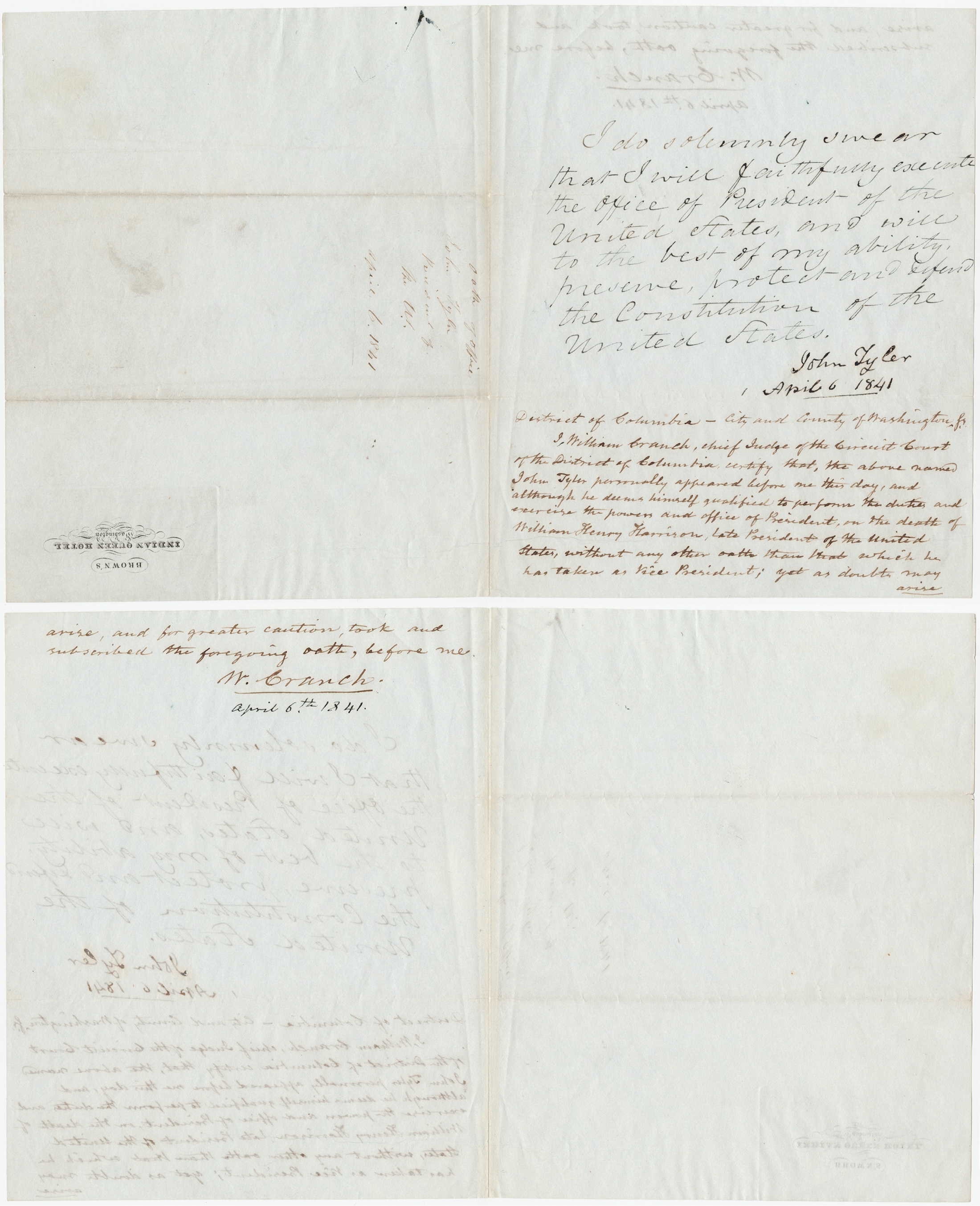
John Tyler made history on April 6, 1841. And even though his situation was and will always be unprecedented, he also left us with a lesson worth preserving for future generations: ambiguity demands decisive leadership.
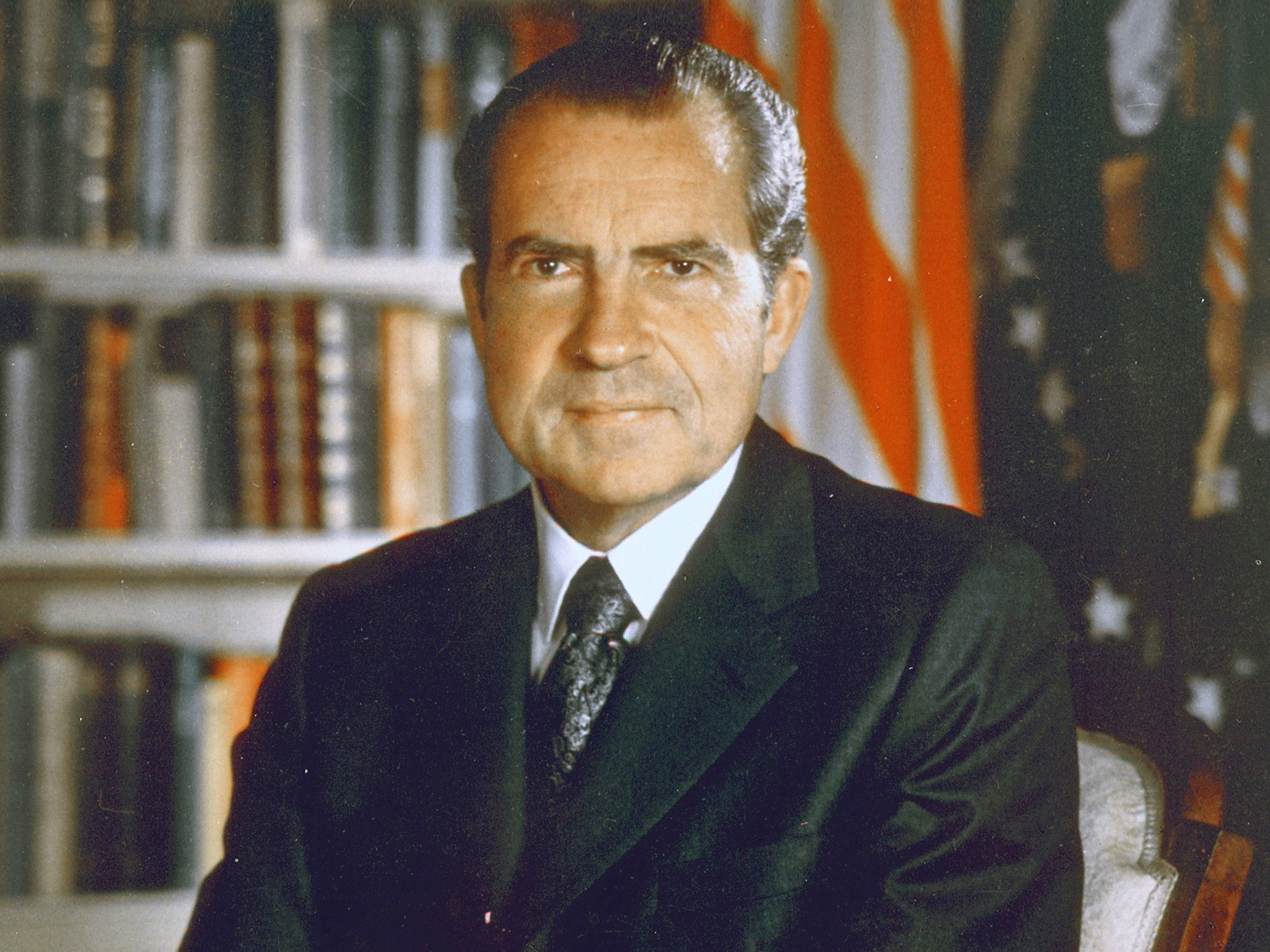
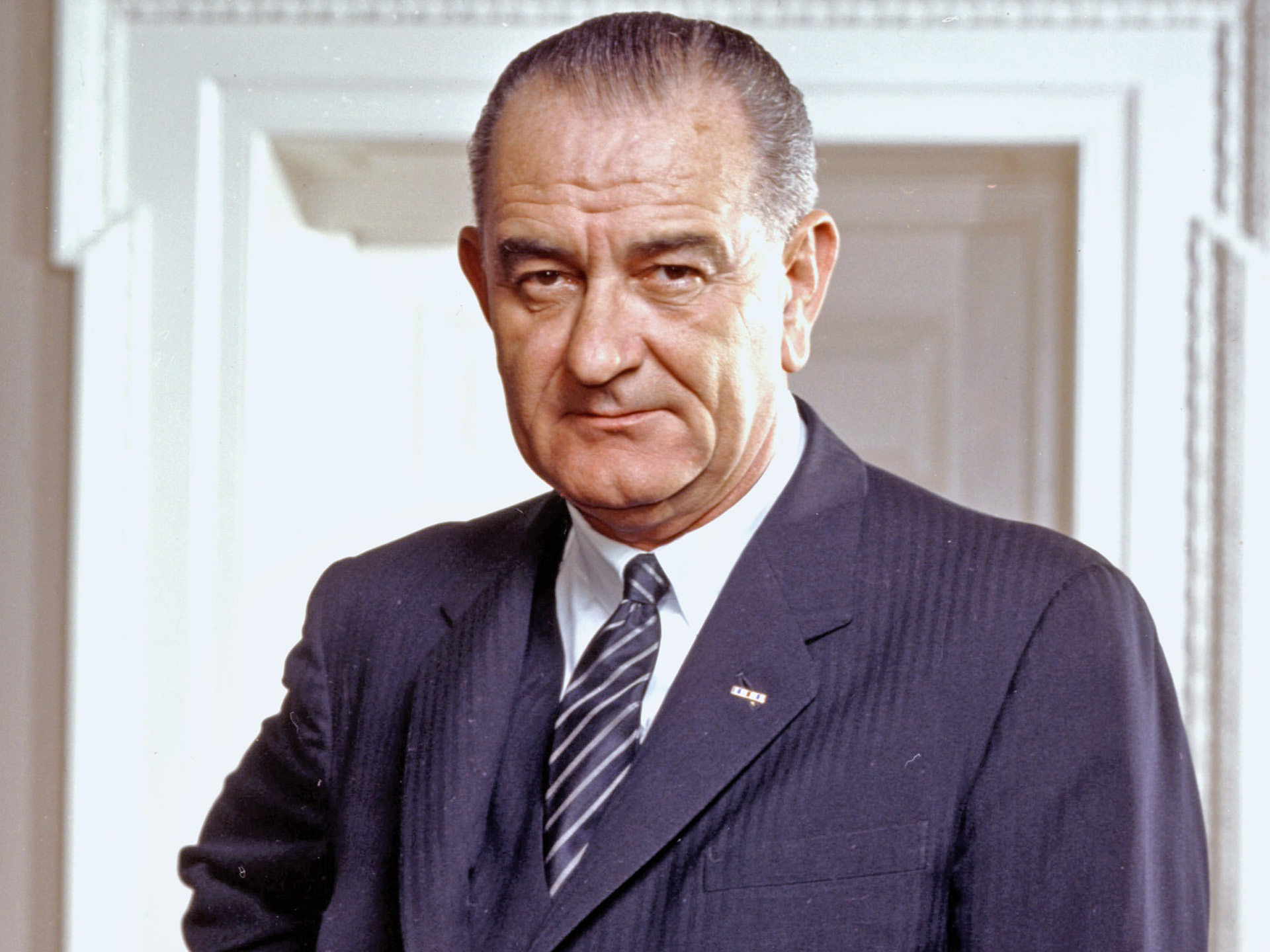
In other words, his forceful independence allowed him to interpret the Constitution in a way that strengthened his position as president. His assertiveness also prevented a possible constitutional crisis that could have undermined his authority and clogged the wheels of government. What people later referred to as the “Tyler precedent” of taking the oath and fully assuming the office of the president became the commonly accepted practice from this point forward. Subsequent vice presidents who succeeded to the presidency upon the death of the chief executive—Millard Fillmore, Andrew Johnson, Chester Arthur, Theodore Roosevelt, Calvin Coolidge, Harry Truman, and Lyndon Johnson—all followed Tyler’s lead. The Twenty-Fifth Amendment to the Constitution in 1967 that settled the issue once and for all was just following the precedent Tyler established in the parlor of Brown’s Hotel more than a century earlier.
But Tyler's view wasn’t shared by everyone. Many in Washington and beyond doubted that he was anything more than a custodian of the late Harrison’s vision. Some derided him as “His Accidency.” John Quincy Adams, a former president and now Massachusetts congressman turned enemy of Tyler, insisted on referring to him as “acting” president and never acknowledged that taking the oath granted him the legitimacy to assume the office. Another soon-to-be political enemy, Senator Henry Clay of Kentucky, argued that Tyler should continue to view himself as vice president and that he must simply carry out the policies of the Harrison administration. The issue of his proper title irritated Tyler.
But Tyler stuck with it. He believed he had earned the right to be addressed as “President Tyler,” and made a point of promptly returning—unopened—mail he received addressed to the “acting President” or “Vice President” Tyler.
He did all this despite a threat to his legitimacy from his own cabinet, all Harrison appointees. He told the four men who met with him at noon on April 6 that he wished to retain them all. He praised them for their service to the country and stated that he would need their help to keep the government functioning smoothly. Yet Secretary of State Daniel Webster, the most formidable member of the cabinet, informed the new president that decisions under Harrison had been made by majority vote—with the president holding but one of the votes. According to Webster, then, the executive branch of the government had functioned by committee.
When Webster brought this up, Tyler shook his head and abruptly cut him off. “I am the President,” he stated sharply, “and I shall be held responsible for my administration.” Looking at the cabinet members who stood before him that morning, he told them that he would welcome their advice and would rely on their expertise, but that he would never consent to granting them any decision-making power. Tyler ended the discussion by informing them that he would accept their resignations if they could not work under this arrangement. Not one of them offered.
“I am the President, and I shall be held responsible for my administration.”
- John Tyler
Tyler’s forceful response to Webster’s attempt to undermine his authority left no doubt as to who was in charge. The new president had made clear to the cabinet that he would not accept the arrangement that had been in effect during Harrison’s short term in office. Webster may have been surprised by Tyler’s assertiveness, but he fell quickly in line and made up his mind that he could work with the new president. His fellow cabinet members agreed.
Yet Tyler couldn’t contain for long the underlying risk of a cabinet chosen for political reasons and more loyal to his predecessor than to him. When Tyler began to implement his agenda, most notably by vetoing two bills that would have created a national bank, the entire cabinet—except Webster—resigned. The Whig Party to which Tyler belonged formally drummed him out of their ranks. Before long, Tyler found himself a “President Without a Party.”
Even worse, he later became a president without a country. When civil war loomed, Tyler helped drive Virginia’s secession, renounced his citizenship, and was elected to the Confederate Congress. He died in 1862, with the unenviable distinction of being the only former U.S. president not to be a citizen of the nation he’d once led.
Still, Tyler’s lack of hesitation when the presidency was thrust upon him remains one of the most consequential and underrated decisions of any commander-in-chief before or since. It not only helped ensure that our constitutional republic would endure despite President Harrison’s untimely death, but also set a decisive tone for all Presidents thereafter. Tyler’s actions remind us how essential strong leadership is to the success, indeed the survival, of our democracy. More broadly, he demonstrated how confidence in oneself—and a willingness to chart one’s own course when called upon by circumstance—are essential in times of volatility.
“Tyler's lack of hesitation...remains one of the most consequential and underrated decisions of any commander-in-chief.”
Check out the lesson on Substack to be part of the discussion. Share your views, respond to others, and help deepen our understanding.
View on Substack