James Madison is often described as the Father of the Constitution. Yet it is hard to make any individual the father of a document that took months to write, with multiple framers and several important committees contributing to its composition. Nor would Madison have thought of himself as the main author of the Constitution. The Federal Convention rejected several of the proposals he worked hardest to attain. Some of its key decisions sorely disappointed him, especially the narrow vote to give each state equal weight in the Senate. Madison knew how different the constitution-makers of the American revolutionary era were from the heroic individual lawgivers of antiquity: Solon of Athens, Lycurgus of Sparta, even (perhaps) Moses of Sinai.
Yet it is also true that no one played a more important role than Madison in facilitating and securing the adoption of the Constitution. He was involved in nearly every aspect of developing a national constitution, beginning with the steps that led to the ratification of the Articles of Confederation in 1781 and later efforts to amend it. He was one of the dozen commissioners who attended the futile Annapolis Convention of 1786, and the one who worked hardest to implement its recommendation that a general convention to revise the Confederation should assemble at Philadelphia in May 1787. His intellectual preparations deeply shaped the Virginia Plan that Governor Edmund Randolph introduced when the Convention opened and which set the framework for its deliberations.
Drawing on his experience in the Continental Congress and the Virginia assembly, Madison concluded that the federal union could no longer rely upon the state legislatures to implement its decisions. The Virginia Plan accordingly proposed the formation of a new government that could enact, execute, and adjudicate its own laws, which would thus require establishing an independent legislature, executive, and judiciary. Madison also thought deeply about how the Constitution, once drafted, would be ratified. After eleven states had done so by July 1788, he took the dominant role in ensuring that the First Congress would consider the amendments that the state conventions had proposed. Without his forceful leadership, the Bill of Rights might never have been added to the Constitution.
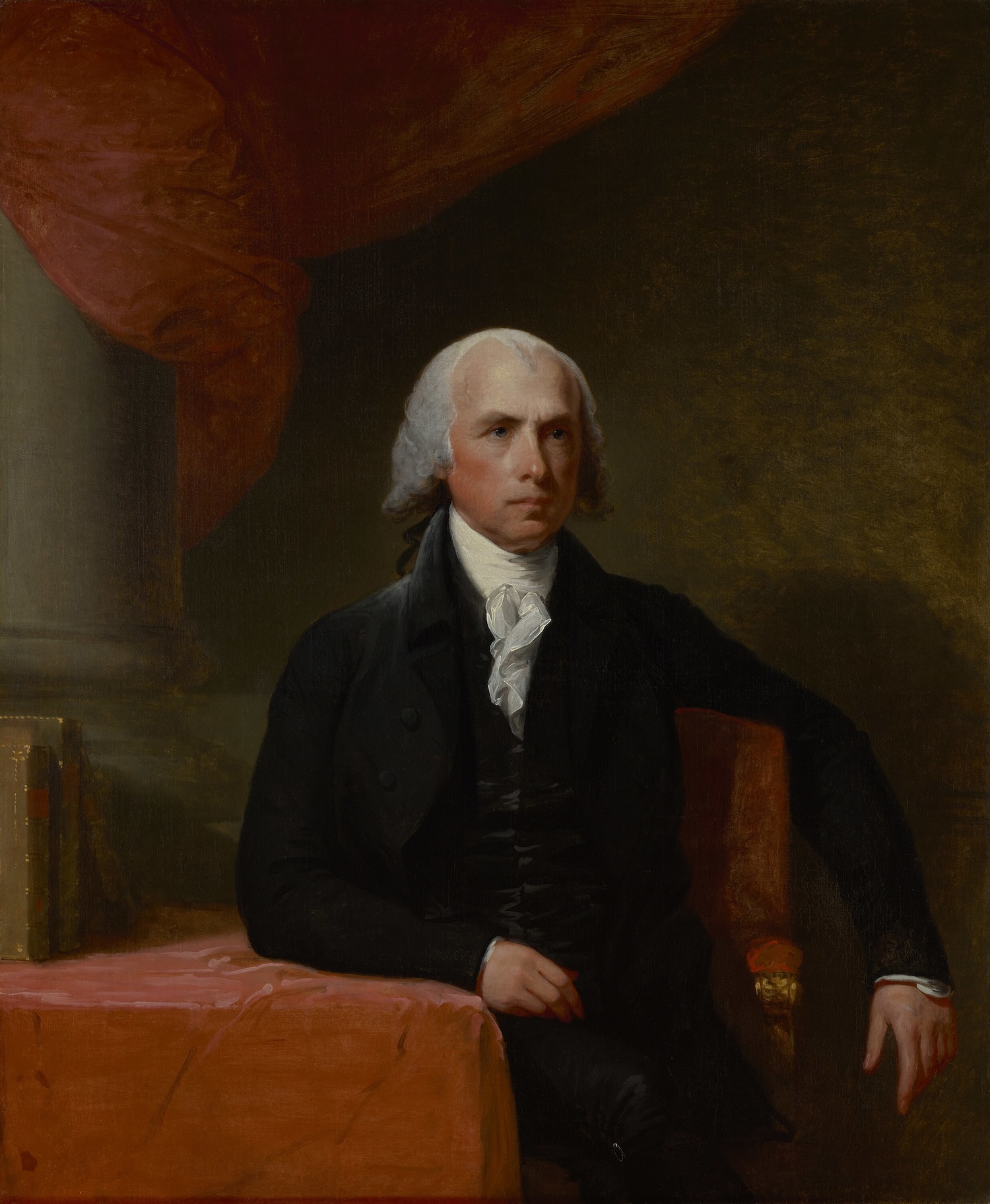
Rather than thinking of Madison as the father of the Constitution or even its main author, then, it is far more useful to regard him as the leading strategist of constitutional reform. His genius lay in recognizing that it was less important to design a perfect model of government than to ensure that the American people would agree that the entire process of adopting a new constitution had been properly conducted. That central insight—process over perfection—guided the Federalist supporters of the Constitution during the eleven months needed to secure its ratification.
Four main points demonstrate how Madison, as a genuine pioneer of constitutional statesmanship, sought to shape a process that the American people would deem legitimate.
First, Madison learned crucial lessons from his sustained service in the Continental Congress and the Virginia House of Delegates. That experience made him a keen observer of how deliberative bodies functioned and, more to the point, the advantages that a skillful and well-prepared leader could gain by shaping the agenda of debate. With the other delegations arriving late to Philadelphia, the timely Virginians and the host Pennsylvanians took the opportunity to present as ambitious a proposal for a new national government as anyone could have imagined.
“No one played a more important role than Madison in facilitating and securing the adoption of the Constitution.”
Second, Madison became preoccupied with the need to find a clear method for distinguishing the status of ordinary statutes from the supremacy of a written constitution. Because one legislature could not bind its successors, a constitution ratified in that way could be violated or even revoked by a later meeting of the same body. To make the proposed Constitution the “supreme law of the land,” therefore, its ratification had to rest upon a clear and unequivocal affirmation by “we the people” themselves, through specially organized conventions serving for that sole purpose. And the people’s delegates, once assembled, could say only one of two words—either “yes” or “no”—to the whole Constitution. The state conventions could freely recommend amendments for future consideration. But they could not make their vote contingent on their prior approval.
Third, Madison realized that it was essential to prevent ongoing rounds of discussion from introducing new complications in the text of the Constitution. Madison’s colleague and friend Edmund Randolph was one of three delegates who refused to sign the Constitution on September 17, 1787, believing that a second convention should be held to take into account the results of the popular debate that was about to begin. Madison thought, correctly, that such a step could become a political disaster. The fact that no prior plan of a constitution had been circulating before the Virginia Plan was drafted had proved a great advantage to the Convention. If a second convention were held, many of the delegations could well return to Philadelphia encumbered with explicit instructions on potentially controversial matters. The public debate over ratification had to be open so that competing views and sensible criticisms could be aired and discussed. But at some point, and sooner rather than later, it would have to end. Randolph’s pet proposal for a second convention could produce the opposite result.
Fourth, to achieve a political consensus across the citizenry as a whole, Madison strove to accommodate the reasonable demands of the Constitution’s well-meaning if somewhat misguided opponents, the Anti-Federalists—but without jeopardizing crucial points that the framers had worked hard to achieve. That was why Madison toiled, in the spring of 1789, to winnow all the amendments that the state conventions had proposed into a tidy list limited primarily to the protection of rights. Madison himself remained unconvinced that the addition of a bill of rights was necessary. He worried about what would happen to rights that were not included and also about the problem of ensuring that the rights listed were properly defined and stated. But he saw no other way to bring the entire process of constitutional adoption to an appropriate close. Strange as it may seem to us now, the great achievement of the Bill of Rights was not to secure the liberties of the people by constitutional amendment. Only in the twentieth century did the Bill of Rights gain an important place in our constitutional jurisprudence. Its still greater achievement was that, after 1789, both Federalists and Anti-Federalists agreed that the Constitution was legitimately the supreme law of the land.

Madison’s skillful shepherding of ratification, through the remarkable deliberations of 1787-1789, yielded a political experiment unprecedented in nature and scope: the creation of the American constitutional republic. The lessons of this period are all the more impressive if one considers how daunting a prospect any serious effort at constitutional reform would face today. Our current constitutional system is in crisis; by some measures, it is actually failing. Trying to imagine how it could be reformed now staggers our political imagination.
Here, too, Madison offers one final insight. In Federalist 49, he reminded his readers what a difficult task creating a constitution could be. Americans should recall, he wrote, how many favorable factors had been in play when the revolutionaries of 1776 began writing new state constitutions as they were declaring independence from Britain. They could not confidently expect such a fortunate situation to prevail later. These “experiments are of too ticklish a nature to be unnecessarily multiplied,” he warned. At a moment when our Constitution badly needs strengthening or even revision, Madison’s warning underscores how lucky our young nation was to have such a masterful constitutional strategist at the helm—and how desperately those talents are still needed.

Check out the lesson on Substack to be part of the discussion. Share your views, respond to others, and help deepen our understanding.
View on Substack