Lesson #
12
• FROM
Martin Van Buren
Martin Van Buren is known more for his nicknames—the Little Magician, the Red Fox, Old Kinderhook—than for his political acumen. Yet the diminutive Dutchman should be remembered not just as the 8th president of the United States, but as one of the originators of the Democratic Party who contributed mightily to the creation and acceptance of a two-party political system.
Only three decades removed from George Washington’s farewell warning against the “baneful effects of the spirit of party,” Van Buren’s leadership helped the country come to view politics and political parties not as a dangerous vehicle to incite the populace but as a system that could bridge divides and unify the nation. He demonstrated that strong coalitions could manage conflict—at least for a while—but not ultimately prevent it.
Van Buren was born in 1782, into a Dutch family whose American roots traced back to their 1631 arrival in New Amsterdam (present-day New York City). Despite being the only American president whose native language was not English, Van Buren developed into a persuasive, if not entirely eloquent, speaker. Growing up around his family’s inn, Van Buren became comfortable engaging with New Yorkers of various ethnicities, classes, and occupations. His ability to interact with a wide range of people—and find commonalities despite their differences—was an early education in building the alliances and partnerships that would advance his future political aspirations.
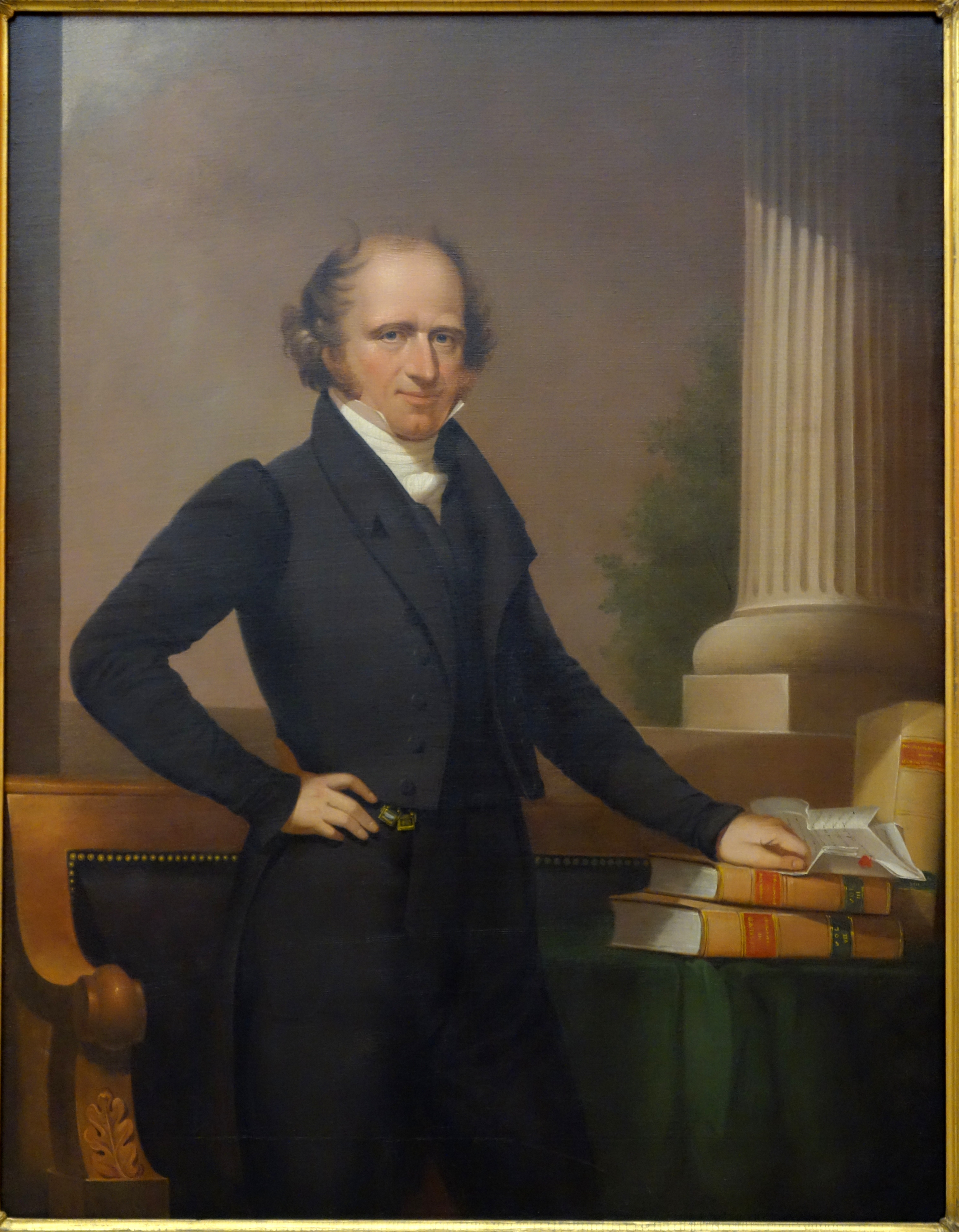
Van Buren’s pathway to politics began via a legal career, first in Kinderhook and then in New York City. Ambitious and politically astute, he shifted his initial allegiance from the weakening faction led by Aaron Burr to the one headed by Governor DeWitt Clinton. With Clinton’s support, Van Buren won election to the New York State Senate, became New York Attorney General, and created a political machine—one of America’s first—nicknamed the “Albany Regency.”
It was in Albany, the state capital, where Van Buren honed the tactics that would lead him to national prominence. From upstate down to New York City, he knit together a loyal network of small farmers, local political leaders, and Dutch elites whom he held together using the power of patronage and the press. A key to Van Buren’s success was championing the expansion of the vote to all white male New Yorkers, a small-d democratic move that had the added benefit of increasing his base of support.
Van Buren entered national politics in 1821, first as a U.S. senator from New York and then, briefly, as governor of the state. Politically, the period from the mid-1820s through the mid-1830s was dominated by the battle for political supremacy between John Quincy Adams and Andrew Jackson. Van Buren identified less with Adams—whose policies he associated with the outdated and elitist Federalists—than with Jackson’s brand of democracy, responsive to a broader constituency and emphasizing more limited federal government. Even more important to Van Buren was the need for a strong two-party system shaped by national concerns rather than divisive local or regional ones. At a moment when issues such as slavery and tariffs threatened a sectional split between north and south, Van Buren hoped that robust national parties could be a centripetal force preventing the splintering of the Union.
Wielding his political machine and political savvy, Van Buren rallied support for Jackson, both during the election of 1824 that Jackson felt was stolen and during Jackson’s victorious campaign in 1828. In return for Van Buren’s support and guidance, Jackson made him Secretary of State. Van Buren served effectively in that office, helping to settle claims against France for American property seized during the Napoleonic Wars, opening greater trade access to the British West Indies, and crafting a treaty with the Ottoman Empire. He was also a steadying presence as Jackson confronted schisms and crises such as South Carolina’s attempt to “nullify” federal legislation and the unsuccessful attempt to purchase Texas from Mexico, the latter of which would haunt his political future.
“Caution, compromise, and discipline proved ill-suited to an era of economic collapse.”
Van Buren’s ability to forge alliances served him well personally during Jackson’s presidency, as illustrated by the improbably-named “Petticoat Affair.” When many of the Cabinet wives shunned Peggy Eaton, the young and supposedly “loose” bride of Jackson’s Secretary of War, Van Buren shrewdly aligned himself with the much-maligned Eaton. Jackson was disturbed by the ostracism of Eaton, which reminded him of the slanders his late wife Rachel had endured over a previous marriage. Shortly thereafter, Jackson replaced Vice President John C. Calhoun—with whom Jackson maintained a fraught relationship and whose wife was the leader of the Petticoat clique—and made Van Buren his running mate for Jackson’s triumphant reelection in 1832.

After four years as Vice President, Van Buren was elected President. Having reached the joyful apex of his decades-long quest for political supremacy, however, Van Buren’s encountered structural crises that even his vaunted coalition-building could not overcome.
His presidency quickly turned disastrous, in large part due to the actions and decisions of Jackson’s administration. When Jackson—with Van Buren’s support—effectively destroyed the Bank of the United States with a presidential veto, he severely compromised the economic underpinnings of the nation. That helped contribute to the Panic of 1837, beginning shortly after Van Buren’s inauguration, which led to a five-year depression and destroyed the financial wellbeing of thousands of Americans. Aggressive federal intervention may have mitigated the crisis, but Van Buren remained stubbornly committed to Jacksonian orthodoxy—managing to alienate working-class supporters and elites alike.
Other Jacksonian policies undermined Van Buren’s tenure as well. Much of the implementation of Jackson’s Indian Removal policy was left to Van Buren. Thousands of members of the Cherokees and Seminole nations were forcibly removed from their ancestral homelands, including 4,000 Cherokee who would die along the westward “Trail of Tears.”
Meanwhile, Van Buren’s opposition to admitting Texas into the Union as a slave state cost him much needed political support in the south. Ridiculed as “Martin Van Ruin” and “Van, Van, the used-up man,” he was defeated in 1840 by the Whig candidate and war hero, William Henry Harrison.
.jpg)
In 1848, the Little Magician attempted to pull one last electoral rabbit out of his hat. Van Buren had evolved from being anti-abolitionist to anti-slavery—not because he was in favor of Black freedom, but because he believed that slavery hurt the American economy. The newly-organized Free Soil party, a collection of anti-slavery Democrats, Whigs, and some abolitionists, nominated Van Buren as its presidential candidate. It would be his final campaign. The man who had excelled at uniting factions ever since he was a young boy at his family’s inn garnered just 10 percent of the vote. The political system he had helped birth no longer had use for him. Van Buren retired to Kinderhook, where he died in 1862.
Van Buren’s troubled presidency exposed the limits of his coalition politics. He had hoped that the modern political arena he helped create would enable politicians to prevent a nation from being torn asunder by sectional issues. For a time, he succeeded. But the skills that had made him indispensable as a party architect—caution, compromise, and discipline—proved ill-suited to an era of economic collapse and intensifying sectional conflict. Van Buren remained loyal to the alliances he had forged, even as they began to fracture under pressure that no amount of political dexterity could contain.
“Van Buren’s troubled presidency exposed the limits of his coalition politics.”
Check out the lesson on Substack to be part of the discussion. Share your views, respond to others, and help deepen our understanding.
View on Substack