Lesson #
38
• FROM
William Howard Taft
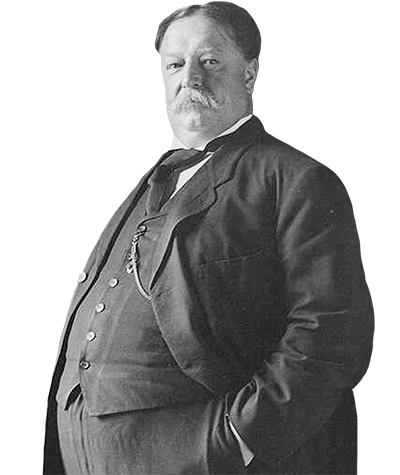
William Howard Taft holds the distinction of being the only person in the history of our Nation to have served as the head of two branches of the federal government: he was the 27th President and the 10th Chief Justice. Taft also held several other key positions in the executive and judicial branches. Yet he remains to this day the only incumbent President to have finished third in a failed bid for a second term. Indeed, the election of 1912 dealt Taft a peculiarly devastating personal blow, as the third-party candidate whose presence on the ballot ensured Taft’s defeat was his erstwhile friend and patron, former President Theodore Roosevelt.
While other defeated incumbent Presidents have gone on to render further distinguished service to the country – John Quincy Adams, for example, went on to serve almost two decades in the House of Representatives – none has had a second act as significant as Taft. Drawing on a deep reservoir of optimism, an abiding faith in the correctness of his core principles, a lifelong commitment to public service, and a steadfast devotion to the Constitution, Taft left the White House with his head held high. After the death of Chief Justice Edward Douglass White – whom Taft had appointed – Taft finally captured what had been his dream job all along. As Chief Justice of the United States, he embarked on a series of ambitious projects that enhanced the authority and prestige of the Court and the Branch. Despite a relatively short tenure of less than nine years, Taft became one of the most consequential Chief Justices in our Nation’s history.
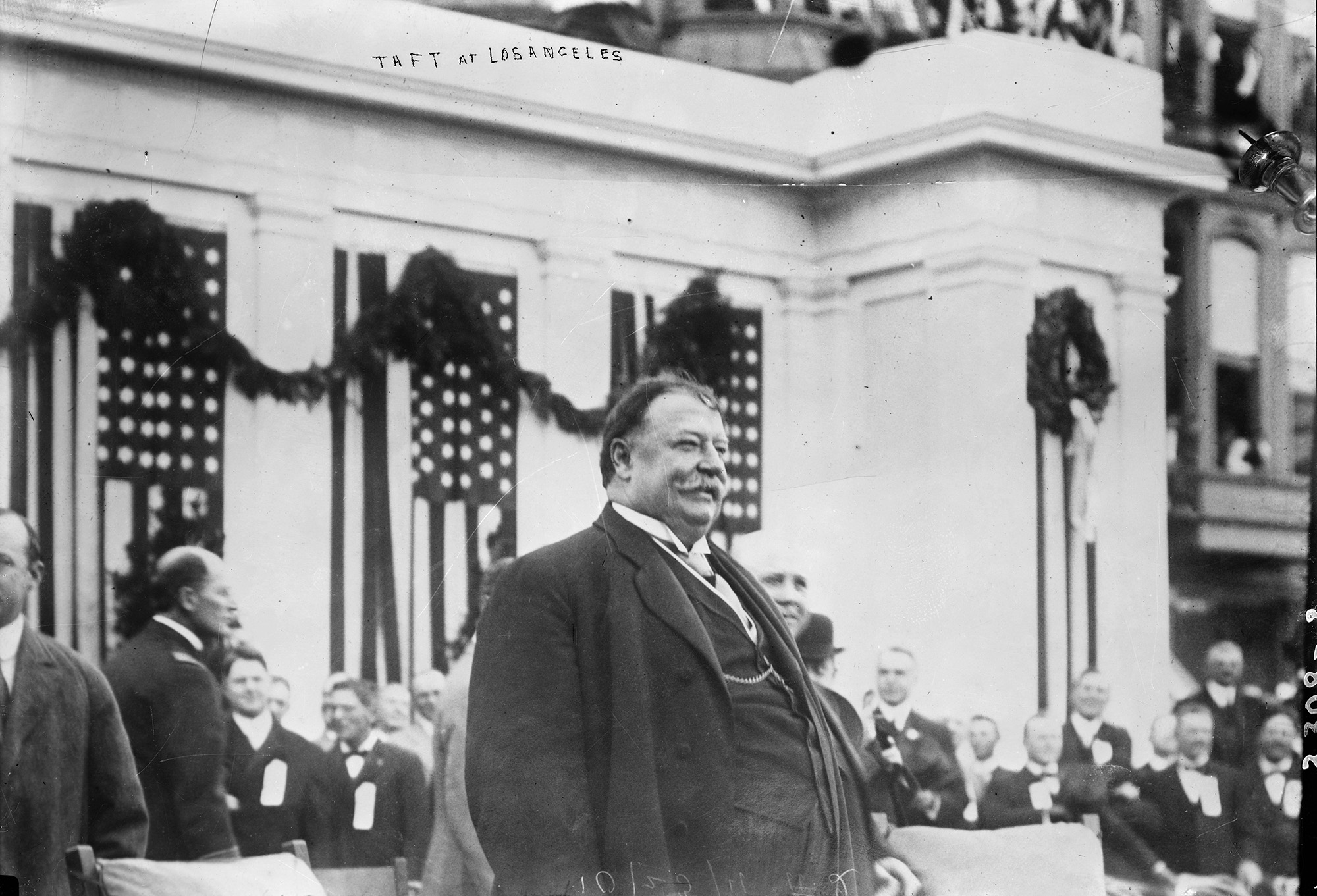
Born into a prominent Ohio family, Taft enjoyed a string of almost immediate professional successes. By the age of 29, he had secured appointment to a state trial court position once held by his father. Two years later, President Benjamin Harrison tapped Taft to argue the Government’s cases before the Supreme Court as the Nation’s youngest U.S. Solicitor General – a record that stands today. Taft won 15 of the 18 cases he argued in that role before returning to Cincinnati to take a newly-created seat on the Sixth Circuit Court of Appeals.
At the turn of the century, Taft commenced a series of important Executive Branch positions, including Governor-General of the Philippines and Secretary of War. President Roosevelt held Taft in the highest regard, offering him a seat on the Supreme Court on three separate occasions, in 1901, 1903, and 1906. Commenting on Taft’s versatility as a potential President or Supreme Court Justice, one observer lamented that it was “impossible, under the Constitution and laws, to cut Mr. Taft in two.”
Taft himself felt deeply divided. He had long wanted a seat on the Court. Yet he recognized the clear path to the White House that appeared to be his for the taking. Roosevelt left the choice to Taft. When Taft chose to pursue the Presidency, Roosevelt extended a full-throated endorsement and celebrated Taft’s comfortable victory. As Taft assumed the Office, he appeared destined to continue his remarkable string of success in increasingly higher offices.
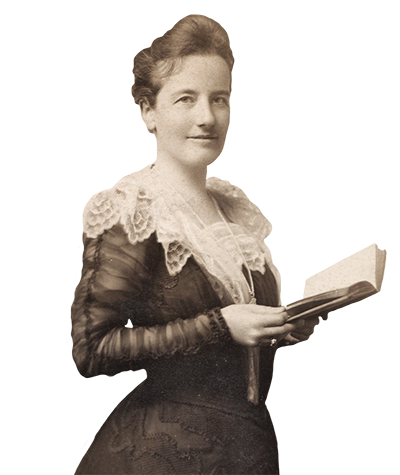
But it was not to be. The Presidency brought both personal and professional disappointment for Taft. Less than three months into his term, Taft’s beloved wife Nellie suffered a major stroke from which she never fully recovered. Nellie’s illness and the stress of the office took their toll on the President’s own health, as he added seventy-five pounds to his already substantial frame. On the job, instead of excelling as he always had, Taft’s performance as President has been judged by historians to have been decidedly mediocre.
That assessment may undersell Taft’s accomplishments. He continued and entrenched Roosevelt’s progressive policies, as he had pledged to do. In fact, Taft pursued more antitrust prosecutions than Roosevelt and set aside almost as much public land for recreational and conservation uses. Steady competence, self-restraint, and respect for the other branches were the hallmarks of the Taft Administration. In Taft’s own words, “I represent a cause, and the cause is that of progress of the people in pursuit of happiness under constitutional government.”
“I represent a cause, and the cause is that of progress of the people in pursuit of happiness under constitutional government.”
- William Howard Taft
Perhaps style more than substance accounts for Taft’s modest ranking. His greatest misfortune was to succeed a President so larger-than-life that he won a place on Mount Rushmore. Taft operated within the system, acting only where he found authorization under the Constitution. Roosevelt, by contrast, saw himself as a direct representative of the people, pushing ahead where he sensed a mandate, even if his actions bumped up against or maybe even beyond the powers of the Executive under the Constitution.
As Taft’s first term came to a close, the tension between Taft and Roosevelt grew into open enmity. Roosevelt viewed Taft as weak; Taft saw Roosevelt as dangerous. When the GOP nominated Taft for a second term after a contentious convention, Roosevelt mounted a third-party challenge. Taft and Roosevelt divided the Republican vote, leading to an easy win for Woodrow Wilson. Taft carried only two States with eight electoral votes – to this day the poorest showing ever by an incumbent President.
True to form, Taft took defeat in stride. Decamping to Yale Law School, he lost the weight he had gained as President, gave lectures, wrote books, and enjoyed his family. He reconciled with Roosevelt shortly before the Colonel’s death. As always, the Constitution remained central to his work – most prominently in his book, Popular Government, which offered a defense of presidential self-restraint and a critique of excessive use of executive muscle as an end run around the Constitutional design.
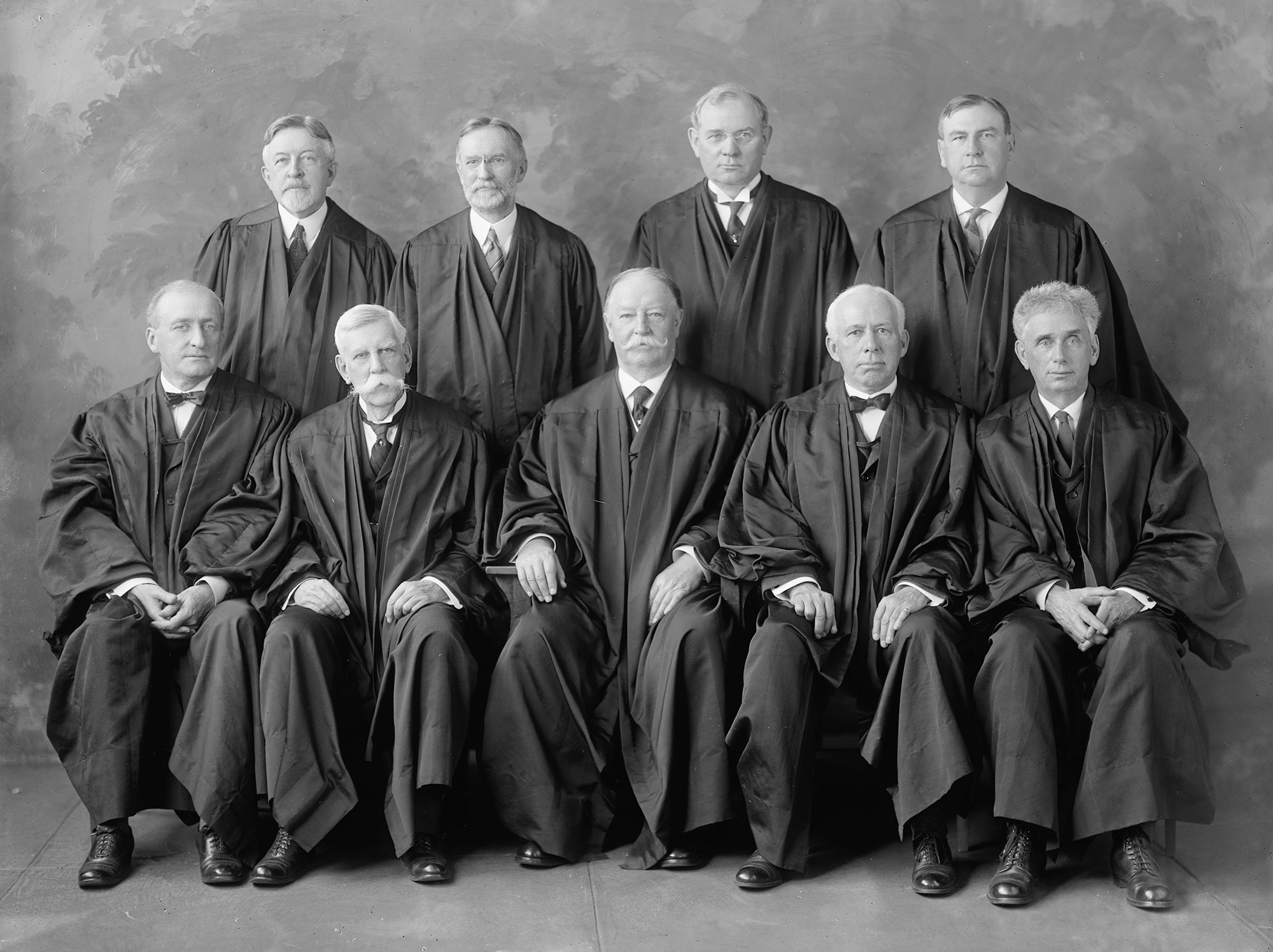
At age 63, Taft ascended to the position for which he was most suited by ability and temperament. Chief Justice Taft achieved the success that eluded President Taft. To be sure, Taft opinions are few and far between in modern constitutional law casebooks. A notable exception is Myers v. United States, which upheld a President’s power to remove executive branch officials. But as an administrator, Taft made landmark contributions to the Supreme Court and the federal judiciary more generally, escorting it into modern times and ensuring its effectiveness as a co-equal branch under the Constitution.
In 1922, Taft created the Conference of Chief Judges, the precursor to Judicial Conference of the United States, which serves as the policymaking body for an integrated, coordinated federal judiciary. Taft convinced Congress to pass the Judiciary Act of 1925, which gave the Supreme Court control over its own docket. For the first time, the Court could focus its full attention on the cases of national importance and decline jurisdiction over inconsequential matters that had consumed the Court’s limited resources. Finally, leveraging his contacts on Capitol Hill and his standing as a former President, Taft obtained the appropriation that enabled the Court to move from the basement of the Capitol to its own majestic building. Although he did not live to see the building opened in 1935, his photograph was fittingly placed in the cornerstone. The building stands today as a symbol of the Court’s status as an independent branch of government and the Nation’s commitment to the Constitution and the ideal of equal justice under law.
Taft’s leadership set the Court on a new trajectory. The enhanced prestige of the Court contributed to the ability of future Chief Justices to stave off challenges to its authority, such as the court packing plan and resistance to its landmark civil rights rulings. And the Conference expanded the role of the Chief Justice as the head of an independent branch of government, enabling the judiciary to more effectively attend to the duties assigned to it under the Constitution.
Taft’s satisfaction in leading the High Court matched his productivity. In 1925, he remarked, “I don’t remember I ever was President.” In a lifetime of public service marked by great successes and deep disappointments, Taft never changed. His touchstone was fidelity to the Constitution, with each branch staying in its lane. Exceptionally gifted as an administrator, though less talented as an orator, Taft kept his poise and unshakeable devotion to duty and country after a historically lopsided repudiation of his Presidency. Coping with defeat through resiliency rather than self-pity, Taft was ready when once again called upon to serve our Nation, becoming one of its great Chief Justices.
“His touchstone was fidelity to the Constitution, with each branch staying in its lane.”
- Chief Justice John Roberts
Check out the lesson on Substack to be part of the discussion. Share your views, respond to others, and help deepen our understanding.
View on Substack