Lesson #
33
• FROM
Caroline Harrison
It is fitting that as we celebrate America’s 250th birthday, we shine a new light on a first lady whose significant achievements, contributions, and legacy have been overlooked by history – Caroline Scott Harrison. During her short term as first lady, Carrie – as she was called – followed her own path. She advocated for women’s issues, the preservation of the history of the White House and our country, White House restoration and functionality, and the importance of art in society. As first lady she was responsible for many “firsts.” But rather than seeking immediate visibility or popularity, Caroline Harrison focused on something more enduring: preserving the nation’s cultural and institutional inheritance.
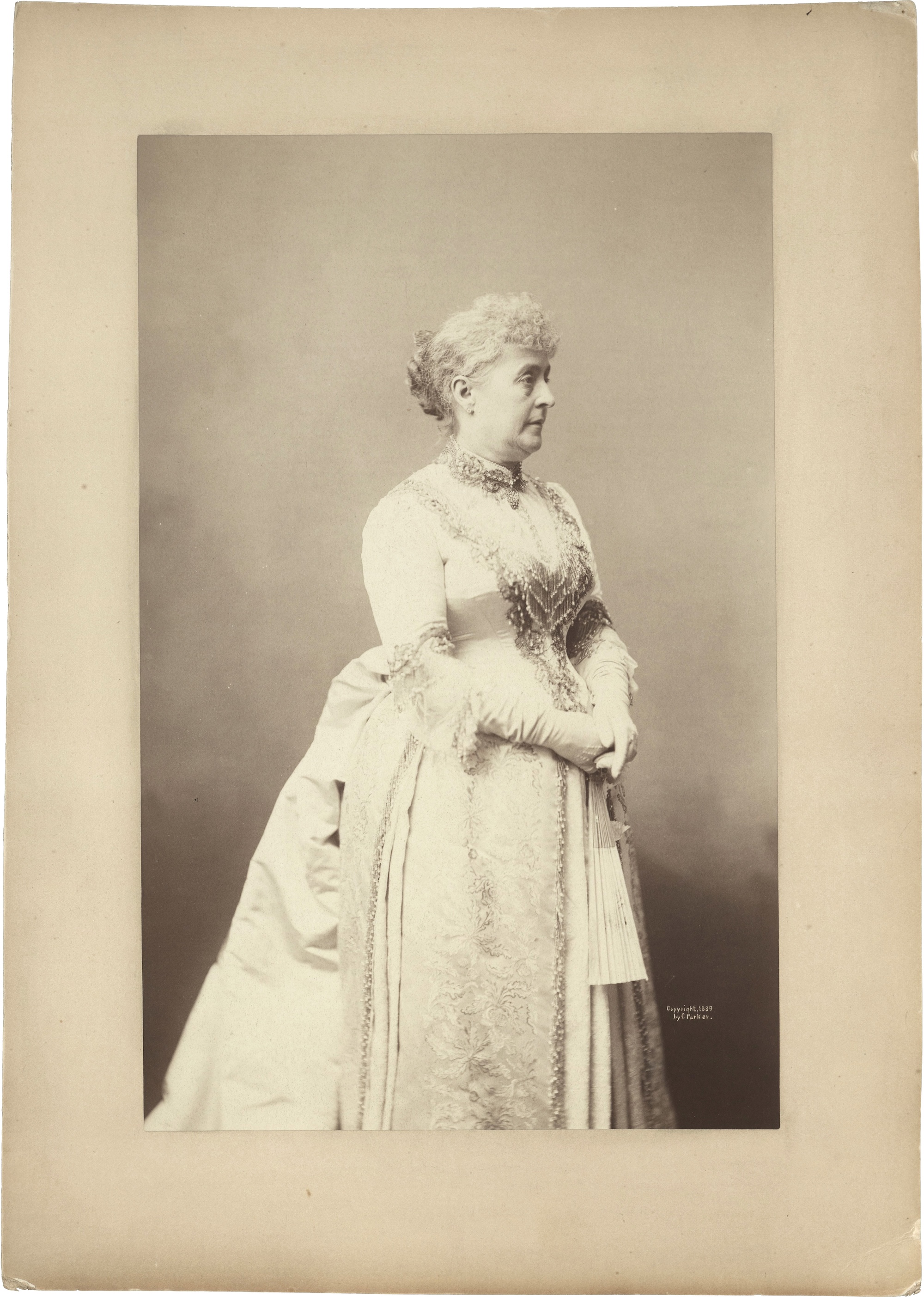
Caroline Harrison was raised in an enlightened environment stressing the importance of education for women, religion, anti-slavery principles, and the significance of family – qualities she embodied throughout her life. After graduating with a degree in music from the Oxford Female Institute in Ohio in 1852, she married Benjamin Harrison, whose great-grandfather was a signer of the Declaration of Independence, and whose grandfather, William Henry Harrison, became the ninth president of the United States. She balanced her husband’s serious, strict, and introverted personality with her gaiety, humor, friendliness, and love of the arts and music.
Benjamin became a successful lawyer, served in the Union Army – rising to brigadier general – and later was elected Senator from Indiana. Caroline was a devoted wife and mother, active in the Presbyterian church, and a dedicated supporter of multiple charities and community groups. She continued to pursue her love of painting, particularly watercolor and china painting, and music. She pursued an energetic life despite her frail health caused by respiratory issues and a serious fall.
In the 1888 presidential election, Harrison defeated President Grover Cleveland. Caroline became first lady at age 56, and suffered from the comparison to her young, pretty, and popular predecessor, Frances Cleveland. However, she soon won favorable press coverage for her skills as an excellent hostess and for the beauty of her decorations, which highlighted her unique artistry at White House events. She particularly earned praise for her bountiful flower arrangements, including her favorite orchids, and she even hosted china painting classes in the White House. Her love and talent for the arts took her into the policy world when she championed federal government support for the arts, telling the Evening Star “this government has reached that point where it should give more attention to the fine arts.”
“this government has reached that point where it should give more attention to the fine arts.”
- Caroline Harrison
Her devotion to family was illustrated by bringing twelve relatives from four generations to live at the White House. She immediately became “concerned over the condition of the house,” finding it in a state of terrible disrepair and noting in her diary “the rats have nearly taken the building so it has become necessary to get a man with Ferrets” to drive them out. The private spaces were small with most of the building reserved for public and office functions. The renovation of the White House became her first initiative.
In a precedent for a first lady, Caroline was not afraid to lobby publicly for her interests – holding press conferences, giving interviews, and leading tours for journalists, Senators and Representatives to advocate for funds to renovate, enlarge, and improve the functionality of the White House. She sent her architectural plan to Congress which preserved the current White House but added two large wings – the West Wing for office space and the East Wing to house an art gallery. Although a bill was sponsored asking for $950,000, the money was not appropriated. Instead, she received $52,000 for restoration. Ike Hoover, an electrician and usher during the Harrison administration, described Caroline’s achievements as so momentous including adding more bathrooms and bedroom space, electricity, renovating the kitchen, floors, and conservatory along with painting and frescoing many rooms, that the Clevelands hardly recognized the house when they returned four years later.
Showing her resolve to find historical items in the White House attic, she climbed a ladder to look through boxes behind a man carrying a rifle so that he could shoot the rats. She made a catalog of the mansion’s furniture, pictures, and decorative objects, preserving those she felt had historical value and starting the movement to maintain the history and provenance of the White House furnishings. As she opened boxes she discovered the chinaware of former presidential administrations which she had cleaned, repaired, and identified, starting the foundation for the popular White House china collection. Because there was no full set of china for entertaining, she used her artistry to design a new set of White House china.

Throughout her life she supported and believed in women’s rights. The centennial of President George Washington’s inauguration in 1889 focused the public’s interest on preserving and honoring the nation’s past. The Sons of the American Revolution had been founded to honor the nation’s founders, but their membership excluded women. In 1890 the National Society of the Daughters of the American Revolution (NSDAR) was formed, honoring the contributions of women in founding the nation. Caroline Harrison was asked to serve as their first President General. On February 22, 1892, Caroline gave the first documented speech by a first lady at the inaugural Congress of the NSDAR, stressing the importance of women to the nation’s history. She stated:
Since this Society has been organized, and so much thought and reading directed to the early struggle of this country, it has been made plain that much of its success was due to the character of the women of that era. The unselfish part they acted constantly commends itself to our admiration and example.
She also agreed to lead the District of Columbia’s fundraising effort for The Women’s Medical School Fund Committee that approached Johns Hopkins University with a plan to raise $100,000 for their new school of medicine, provided that women were admitted on the same basis as men. The committee was successful.
While she did not publicly support the women’s suffrage movement, she did help them behind the scenes. In their lengthy obituary for Caroline Harrison, The Woman’s Tribune, a suffragist newspaper, commented that “although she had not entered into the woman suffrage movement, she was deeply interested in all that pertains to woman’s advancement.” The obituary mentioned that she met with Susan B. Anthony who asked if she would use her influence with Senators and Congressmen to have women recognized at the World’s Fair, which the suffragists felt she accomplished.
Caroline Harrison died of tuberculosis at the White House in October 1892, leaving an impressive legacy of her many firsts for first ladies, including giving a public speech, lobbying Congress for money for White House restoration, starting the china collection and cataloging furnishings, publicly championing federal support for the arts, and raising funds for women’s admission to medical school. Taken together, these “firsts” reveal a larger pattern: Caroline Harrison treated the White House not as a residence, but as a national institution with a history worth preserving. She understood implicitly that institutions outlast individuals, and that leadership sometimes means quietly deciding what a nation chooses to remember.
Caroline Harrison accomplished all of this in keeping with Ralph Waldo Emerson’s words, “Do not follow where the path may lead. Go instead where there is no path and leave a trail.” It is long past time for history and our nation to justly honor and appreciate her noteworthy achievements.
“Caroline Harrison treated the White House not as a residence, but as a national institution with a history worth preserving.”
Check out the lesson on Substack to be part of the discussion. Share your views, respond to others, and help deepen our understanding.
View on Substack