Richard Nixon refused to take “no” for an answer.
From his childhood through his years in the White House, he prided himself on defying the odds and vanquishing his enemies. Sometimes this impulse served him well, propelling Nixon’s political career forward.
Yet that same determination that fueled his rise also helped bring about his fall. Nixon’s capacity for strategic thinking and political achievement coexisted with a consuming sense of grievance. He could envision bold initiatives abroad and significant reforms at home, yet he increasingly treated criticism as a personal affront and political opposition as a threat to be neutralized. In the end, his fixation on enemies helped undermine a record of accomplishments that might otherwise have secured a far more favorable place in history.
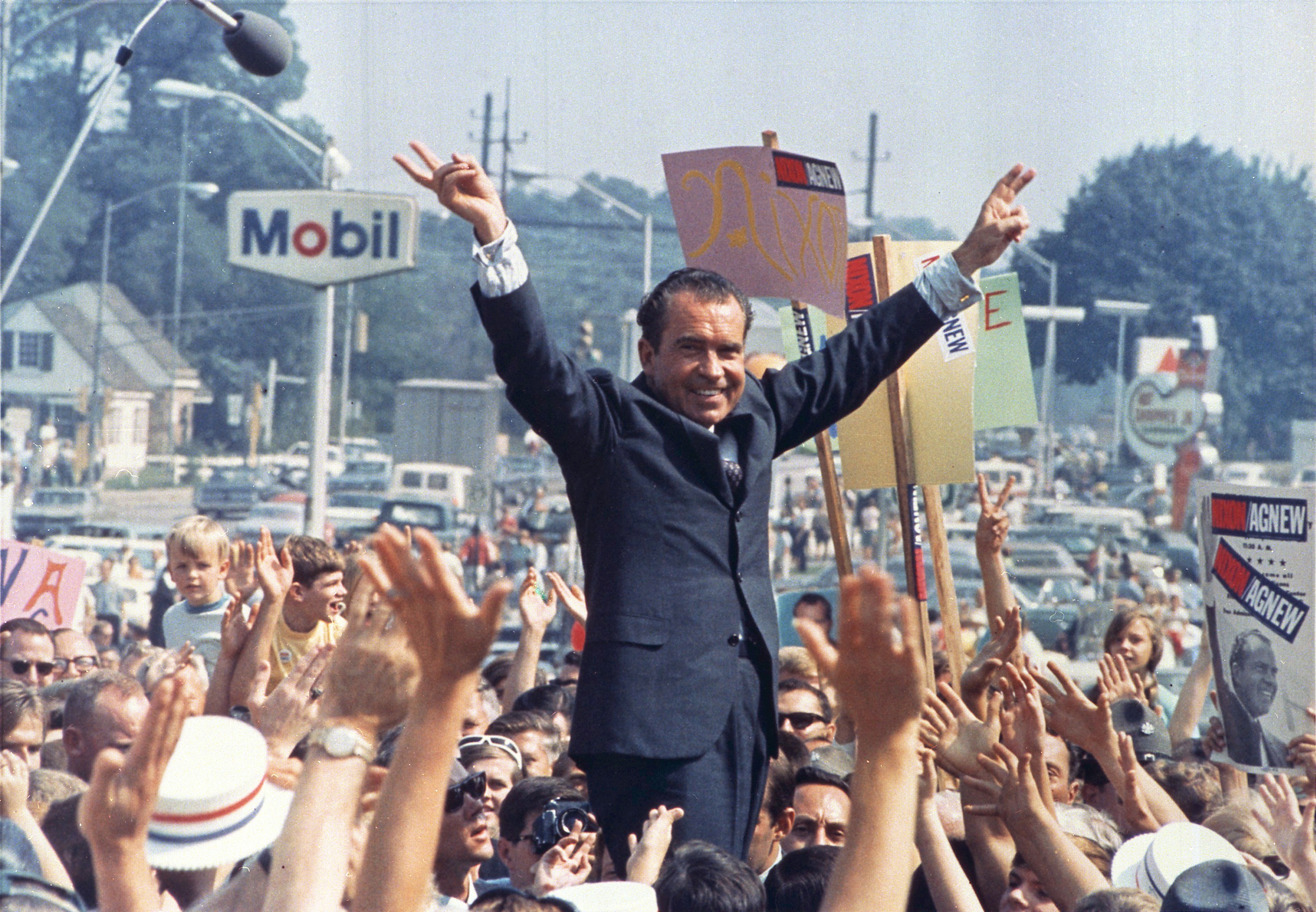
Few initially thought Nixon was destined for greatness. Born in Yorba Linda, California, he came from a struggling Quaker farm family with little money or influence. Two brothers died young, placing a heavy burden on Nixon to hold the family together. Though he was a top student and dependable football player, he was also shy, awkward, and not much fun. No matter how much time he spent in the limelight, Nixon was never quite comfortable there.
If the world did not necessarily believe in him, however, Nixon believed in himself. His first major act of self-fashioning was leaving California to attend Duke University in North Carolina, where he earned a law degree in 1937. Upon graduation, he failed to secure a job with a white-shoe Wall Street firm—a rejection that continued to rankle throughout his career. Returning to Orange County to begin a career as a small-town lawyer, he also pursued a relationship with Pat Ryan, a local teacher. Biographers have long cherished the story of how Nixon drove Pat on dates with other men, refusing to be deterred. They married in 1940, forging what would become one of the most important political marriages of the 20th century.
Like many men of his generation, Nixon joined the military, serving several years in the United States Navy. At 33, with little money and no political experience, he was elected to Congress, his unlikely victory setting in motion a vertiginous political ascent with few parallels in modern politics. At 37, after just two terms in the House, he won a Senate seat. Two years later, Republican presidential nominee Dwight Eisenhower selected him as his running mate. Nixon turned 40 just eleven days before he was sworn in as vice president.
Such a remarkable political rise might have produced a sense of confidence, generosity, and bonhomie. Not for Nixon. He forever understood himself as a fighter and outsider, besieged by naysayers and political enemies. He resented the so-called Liberal Establishment and warned especially of a “Communist conspiracy” aided and abetted by establishment dupes.
Many of Nixon’s earliest political battles followed this script. During his first term as congressman, he made his name denouncing and exposing Alger Hiss, a Harvard-educated New Deal official accused of passing information to the Soviets. During his 1950 Senate run, he alleged that his Democratic opponent Helen Gahagan Douglas was “pink right down to her underwear.” As vice president, he helped outmaneuver Senator Joseph McCarthy, who had become a thorn in Eisenhower’s side.
After two terms as Eisenhower’s vice president, Nixon secured the 1960 Republican presidential nomination. But in November 1960, in one of the tightest races in U.S. history, he narrowly lost the presidential election to his Democratic opponent, John F. Kennedy. Publicly, Nixon bowed out with grace. Privately, he maintained that the election had been stolen.
Once again, though, he would not accept defeat. In 1962, he ran for governor of California and lost—this time, not so narrowly. He blamed others for the defeat, expressing special fury toward an unsympathetic press. After the election, he famously told the assembled reporters, “you won’t have Nixon to kick around anymore,” effectively promising to bow out from public life.
“This time, vote like your whole world depended on it.”
- Richard Nixon
As it turned out, his personal ambition—and burning desire to prove his enemies wrong—soon thrust him back into the political limelight. In the mid-1960s, Nixon began to mount one of the most remarkable political comebacks in U.S. history. In the summer of 1968, after years of political exile, Nixon once again secured the Republican nomination, putting him on the national ticket for the fourth time.
“Tricky Dick” ran a campaign of comeuppance against anyone and everyone who had ever doubted him. One of his slogans—“this time, vote like your whole world depended on it”—upbraided the American public for having had the temerity to vote against him eight years earlier. In January 1969, Nixon was sworn in as the nation’s 37th president.
Nixon assumed the presidency at an especially fraught moment, dominated by debates over civil rights, the Vietnam War, street protest, urban riots, and youth rebellion. Nixon understood that many Americans longed for stability and an end to the war. His political instincts enabled him to speak to those concerns. His presidency also demonstrates that a leader capable of nursing grievances could possess considerable strategic vision.
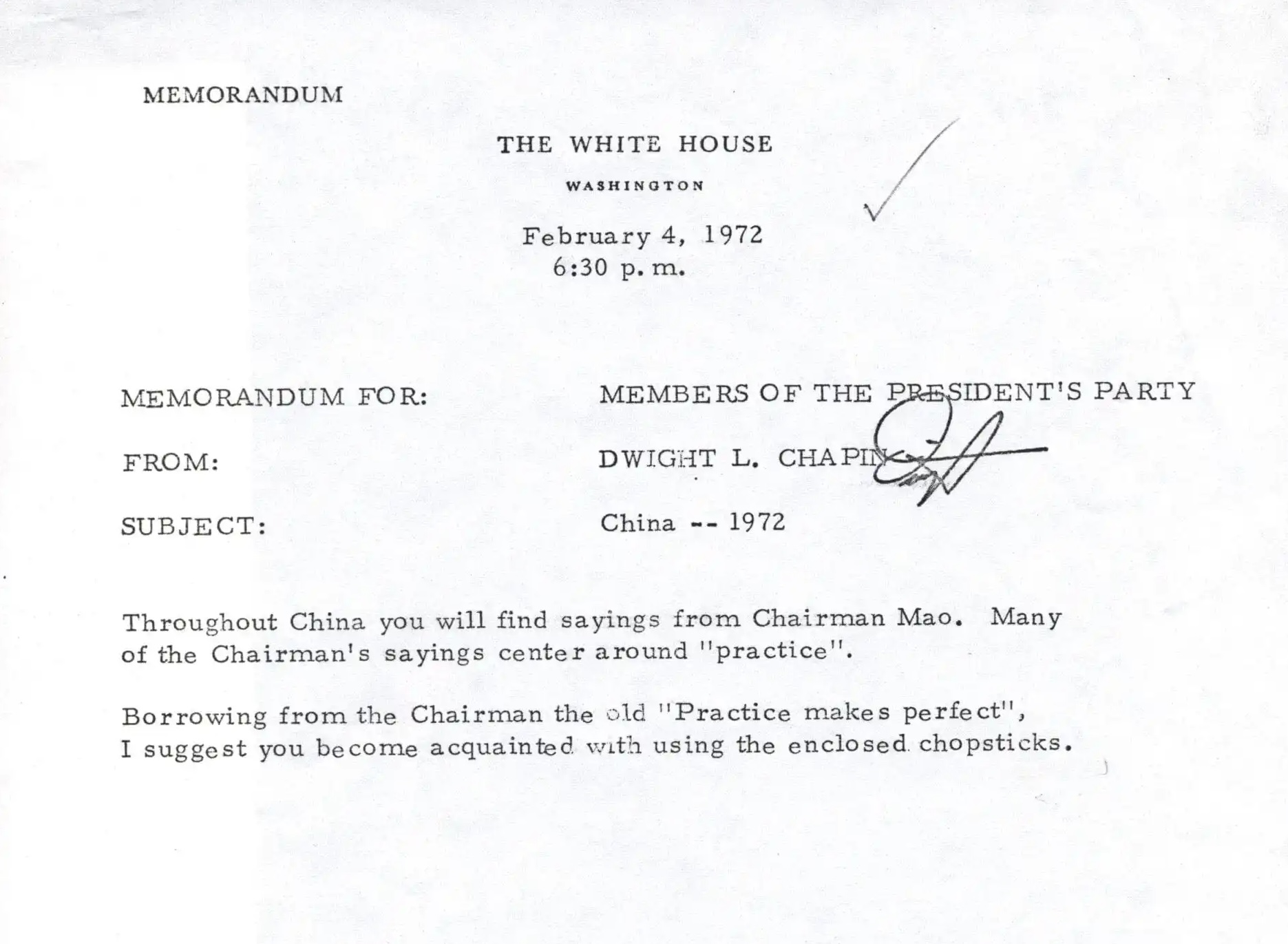
His 1972 visit to China, prepared through painstaking diplomacy with national security adviser Henry Kissinger, began a transformation in relations between Washington and Beijing after decades of hostility. Nixon also pursued détente with the Soviet Union. In 1972, he and Soviet leader Leonid Brezhnev signed the first Strategic Arms Limitation Treaty and the Anti-Ballistic Missile Treaty.
At home, Nixon established the Environmental Protection Agency in 1970 and signed the Clean Air Act amendments that year, creating a stronger national framework for controlling air pollution. Nixon also signed Title IX in 1972, prohibiting sex discrimination in federally funded education programs and opening new opportunities for women and girls, particularly in athletics. His administration launched the national War on Cancer, culminating in the National Cancer Act of 1971. These initiatives, alongside other domestic measures, formed part of a consequential presidential record.
None of this makes Nixon a flawless president, nor does it erase the limitations and controversies of his policies. But it establishes an essential point: Nixon was capable of recognizing strategic opportunities, building unlikely coalitions, and pursuing policies whose effects extended far beyond his presidency. The tragedy is that his accomplishments did not assuage his sense of powerlessness or anger at those who criticized him.
Though it had arguably served him well as a young man, Nixon’s sense of embattlement soon sent his presidency careening off course. His White House occupied a “state of permanent crisis,” White House aide Jeb Magruder recalled. As early as 1969, Nixon began pressuring agencies such as the FBI and IRS to investigate his enemies. When they dragged their feet, he approved the creation of the Plumbers, a secret White House unit organized to carry out surveillance and harassment campaigns against Nixon critics. By 1971, his staff had developed an “Enemies List” featuring members of the press, Hollywood celebrities, businessmen, university leaders, and prominent Democrats. And on June 17, 1972, a team working for his reelection campaign broke into the headquarters of the Democratic National Committee at the Watergate complex, ostensibly to adjust a set of illegal wiretaps that had been placed there several weeks earlier.
One of the most puzzling aspects of the Watergate burglary is that it was so unnecessary. As an incumbent president running against a weak opponent, Nixon was in a position of remarkable strength. There was little to gain and much to lose by wiretapping the DNC or engaging in other illegal shenanigans. But neither he nor his staff saw things that way. As always, Nixon pictured himself as the little guy, besieged on all sides by powerful enemies. Even his overwhelming victory in the 1972 election could not dissuade him from that narrative. That November, Nixon pulled off one of the great landslides of American history, winning every state in the electoral college except Massachusetts. Rather than rest on his laurels, he set about expanding his Enemies List and girding for future battles.
Nixon did have political enemies. But his downfall came as much from his own mindset as from anything inflicted by his critics. As the Watergate investigations intensified, Nixon maneuvered to cover up White House involvement in the burglary and other illegal activities. He justified his actions with a familiar logic: In a life-and-death struggle against determined foes, the ends justified the means. “When the president does it, that means that it is not illegal,” he later explained to interviewer David Frost.
During the 1970s, the Supreme Court and much of the American public disagreed. In August 1974, after more than two years of Watergate battles, Nixon became the only U.S. president ever to resign from office. For the rest of his life, he continued to insist that even this had been the result of a conspiracy by his political foes, and that he always had the nation’s best interests at heart. In the end, though, Nixon was his own worst enemy.
“Nixon was his own worst enemy.”
Check out the lesson on Substack to be part of the discussion. Share your views, respond to others, and help deepen our understanding.
View on Substack