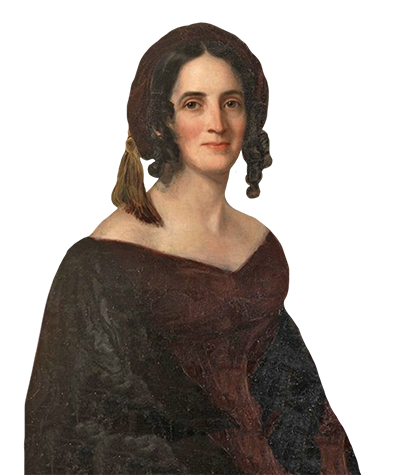
Lou Henry Hoover grew up in the late nineteenth century when most women aspired to become wives and mothers. Lou wanted these things, but she also had grander ambitions for her future and for the impact she might have on the wider world. As a child, her father encouraged her to explore nature. Later, she studied geology at Stanford University. When she was preparing to graduate, Lou bemoaned that the A.B. degree she would soon earn did not stand for “a boy” because she was struggling to find a career path in a decidedly male field of employment.
Her fate and future changed when a former classmate and romantic friend, Herbert Hoover, who graduated three years ahead of Henry, telegrammed her a proposal of marriage. The couple married at her family’s California home then departed for China where Bert worked as a young mining engineer. Over her nearly forty-five years of marriage to Bert, Lou became known for her hospitality and generosity, which she often mixed with her efforts for bettering society.
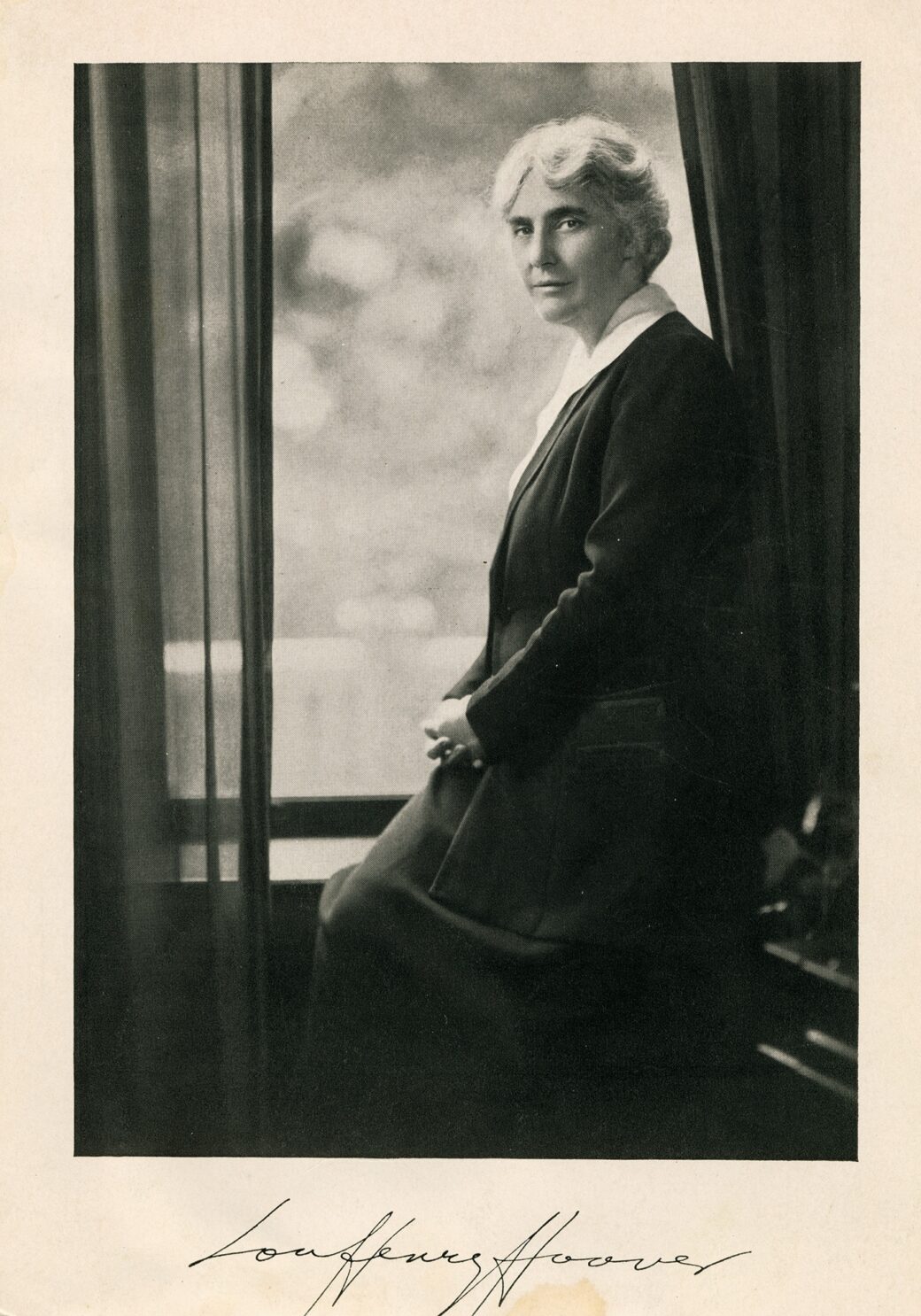
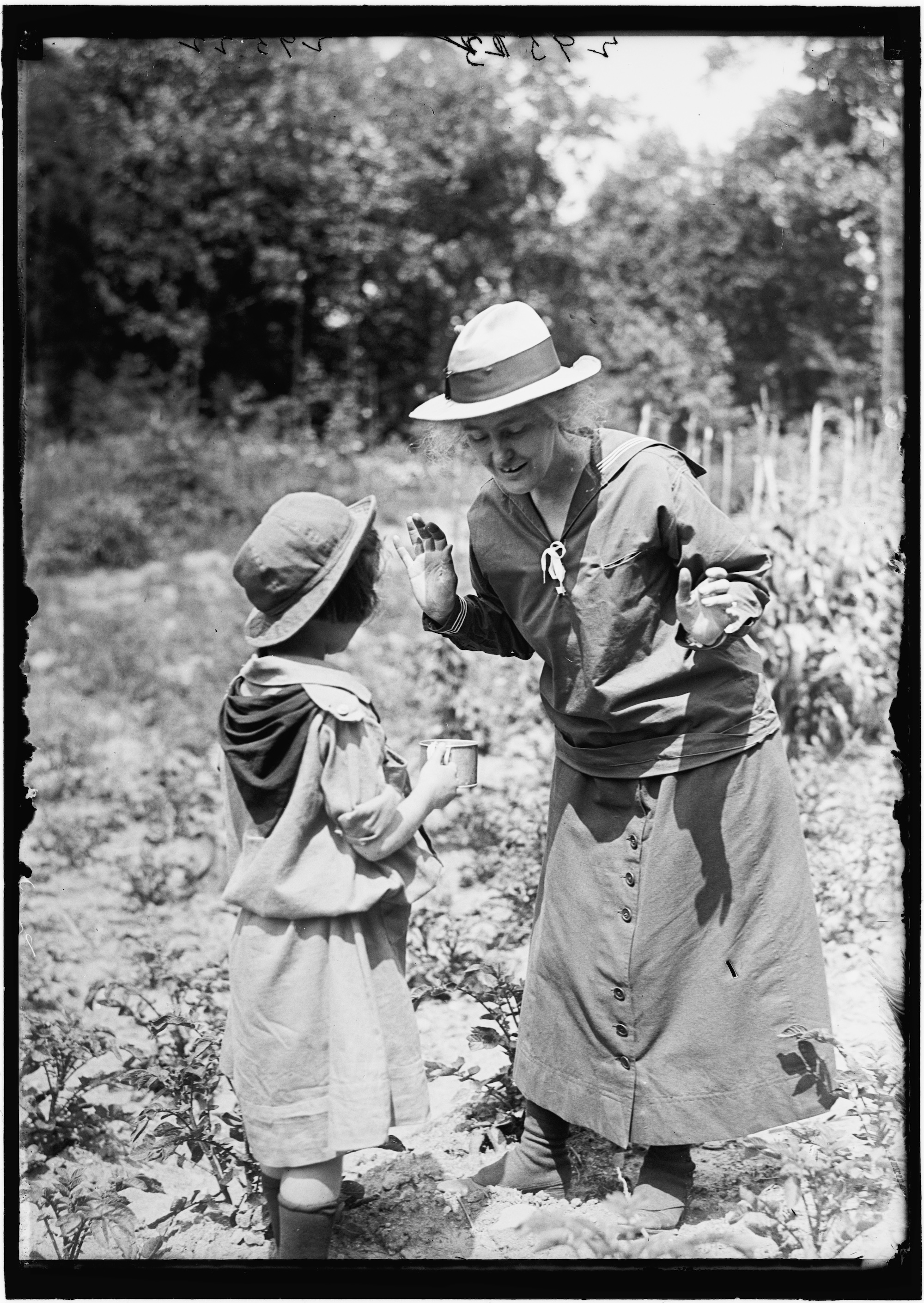
Examples of Lou Hoover’s merger of generosity with reform are numerous and began even before she became first lady. As residents of London, the Hoovers understood the challenges that befell Americans traveling abroad on the continent of Europe when World War I broke out. Lou Hoover established an ad hoc system for helping stranded Americans travel home. Later, when the United States became a combatant in the war, she saw the needs of the young single women who came to Washington, D.C. to work in the government bureaucracy. When her husband served as head of the U.S. Food Administration, she helped establish what amounted to a settlement house for these women so they could have access to leisure and living quarters where they could be assured of their safety. Lou also encouraged organizations that sought better opportunities for children and youth, namely the Girl Scouts and the National Amateur Athletic Federation. She fervently held that girls should have the opportunity to explore nature, and she believed scouting was the perfect vehicle for that. She also contended that sports should not be about winners and losers but instead about participation so that all could benefit, not just those with physical talents. In each of these endeavors, Lou showed consideration toward those otherwise left out of key components of American society.
When the Hoovers moved into the White House in 1929, Lou, like her predecessors, practiced the type of lavish entertaining typical of first ladies. Yet her efforts proved more encompassing. Lou believed it important to the political work of her husband that he socialize in the evenings. A journalist covering the White House during Hoover’s presidency observed when the Hoovers dined alone, that was news. Moreover, the couple throughout their marriage had operated by the theory that there was always room for one more at the dinner table. This practice gave the kitchen staff fits because a luncheon for six could all too easily turn into service for forty when both Lou and Bert independently added guests to the table. And because she wanted things to be perfect for her guests, she developed a series of hand signals to communicate silently with the servants. Her purpose was to ensure that the service did not interrupt conversation among guests. For Lou, though, entertaining was more than just a robust social life. It was, for her, also a tool for making the world a better place through social change.
“If only more of our leaders today were more concerned about the results of their work than they were with the applause of the crowd.”
But the Great Depression sorely tested whether Lou’s marriage of hospitality and social change could survive. Her four years in the White House coincided with some of the worst economic hardships in the nation’s history. Would there be room for such niceties when the country faced an unemployment rate of around 25 percent, when banks and businesses were shuttering, when countless Americans fell into homelessness, and when the nation’s economic and political systems seemed in jeopardy of total collapse?
Lou’s most important acts of service during this calamitous period went unnoticed by most Americans as she quietly merged social reform with philanthropy. To escape the heat and humidity of Washington, D.C., the Hoovers built a weekend retreat, Camp Rapidan, in the Blue Ridge Mountains of Virginia. While visiting there in 1929, Bert Hoover received a gift from a local lad, a fifteen-pound opossum. The boy somehow knew that it was the president’s birthday, and he wanted to celebrate the occasion with an offering to his new neighbor and by sharing what would have been a valuable food source for residents of this impoverished mountain community. Hoover chatted with the boy and learned that he had no school to attend. From that gift came a much larger response from the first lady.
Lou worked tirelessly to build what became the President’s Mountain School for the community that lived near Camp Rapidan. Later, knowing that the residents of the community would be relocated for the opening of Shenandoah National Park in the mid-1930s, she believed it even more important that they continue to be educated so they could succeed in the modern world. She researched the most modern methods for building and equipping such a school, and she also looked for teacher training programs that specialized in reaching disadvantaged mountain populations. Lou relied on private philanthropy, much of it her own, for this initiative. More notably, she refused publicity for her philanthropy, arguing that seeking and taking public acclaim for such good works rendered them no longer philanthropic.
This view of philanthropy—and by extension hospitality—is decidedly nineteenth century in orientation. Lou may well have been correct in her analysis of publicizing philanthropic acts, but keeping her generosity private also meant not providing an example for other Americans to emulate at a moment when public acts of generosity toward the less fortunate were needed. Conversely, publicly claiming credit for her good works would also have meant branding them and would have made them more about her than about the people—both children and adults—who benefited from the practical curriculum the President’s Mountain School offered. Lou did not believe it appropriate to boast about her good works in the community, but she did think the problems of the Depression could be resolved if only all Americans who were able provided for the less fortunate in their communities. “Others are in real, desperate need of assistance,” she observed, “and need help in finding out how to utilize the various agencies of their neighborhood, some one of which can probably care for their particular need.”
During the Great Depression, Lou received thousands of appeals from struggling Americans. Her approach was to research the veracity of the claim and then devise with her staff the most hospitable approach that would yield positive social change. Sometimes that meant putting the person seeking help in touch with a local contact in a voluntary organization like the Girl Scouts or the American Red Cross. At other times, it meant sending money. Lou quietly paid the school tuition for some students who had no other way to complete their education. She did so anonymously, but a few persistent souls discovered their guardian angel. They tried to repay her, but in entirely predictable fashion, she did not accept repayment. That, too, would have rendered the philanthropic generosity something less noble and more transactional. When Lou died in 1944, her family discovered countless uncashed checks in her desk drawer.
If only more of our leaders today were more concerned about the results of their work than they were with the applause of the crowd, average Americans would be better off.
“Others are in real, desperate need of assistance, and need help in finding out how to utilize the various agencies of their neighborhood.”
- Lou Henry Hoover
Check out the lesson on Substack to be part of the discussion. Share your views, respond to others, and help deepen our understanding.
View on Substack