Lyndon Johnson was a towering American President who—nearing the heroic scale of his hero and friend Franklin Roosevelt—changed this society for the better. He also, in Vietnam, made a series of tragic mistakes that brought the deaths of many young Americans and incited painful doubts about our democracy.
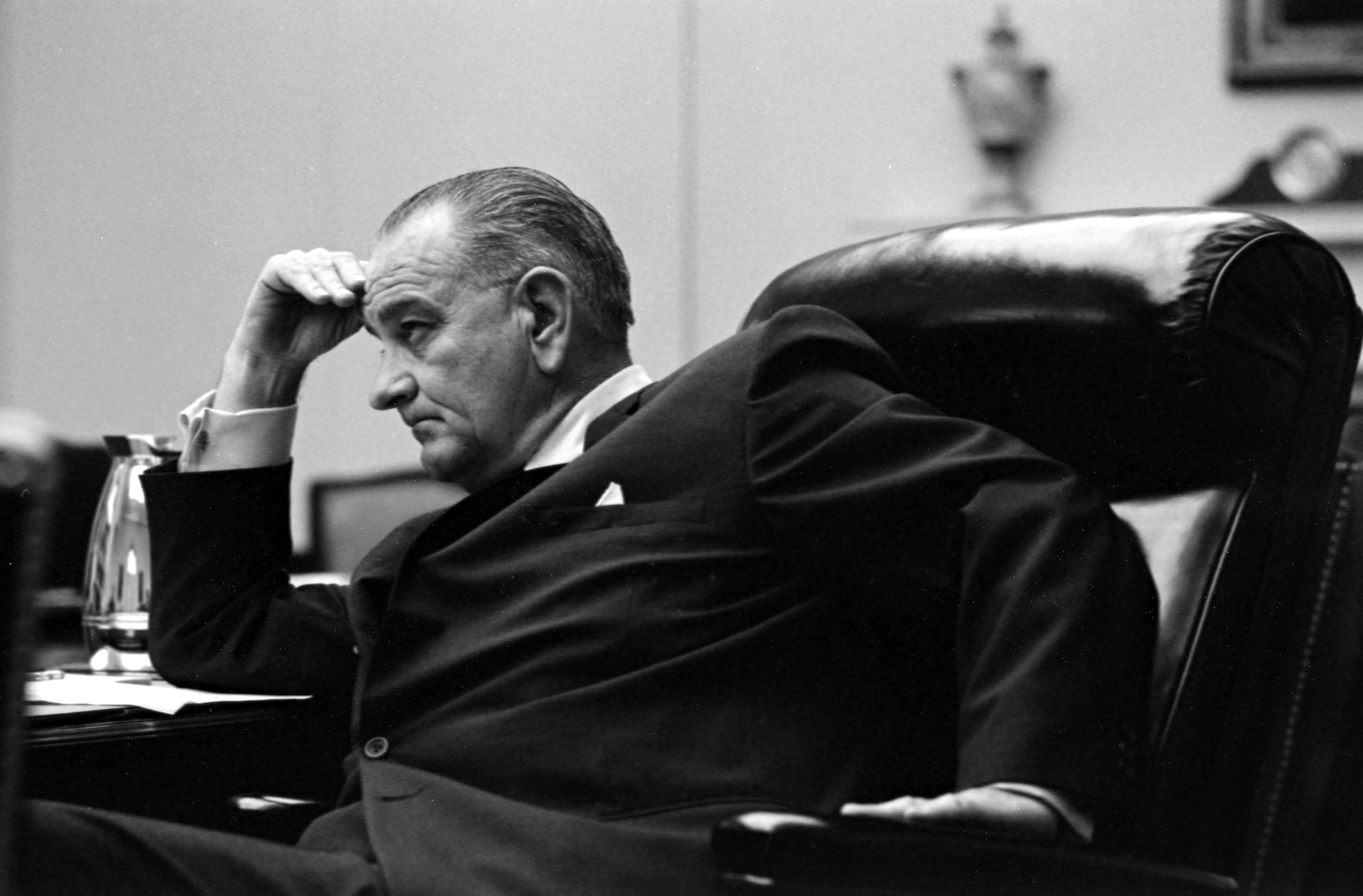
Born in 1908 in the Texas Hill Country, LBJ grew up in a place where, as his mentor Sam Rayburn said, “they know when you’re sick and care when you die.” He revered but did not emulate his elegant, learned mother, Rebekah. He loved his rough-hewn father, but generally regarded Sam Johnson, known to locals as a pathological failure, as a lifelong negative role model.
Although he suffered from lifelong spells of anger, vengefulness and frustration, Johnson was always what Acheson said of Harry Truman—a “captain with a mighty heart.” The young man who sought political power always strove to help people, especially those down on their luck—which, for him, in time, included Latino and Black people, sick people and other minorities.
Had LBJ died of the massive heart attack that almost killed him in 1955, he would now be known to us as a first-class transactional leader, with a gift for melding Members of Congress to his will that rivaled Henry Clay’s.
“A Captain with a Mighty Heart”
- Secretary of State Dean Acheson
Before his ascent to power in 1963, he never held a top executive position with any organization larger than the Texas chapter of FDR’s National Youth Administration (NYA). He made a stab at running for President in 1960 so feeble and half-hearted that Lady Bird Johnson insisted to me in 1997 that Lyndon had never aspired to sit in the Oval Office before 1963.
This shrewd, smart and loving woman understood her husband’s psychology. She boosted him from depression and calmed him down when angry. But on this issue, Mrs. Johnson and I cordially agreed to disagree.
When Johnson became President, he managed Members of Congress by using a microscope, a bag of favors and a bullwhip. Thus during his first two years, he managed to pass bedrock laws that remade America, starting with civil rights, Medicare, education and the War on Poverty.
LBJ’s wise aide Harry McPherson told me in 1994 that, seizing their golden opportunity after Johnson’s 1964 landslide, “we kept on throwing Jello at the wall, hoping that some of those Great Society programs would stick.”
Now to Vietnam. Although a crony of President Eisenhower as Democratic Senate leader, guiding the American Colossus did not come naturally to Johnson. He lacked the kind of oratorical skills that had helped FDR to persuade skeptical, isolationist Americans in 1940 that our country had to rearm against Hitler.
Thus he took the nation into a quicksand war without ever fully explaining to Americans—or even, fully, to himself—“Why We Are In Vietnam” (to use his own oft-repeated phrase) or how it would end in victory.
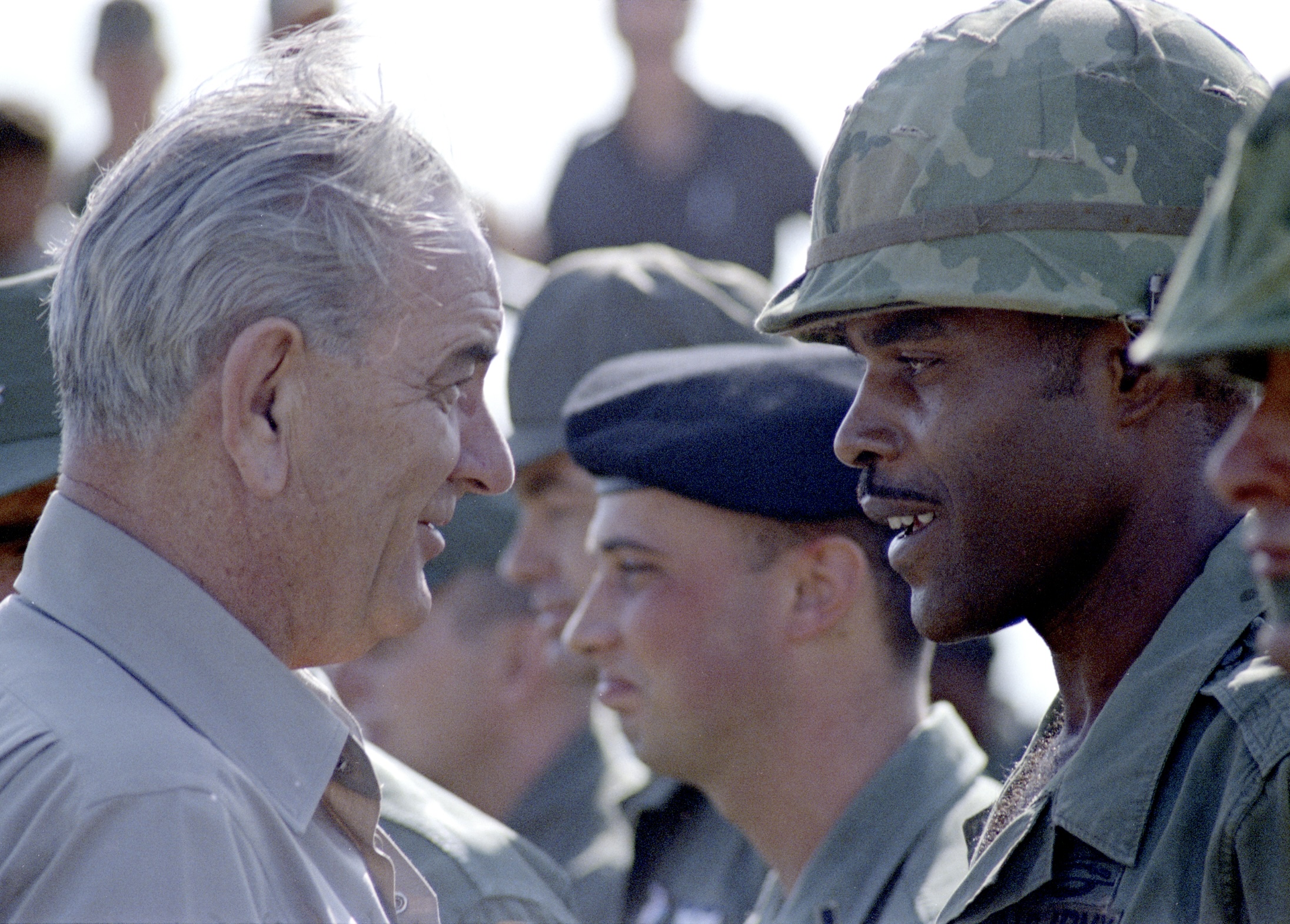
With his self-doubt about foreign policy, his instinctive first allegiance to domestic affairs and his fears about seeming to abandon President Kennedy’s supposed Cold War fervor, LBJ allowed himself to be overinfluenced by JFK holdovers to plunge into Vietnam and use “gradual escalation,” just as their martyred boss had done, on their advice, in the Cuban Missile Crisis. They swore up and down to Johnson that Kennedy would have escalated combat in Southeast Asia, had he lived—and threatened LBJ with public scorn if he betrayed President Kennedy’s wish.
Let us name the worst offenders—Secretary of Defense Robert McNamara, National Security Advisor McGeorge Bundy and Secretary of State Dean Rusk. The last of these three had the least reason to be babbling to Johnson on what Kennedy might have done in Vietnam. JFK was uncomfortable with Rusk and did not confide to him his private intentions.
The result of such errors on Vietnam was that President Johnson, once the idealistic NYA Director, was vilified on campuses as the executioner of American youth—exactly the opposite of what he had hoped for when he had suddenly become President.
For at least a generation after Johnson’s death in 1973, with every American family rent in some way by his Vietnam escalation, he was known overwhelmingly for the war that he could never publicly bring himself to admit was largely a result of his mistakes.
“Why Are We In Vietnam?”
- Lyndon B. Johnson
At least one Vietnam vet reputedly approached the family cemetery on the LBJ Ranch and loudly damned the late President to eternal hell for destroying his life.
Johnson used to say that sometimes leaders show you what is at the depth of their soul by what they don’t say or do. Absolutely correct. So look at how seldom Johnson spoke of the Vietnam tragedy during his four years as ex-President. Surprisingly, for this sensitive man, there is precious little record of him reaching out in public to stricken Vietnam veterans and their families.
You might interpret this disheartening omission as proof of LBJ’s unrepentant coldness about what he had done in Vietnam. I prefer to see it instead as a metric of the private acknowledgment of his own complicity in the deaths of American young people. Depressed by those deaths, he was trying to forget them. If this is true, at least, he privately knew the importance of what he had done wrong.
Johnson was, above all, a realist. An ex-President genuinely proud of his role in Vietnam might have made more of an effort to align himself than Johnson did with that ghastly war of which he had been the architect. His beloved aide Jack Valenti told me in 1998 that in Johnson’s retirement—by drinking, smoking and eating and (away from Lady Bird’s surveillance) throwing some of his heart pills into the LBJ Ranch bushes—his ailing old boss was knowingly trying to commit “slow-motion suicide.”
By the early 1990s, the best of Lyndon Johnson’s Great Society had been largely eclipsed from our public memory by Vietnam. When I began to transcribe and write on LBJ’s almost eight hundred hours of secret Presidential tapes, slowly unveiled in that decade, a Black former NFL player I met was horrified that I would even take the time to study a President who had slaughtered so many Black people in Vietnam. (The football star was correct to complain that Black Vietnam casualties under Johnson were disproportionate.)
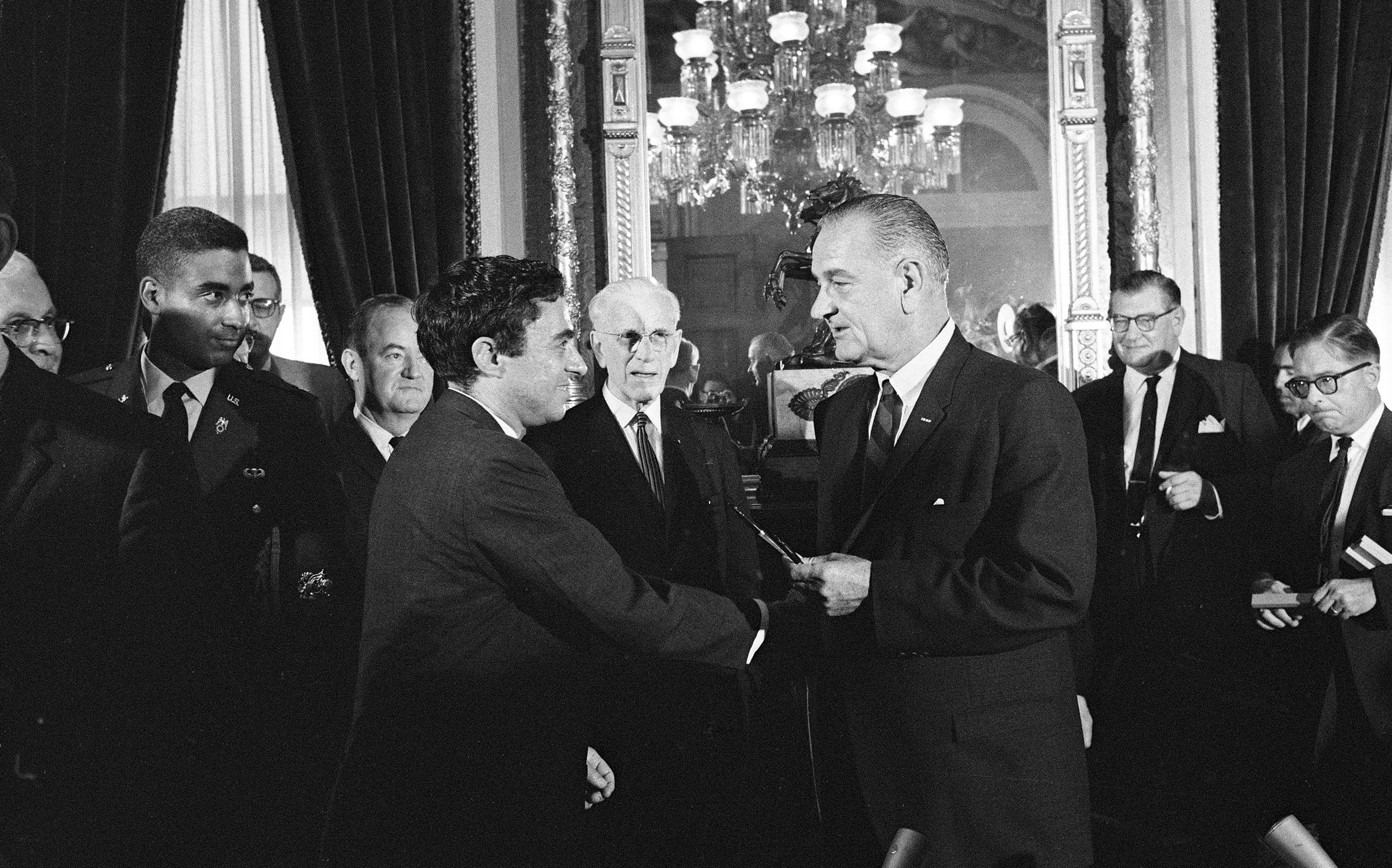
But American historiography can work in wondrous ways. Thanks to the magnitude of Johnson’s accomplishments and, in part, to the tapes he made and preserved of his private conversations—which show us the authenticity of his dreams and the effectiveness of his horsetrading—we can understand, without forgetting the blight of Vietnam or claiming that each of his domestic programs was perfect, that Lyndon Johnson was a flawed but monumental President. Remembering him in the White House at his best, LBJ deserves the respect and admiration of all Americans.
Check out the lesson on Substack to be part of the discussion. Share your views, respond to others, and help deepen our understanding.
View on Substack