James Garfield, our nation’s 20th President, is a frequent presence on lists of the most widely forgotten occupants of the White House. There are admittedly good reasons for this. First, Garfield’s Administration took place in the Gilded Age — an era in which presidents were unexceptional to the point of being tough to tell apart. Furthermore, Garfield was murdered only six months into his Presidency. His assassination has been deeply explored over the years — written up in excellent detail by the great Allan Peskin, and vividly portrayed on TV by the recent Netflix miniseries Death by Lightning, based on the scholarship of Candice Millard. As a result, the one thing many Americans recall about Garfield’s tenure in the White House is how it ended.
This is especially tragic, because in life Garfield was considered to be one of the most impressive and quietly influential Americans of all time. Despite being born in a log cabin and raised by a single mother, Garfield grew up to become a bona fide American Renaissance man: a Congressional leader, Civil War general, Supreme Court attorney, civil rights advocate, polyglot, writer, farmer, and more. He created America’s first federal Department of Education, could reportedly write in both Greek and Latin simultaneously, and even authored a proof of the Pythagorean Theorem while helping lead Republicans in the House. “The truth is no man ever started so low that accomplished so much in all our history,” President Rutherford Hayes would write about Garfield.
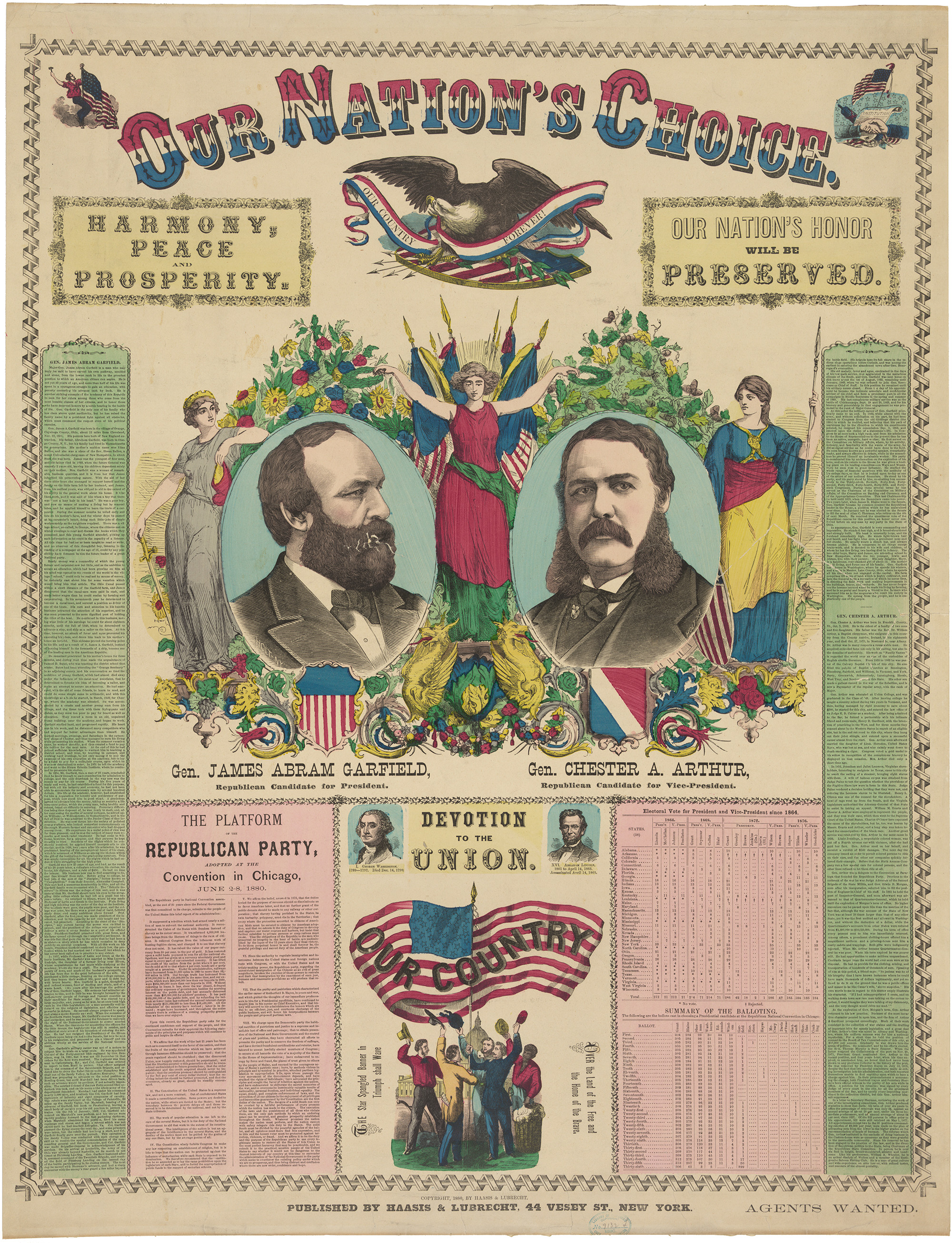
When Garfield finally won the Presidency, though, another facet of his personality inspired the most appreciation from voters: the persistent “good vibes” Congressman Garfield had managed to sustain in a divided Washington. “No man keeps more cordial relations with his political antagonists…no man has warmer or more numerous personal attachments,” one reporter wrote. Those traits served as the “secret sauce” to Garfield’s political success. He was certainly not a flawless figure — getting snared in financial scandals, taking a direct role in the relocation of a Native tribe in Montana, and even engaging in an extramarital affair. Nevertheless, in a polarized America, Garfield’s public record of institutionalism, pragmatic politics, measured rhetoric, and kindness towards Congressional foes made his ascent to the White House possible. They also stand as a timely reminder that being ambitious and agreeable are not mutually exclusive, nor politically prohibitive.
Growing up in the 1840s on the “Western Reserve” of Ohio, a stretch of farmland along Lake Erie, Garfield felt possessed by what he described as an urge to “stand at least among the first or die.”
But this drive to excel also went tempered by an equally powerful kind spirit. The young Garfield worked hard to befriend those he beat in the classroom and seemed to value his classmates’ perspectives on issues just as much as his own. “With this desire to conquer,” a friend later remembered of Garfield, “there was found the most generous and exultant admiration in the success of another.”
“I never feel that to slap a man in the face is any real gain to the truth.”
- James Garfield
This proved to be a winning combination. By his late twenties, Garfield was president of a local college while also moonlighting as the youngest state senator in Ohio. An ardent abolitionist, Garfield entered the Union Army determined to help crush “the monstrous injustice of human slavery,” eventually becoming a major general during the Civil War. By 1864, he had begun serving (according to his own calculations) as the youngest man in Congress, after realizing on bloody Southern campaigns that “the successful ending of the war is the smaller of the two tasks imposed on our government.” In other words, Garfield grasped that piecing America back together demanded more than mere battlefield supremacy. It would also require the far more difficult task of repairing and improving institutions.
Reconstruction, as Garfield anticipated, was a divisive period for the nation. For all the hard-won progress of this era — not least of which were the Reconstruction Amendments abolishing slavery and strengthening the civil rights of Black Americans — the Republican coalition which won the Civil War collapsed over the course of a decade, splitting along wedge issues. These included not just the future of the postwar South and civil rights, but also corruption in the civil service, as well as the emerging schism of labor versus capital in an industrialized America. Economic meltdowns, presidential scandals, Klan violence, and Constitutional crises only added to the chaos.
One of the few constants of American public life in this period was James Garfield. He achieved this primarily by committing himself to the dry, unglamorous busywork of lawmaking. Whenever Representative Garfield made headlines, it was usually for his diligent work running fiscal, monetary, or census committees in the House. Democrats considered him a man they could make deals with; fellow Republican leaders liked having a colleague they could pawn legislative business onto. Garfield, for his part, was perfectly happy to let publicity-hungry colleagues hog all the limelight.
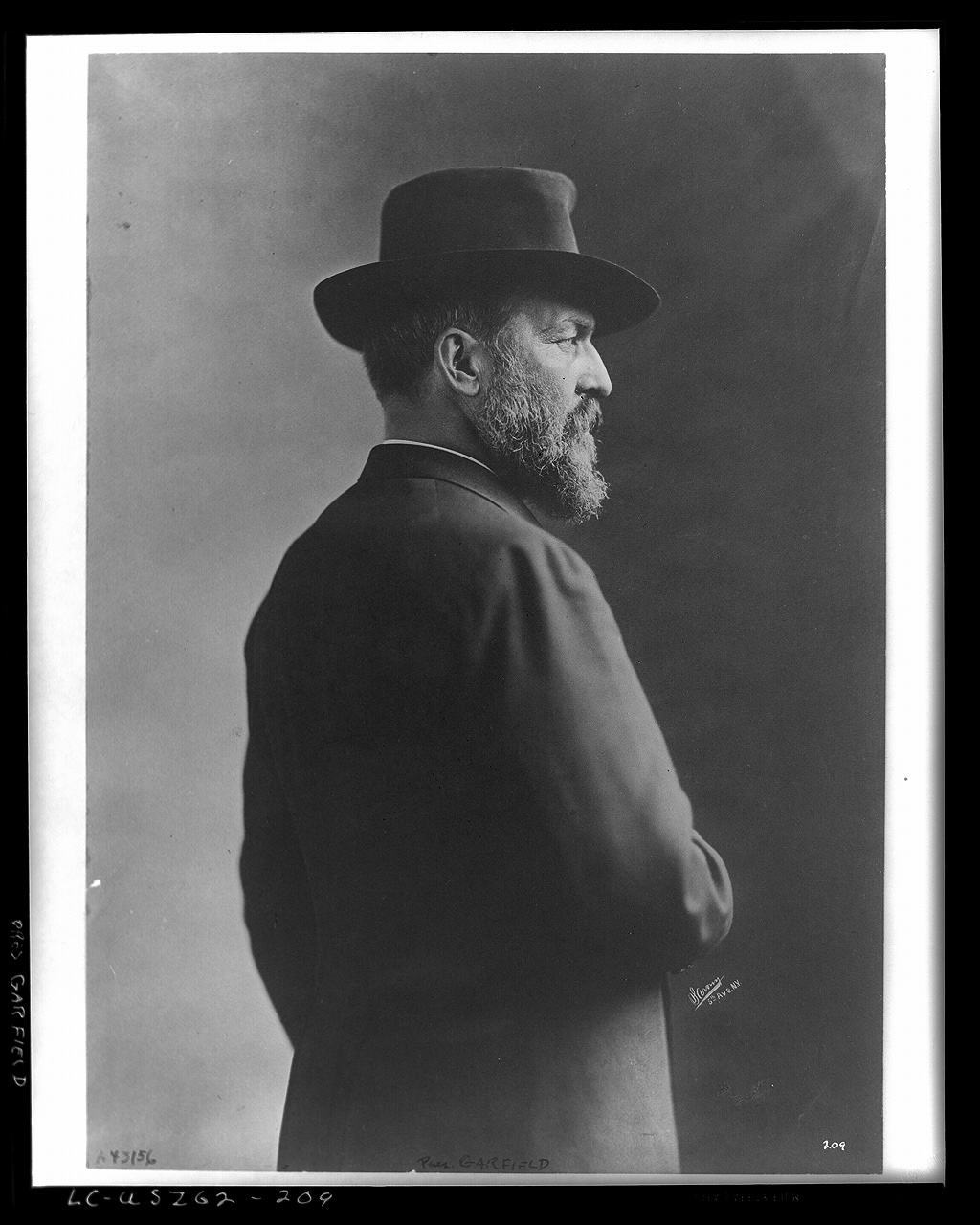
Whenever partisan fireworks went off, he preferred to watch from afar (“I am a poor hater”). Garfield had strong progressive instincts but was wary of straying too far from the electorate (“I am trying to be a radical, but not a fool”). If legislative combat on the House floor ever went his way, Garfield refrained from twisting the knife (“I never feel that to slap a man in the face is any real gain to the truth”). And as crisis after crisis hit America, Garfield’s first political instinct was always to protect our institutions (“We must make a track that will be fit to follow after we are dead”). Consequently, as the years passed and polarization took its toll on both Congress and Republicans, Garfield became a quietly crucial figure — serving as a reliable legislative partner in moments of national emergency, and a peacemaker in a Republican Party coming apart at the seams.
He was also, astonishingly, willing to place his own interests below those of other Republicans. For example, Garfield gave up a surefire Senate seat to serve on as House Minority Leader at President Rutherford Hayes’ request. Afterward, Garfield consoled himself that his record of goodwill in Washington would one day be rewarded. As he told a friend: “I cannot believe that, in the long run, a man will lose by self-sacrifice.”
This instinct proved correct. When it came time for Republicans to nominate a new Presidential candidate at their 1880 convention, their party had split into colorfully named factions (including “Half-Breeds” and “Stalwarts.”) Each group had their own candidate in mind, but if any faction’s pick won the nomination, the Republican Party would fracture further and lose the general election. The Party needed a more moderate, practical, and likeable nominee for voters of all stripes to rally under — and, late in the convention, everyone realized that they knew an amiable Ohioan who could fill this void. Despite not even being a declared candidate, Garfield left the gathering as its Presidential pick.
The events which followed are too complicated and tragic to fully explore here. In summary, Garfield led a successful presidential campaign by channeling the same inclusive, pragmatic, institutionalist spirit that had driven his career beforehand. After reaching the White House, his attempts to perpetuate that style of politics resulted, indirectly, in his own assassination.
But there were some important silver linings to Garfield’s sacrifice. It shocked 19th-century America back from the precipice of polarized politics. It kick-started reforms that gradually depoliticized the federal civil service, whose work all Americans continue to benefit from today. It also made a martyr out of the rare American statesman who was almost universally considered a good person.
Most importantly, Garfield — a “poor hater” indeed — left a lasting example of what good-natured, responsible leaders can achieve, especially in tough times.
“The truth is no man ever started so low that accomplished so much in all our history.”
- Rutherford B. Hayes
Check out the lesson on Substack to be part of the discussion. Share your views, respond to others, and help deepen our understanding.
View on Substack