Lesson #
26
• FROM
Julia Grant
Julia Grant was not a natural agent of reconciliation for a broken nation. She did not seek a public life, and did not expect to have one. Born in 1826, she was the fifth of eight children of a successful Missouri merchant and planter who owned more than two dozen enslaved men and women. When she was eighteen, her older brother introduced her to a West Point classmate from Ohio named Ulysses S. Grant, and the two were soon engaged.
Mrs. Grant had no reason to expect that her new husband would bring her to the pinnacle of American political life. He was, at first, an unhappy soldier, who left the Army with no great prospects in 1854, and never quite found his place in civilian life. When the Civil War broke out in 1861, he rejoined the Army and this time quickly climbed the ranks—revealing not only great strategic acumen as an officer but exceptional political skills as well. By the end of the war, General Grant was profoundly alert to the challenges that bringing a bitterly divided nation back together would involve. And in his mission of reconciliation, he drew upon his wife’s great skills and instincts to balance the pursuit of a just cause with respect for the humanity of a defeated former enemy.
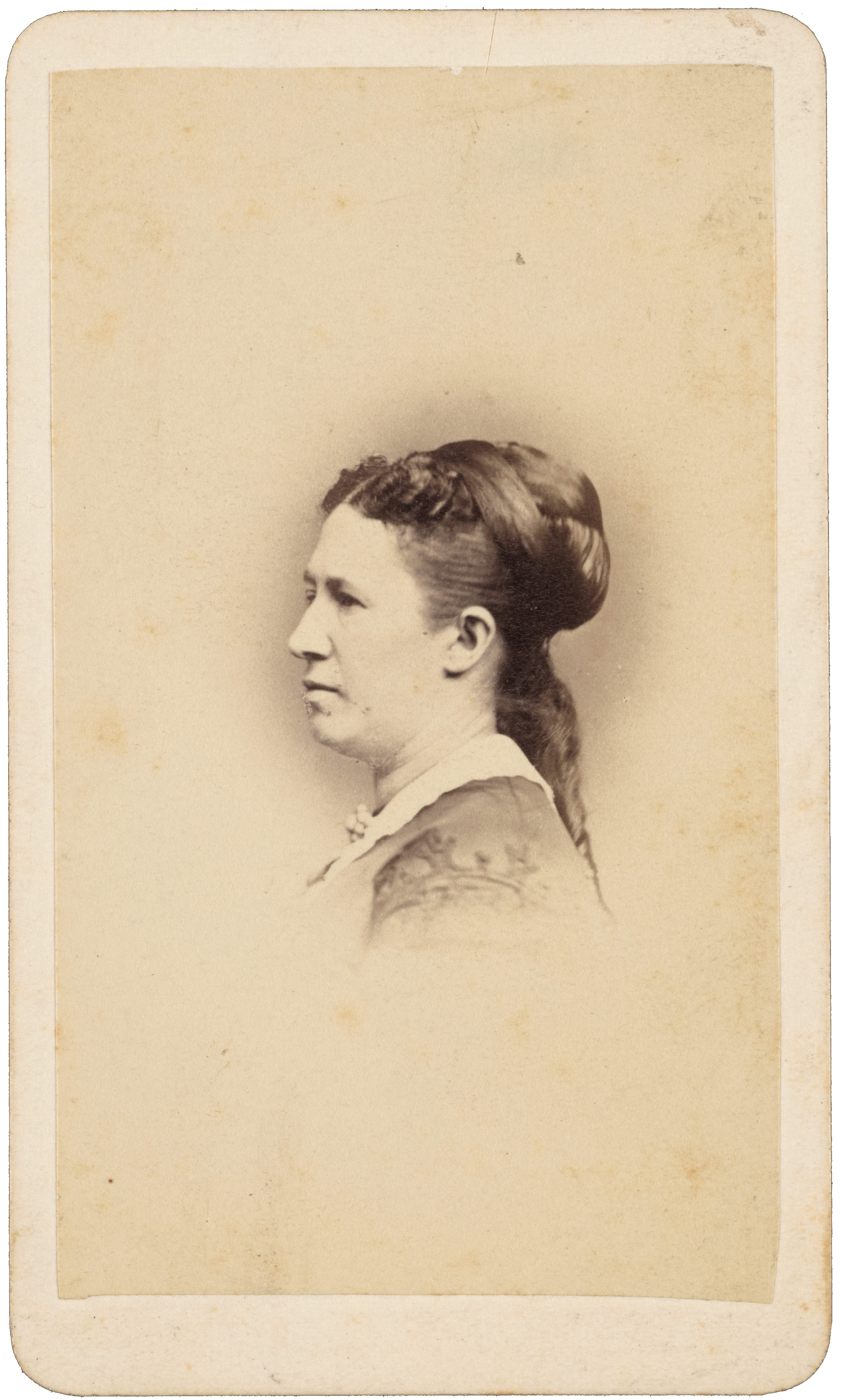
Julia Grant’s roots in Missouri, which she feared would be a liability for her husband, turned out to be an unexpected source of strength. Although she was careful to describe herself as a Westerner rather than a Southerner (her native St. Louis offering a mix of both in the mid-19th century), she deeply understood the nature of the South’s wounded pride once the outcome of the war became clear.
Her surviving letters to her husband, and a memoir she wrote later in life, reveal that she consistently urged General Grant to be lenient toward captured Confederate officers, and that she shared his strong inclination to offer the Confederacy generous and humane terms of surrender at the war’s end. She recounts in her memoirs that she was “proud that General Grant had acted with such kindness toward General Lee and his poor, tired soldiers” at Appomattox.
This was not because she harbored sympathy for the Southern cause—her memoirs record unwavering disapproval of the Confederacy and its rebellion (although she never writes specifically about slavery). But she knew that the nation would somehow have to come back together after the war, and that living as fellow citizens again would only be possible if combatants on both sides left the battlefield with some dignity and pride intact.
In her memoirs, she recalls a brief conversation she had with Abraham Lincoln in the final days of the war in which, after Lincoln expressed doubts about the South’s willingness to accept terms of surrender, she asked him: “Mr. President, are you not going to make peace terms with them? They are our own people, you know.” She recounts Lincoln answering “Yes, I do not forget that,” and then taking out of his pocket a paper detailing the terms the Union had offered. She was shocked that the Confederacy had not accepted those terms, telling Lincoln, “Why, what do they want? That paper is most liberal.” And Lincoln responded, “I thought when you understood the matter you would agree with us.” Contained in that exchange was the core of Julia Grant’s understanding of reconciliation: justice need not require humiliation, and victory need not erase empathy. National healing depended on holding firm to principle while refusing to destroy the dignity of those who had lost.
“Justice need not require humiliation, and victory need not erase empathy.”
In time, the Confederate rebels did accept Lincoln’s terms, and Mrs. Grant welcomed the end of the war with gratitude for the Union’s total victory but also with immense relief for all involved. She remembered years later that, in the days after Robert E. Lee’s surrender, she visited Richmond with some Union officers, and felt not triumphant but sad:
Her husband had not come with them to Richmond, and when she asked him why, she was struck by his answer:

During the war, such exchanges and views were kept private, and Julia Grant did not seek any role for herself in making or carrying out any course of policy. But when Ulysses S. Grant was elected President of the United States in 1868, she was thrown into a much more public role, which required her to make concrete decisions about how Southerners should be treated at the White House.
On this front, again, her own roots were of great help. She went out of her way to welcome Southern guests and even hosted ex-Confederates at the White House (including officers who had confronted her husband across battle lines, provided they had formally sworn allegiance to the Union). At the same time, she let it be known that Black Americans who called upon her at the White House as guests would be welcome, and she went out of her way to publicly align herself with President Grant’s views on the necessity of enforcing the newly ratified Fourteenth Amendment in the South.
This balancing act was not just a matter of instinct or tact. Her memoirs make clear that she was keenly aware of her husband’s policy orientation toward the South: firmness on civil rights and Reconstruction, but an open hand to individual former Confederates seeking reintegration. That combination of principles needed to be translated into practice not only through formal administration but also through human connections. Her role atop Washington’s social scene meant that Mrs. Grant could set the tone on this front, and she did so with skill.
She also exhibited great care for the public dignity of the presidency, and shared her husband’s view that national healing depended on visible unity. She supported President Grant’s practice of appearing publicly with former Confederate officers once they had pledged loyalty to the Union. And she went to great lengths to put the wives of those officers at ease in Washington.
The complicated and sophisticated role that Julia Grant played in these efforts helps to illuminate a lesson that remains intensely pertinent in our time: Reconciliation after conflict is not a matter of philosophical abstractions but of practiced empathy grounded in principle. Even in the heat of righteous struggle, we must not lose our capacity for empathy. And when a battle is won and can be put behind us, we should seek ways to live in peace with fellow Americans with whom we had fought. They are our own people, you know.
“They are our own people, you know.”
- Julia Grant

Check out the lesson on Substack to be part of the discussion. Share your views, respond to others, and help deepen our understanding.
View on Substack