Lesson #
34
• FROM
William McKinley
Following President Ulysses S. Grant’s 1872 reelection, the Civil War’s bitter divisions moved from blood-soaked battlefields to the smoke-filled corridors of Washington, making the Gilded Age one of America’s most polarized periods.
In that era’s five presidential elections, no winner received 50 percent of the vote. Twice, the winner lost the popular vote but carried the Electoral College. The most controversial contest took place in 1876: complaints of widespread violence against Black voters led to disputed results in Florida, Louisiana, and South Carolina. After four months of heated debate, a special electoral commission awarded the election to Republican Rutherford B. Hayes. Some say it was in exchange for removing federal troops from the South.
Capitol Hill was similarly divided. Democrats elected to Congress dozens of former Confederate soldiers and officials, including Confederate Vice President Alexander Stephens. Between 1874 and 1904, the House majority expelled 60 members of the minority—claiming election fraud—and replaced the ejected members with ones of their own party. Throughout the period, each party had only two years where it held the White House, House, and Senate.
Little got done in Congress. Only events forced the passage of a few notable pieces of legislation, such as the start of civil service reform and the Interstate Commerce Act. Otherwise, partisan gridlock reigned.
It took a conciliatory Ohioan named William McKinley to break the stalemate and unify the country. He did so by recognizing that all Americans must be given the opportunity to share in the Declaration of Independence’s promises.
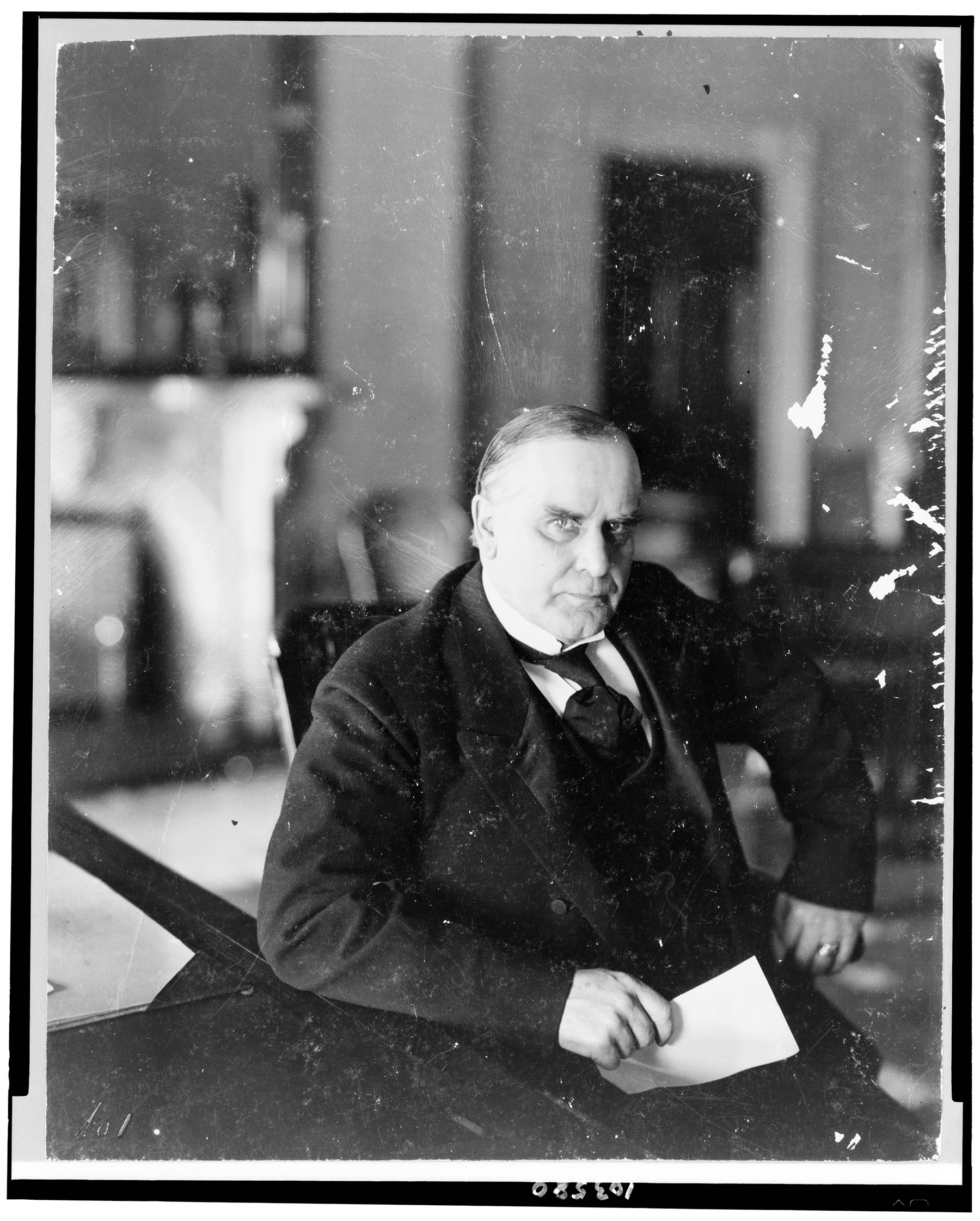
A staunch Republican, McKinley was nevertheless uniquely suited to heal a fractured nation. At a time of fierce conflict between labor and capital, McKinley believed that prosperity was possible only if the rights of both were respected. He represented laborers as an attorney, even defending miners pro bono in a dispute with their employer, Mark Hanna. Hanna would later become McKinley’s great friend and advocate.
Running for president in 1896, with America in a deep depression, McKinley advocated for “sound money”—a gold currency—to give working men honest wages for their labor while providing confidence to business. This was in stark contrast to his Democratic rival, William Jennings Bryan, whose populist demands for an inflationary silver currency—“You shall not crucify mankind upon a cross of gold!”—pitted labor against capital, debtor versus saver.
McKinley’s commitment to fairness was deeply rooted. Raised by abolitionist parents, McKinley enlisted in the Union Army in early 1861. Over the next four years, he rose from private to major by remarkable acts of valor, including two dangerous—some said suicidal—missions. Recommended for the Medal of Honor, he refused, protesting “I was only doing my duty.”
Freedom for blacks, especially their right to vote, was a lifelong priority for McKinley. He was more disappointed at the defeat of a black suffrage amendment to the Ohio Constitution in 1867 than pleased with the gubernatorial election of Hayes, his wartime commander. McKinley continued pressing for black voting rights when he was elected to Congress in 1876.
In 1895, he became the first presidential hopeful to meet with Black political leaders, rather than working through intermediaries. McKinley then did what no party presidential candidate had done. He spoke before black audiences, first in Florida and then Georgia, and publicly asked for their support. He received it. The following year, the South’s mostly Black Republican delegates provided nearly half the votes he needed for the nomination.
McKinley was a proponent of equal treatment under the law for all Americans. Before his 1893 Ohio gubernatorial reelection, the American Protective Association—a virulently anti-immigrant and anti-Catholic organization that was the country’s largest pressure group—insisted McKinley fire Catholic prison guards. When he refused, the APA called for his defeat. He easily won reelection.
“No Republican presidential candidate had campaigned among Southern veterans.”
APA leaders didn’t forget. When McKinley ran for president, they declared every GOP presidential candidate acceptable—except McKinley. They attacked him as pro-Catholic, even claiming he belonged to a secret Catholic society. McKinley’s campaign fired back. Yes, they admitted, he belonged to secret societies—but they were the Masons, Sons of the American Revolution, Union veteran groups, and his college fraternity. Nor was he Catholic, but rather a trustee of his hometown’s Methodist Church.
Mocking the APA helped McKinley court Catholic and immigrant voters. This paid off. McKinley became the first Republican to be endorsed by a member of the Catholic hierarchy. Virtually every ethnic group sent delegations to Canton as part of McKinley’s “front-porch” campaign and were prominently featured in hundreds of rallies and parades his campaign hosted. With their support, McKinley ran ahead of previous GOP candidates in Northern and Midwestern cities and ethnic communities.
The most powerful expression of McKinley’s desire to unite America occurred on October 9, 1896, when 2,000 Confederate war veterans visited him in Canton. No Republican presidential candidate had campaigned among Southern veterans. These Confederates were from the Shenandoah Valley; for nearly three years, they’d tried to kill McKinley and his comrades.
Thousands lined Canton’s streets and cheered as bands played and veterans in blue and grey marched together to McKinley’s front porch. There he welcomed the former Confederates, saying “we are a reunited country” and “have but one flag.” He urged Northerners and Southerners to support “the enthronement of justice and the supremacy of law.” Americans had not witnessed anything like this in the 31 years since Appomattox. Spectators wept.
McKinley’s campaign closed by asking every American to display the flag on October 31 and participate in local parades. What followed was an extraordinary outpouring of patriotism. The New York City parade alone took seven hours for the 100,000-plus marchers to pass the reviewing stand.
McKinley’s election broke the Gilded Age stalemate. In part, this was because he presided over the restoration of prosperity. It was also because he sought to heal the country’s divisions. He named an ex-Confederate general to a position of military leadership during the Spanish-American War, made a record number of Black appointments, and kept Democratic president Grover Cleveland’s chief aide on as a key adviser. Setting a tone of unity helped McKinley usher in a 36-year period of Republican dominance and reform legislation, disrupted only by Woodrow Wilson’s eight years in the White House when the GOP divided against itself.
With the economy booming and victorious in war, McKinley easily won reelection in 1900. The following September, he was shot by an anarchist while attending Buffalo’s Pan-America Exposition, lingered for eight days, then died.

The nation experienced a tsunami of grief. An estimated 500,000 people lined the tracks to Washington, D.C. as his body was returned to the Capital. Tens of thousands attended his burial in Ohio, the road into Canton’s cemetery covered in sweet-pea flowers sent by Nashville’s schoolchildren. To reassure the country, his young vice president, Theodore Roosevelt, pledged he’d pursue his fallen chief’s policies.
McKinley’s presidency had its shortcomings. His plans to prepare the Philippines for independence provoked a brutal insurgency. Nor did McKinley move aggressively to counter racial violence and the emergence of Jim Crow, as North Carolina Democrats used violence and intimidation to break up the Populist-Republican alliance gaining acceptance in the state.
Yet when Gilded Age America needed a president to calm passions, call for prosperity for both labor and capital, open doors for the less powerful, nurture respect for the reviled and ignored, and bring the nation together after decades of acrimony, it got just that president in William McKinley.
Check out the lesson on Substack to be part of the discussion. Share your views, respond to others, and help deepen our understanding.
View on Substack