Mary Todd Lincoln’s capacity to endure profound personal loss, political hostility, and public judgment reveals a core strength that is often overlooked. She was confronted with war, the loss of three children, the murder of her husband, mental and physical illnesses, and betrayal by family and friends. Bowed but not broken, she would not be defeated.
Mary’s intellect and service to the nation during the Civil War should have defined her as one of the most consequential first ladies in American history. Instead, her private struggles and public controversies shaped her legacy. She was harshly judged by her contemporaries and excoriated by both her husband’s enemies and a sensational press corps for her lavish spending and mercurial temperament. Compounding her challenges, her half-siblings fought for or were aligned with the Confederacy, opening the door for detractors to say almost anything about her. She was accused of being coarse, a traitor, a thief, and an advocate for slavery.
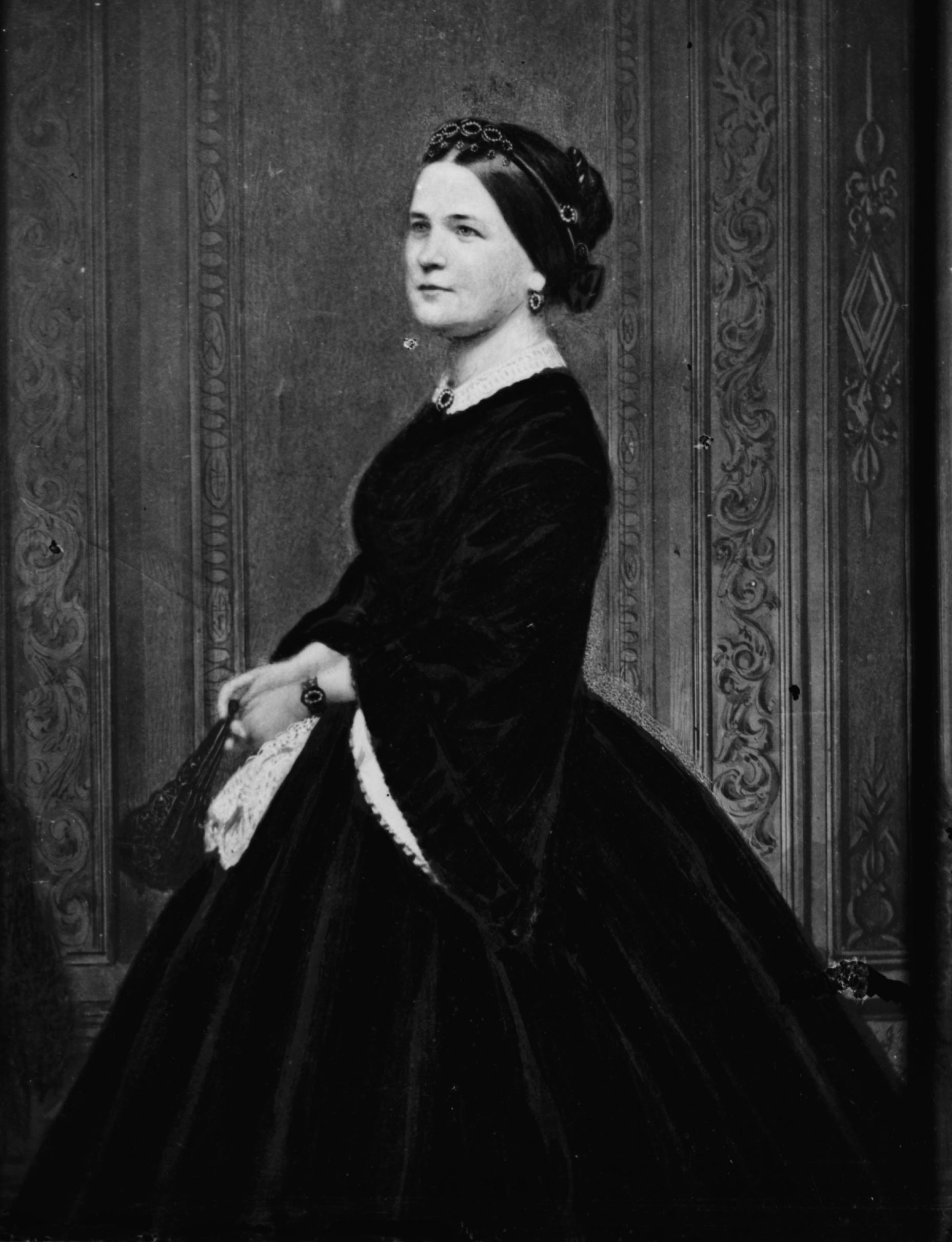
Only in recent years have scholars acknowledged Mary’s resilience and significant contributions during the nation’s lowest moment. She used her position to unflinchingly support the Union, with an uncommon visibility that helped transform the role of First Lady. Not a month after Confederate forces bombarded Fort Sumter, triggering the war, she ventured with Sumter’s heroic commanding officer, Robert Anderson, to Philadelphia and New York, where she visited a factory making Army uniforms, went to an encampment to greet 2,000 cheering soldiers, and turned heads when she showed up for a Sunday service at abolitionist Rev. Henry Ward Beecher’s church. She was breaking new ground and influencing her successors. Unlike her predecessors, who had stayed mostly out of the public eye, she was making a political statement. Mary Lincoln intended to be seen and heard.
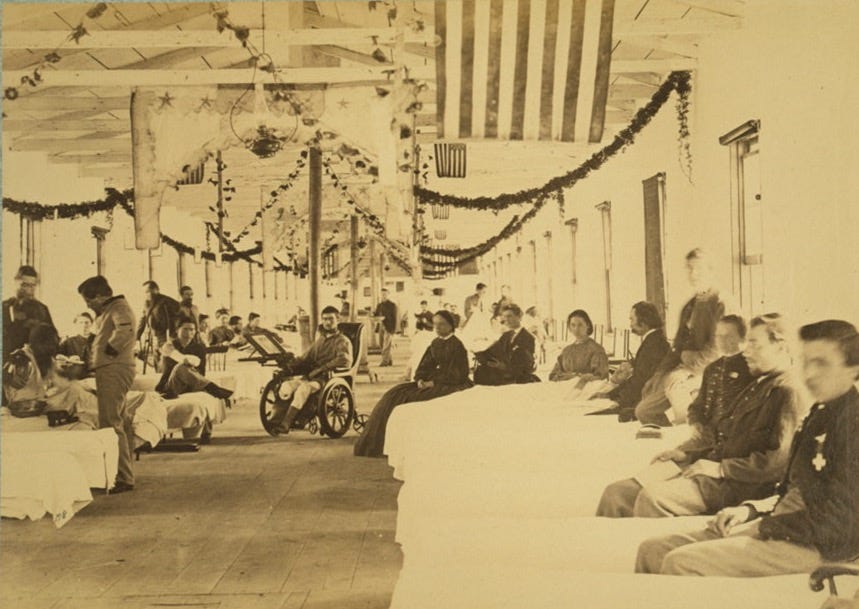
In Washington, she housed troops in the East Room, ministered to grievously wounded soldiers at nearly every Washington hospital, and visited front lines and camps from New York to Virginia. Courageously, she refused the entreaties of General Winfield Scott to flee Washington for safety when the capital was threatened with invasion. She refurbished a dilapidated White House and opened its doors to thousands of visitors to reinforce national unity and boost morale. Although her Kentucky family owned slaves, she loyally supported Lincoln’s gradual evolution on racial issues, backing his efforts to limit slavery’s expansion during the 1850s and, later, his Emancipation Proclamation. As First Lady, she donated money and gifts to raise awareness of the dire conditions in which formerly enslaved people were living.
But Mary’s early story was written by men who tried to destroy her, who emphasized her foibles while ignoring her kindness and generosity and commitment to the nation, creating a narrative that remained largely unchanged for more than a century. She suffered a series of crushing personal losses that defined her life and exacerbated her fragile mental state, outliving three of her four sons, as well as her husband, who was murdered as they held hands at Ford’s Theatre.
Mary’s life was a complex tapestry of privilege, politics, tragedy, and extraordinary resilience. She was born on December 13, 1818, in Lexington, Kentucky, into a politically connected family. Her mother died shortly after giving birth to her last son when Mary was just six. With six motherless children, her father quickly remarried Elizabeth Humphreys in 1826. The couple had nine more children, creating a chaotic and crowded household for little Mary. Yet, she persevered.
Mary came of age in one of the most developed settlements in America. Called the “Athens of the West,” Lexington, Kentucky, by the early 1800s had evolved from a rough frontier town into a flourishing community of newspapers, a 2,000-book library, private schools, fancy shops, and five churches. Her father believed women should be educated and afforded her an extended education uncommon for women of her time. Her friends and family saw her as smart, witty, cultured, and giving — but also as willful, high-strung, and sharp-tongued. She learned politics at her father’s dinner table, where politicians, bankers, and merchants drank mint juleps and discussed the issues of the day. From a young age, she told friends and family that she believed the White House was her destiny.
Eager to escape a difficult stepmother who favored her biological children, Mary pushed forward. She moved to Springfield, Illinois, in the fall of 1839 to live with her oldest sister, Elizabeth, and find a husband. A few days after her twenty-first birthday, she met an awkward, unrefined lawyer and state legislator named Abraham Lincoln. They were instantly drawn to each other, connected by their love of politics, books, and ambition. After a tumultuous on-and-off courtship, they married in 1842, and together they set their sights on the White House. There can be little question that Mary helped lift her husband to greatness, using her social and political connections to shape his image among influential politicians.
He was a long shot for higher office, but Mary was undeterred despite his losses in two Senate races. Her cousin, John Todd Stuart, once Lincoln’s law partner, was convinced that Lincoln’s naturally depressive personality might have stymied him, but that Mary’s “fire, will, and ambition,” combined with Lincoln’s own talents, brought him to the White House.
The couple arrived in Washington in 1861 as a ruptured nation was on the brink of dissolution over the continuation of slavery. While other First Ladies earned praise for their style and humanitarian work, Mary was relentlessly vilified for excessive spending in wartime to decorate the White House and purchase extravagant gowns. In addition, her efforts to land patronage appointments for family and friends rankled the political patriarchy, with gossip flying that she was being bribed to influence her husband. Abolitionists and newspaper editors, who believed Lincoln was moving too slowly on emancipating enslaved people, blamed Mary, accusing her of siding with the rebels. The pressures on her were immense, and her losses catastrophic. The Lincolns’ favorite son, Willie, died in the White House of typhoid fever in 1862 at just eleven years old. Mary was inconsolable, and it marked the beginning of her mental decline.
After the assassination, she spent seventeen years as a terrified, sad, lonely widow, desperately trying to survive, fighting for her freedom, her dignity, her money, and her rights. Her unprecedented battle for a presidential widow’s pension did more than just help her: she paved the way for future widows to receive government pensions.
Mary lived a painful, itinerant life, traveling the country searching for spiritualists to connect her to her dead children and husband. She fled to Europe to escape relentless criticism and gossip. Her surviving son, Robert Todd Lincoln, humiliated her by orchestrating a trial to have her declared insane, committed to an asylum, and to take control of her finances, fueled by his obsessive concern about her compulsive shopping.
Mary Todd Lincoln remains one of the most misunderstood figures in American history. Indeed, she was difficult. She was histrionic, self-focused, strong-willed, and impulsive, and at times, dishonest. Her anxiety could make her overbearing. However, she was also good-hearted, loved her children and husband unconditionally, and was loyal to her country. She suffered unimaginable losses that few have had to endure.
Mary’s life is a powerful reflection of the resilience of the human spirit. She was a brilliant but flawed woman of fierce loyalty and humanity. Her painful journey is a reminder that behind our greatest leaders often stand women who carry unfathomable burdens and whose stories enrich our understanding of history.

Check out the lesson on Substack to be part of the discussion. Share your views, respond to others, and help deepen our understanding.
View on Substack