In August of 1936, Franklin Roosevelt visited the Black Hills of South Dakota. He’d been asked to offer a few remarks from the back seat of his open touring car at the unveiling of the massive head of Thomas Jefferson, the second presidential countenance to be carved out of Mount Rushmore. George Washington’s had been dedicated six years earlier; the future faces of Abraham Lincoln and Theodore Roosevelt remained unfinished, indistinct and unformed in the hard rock.
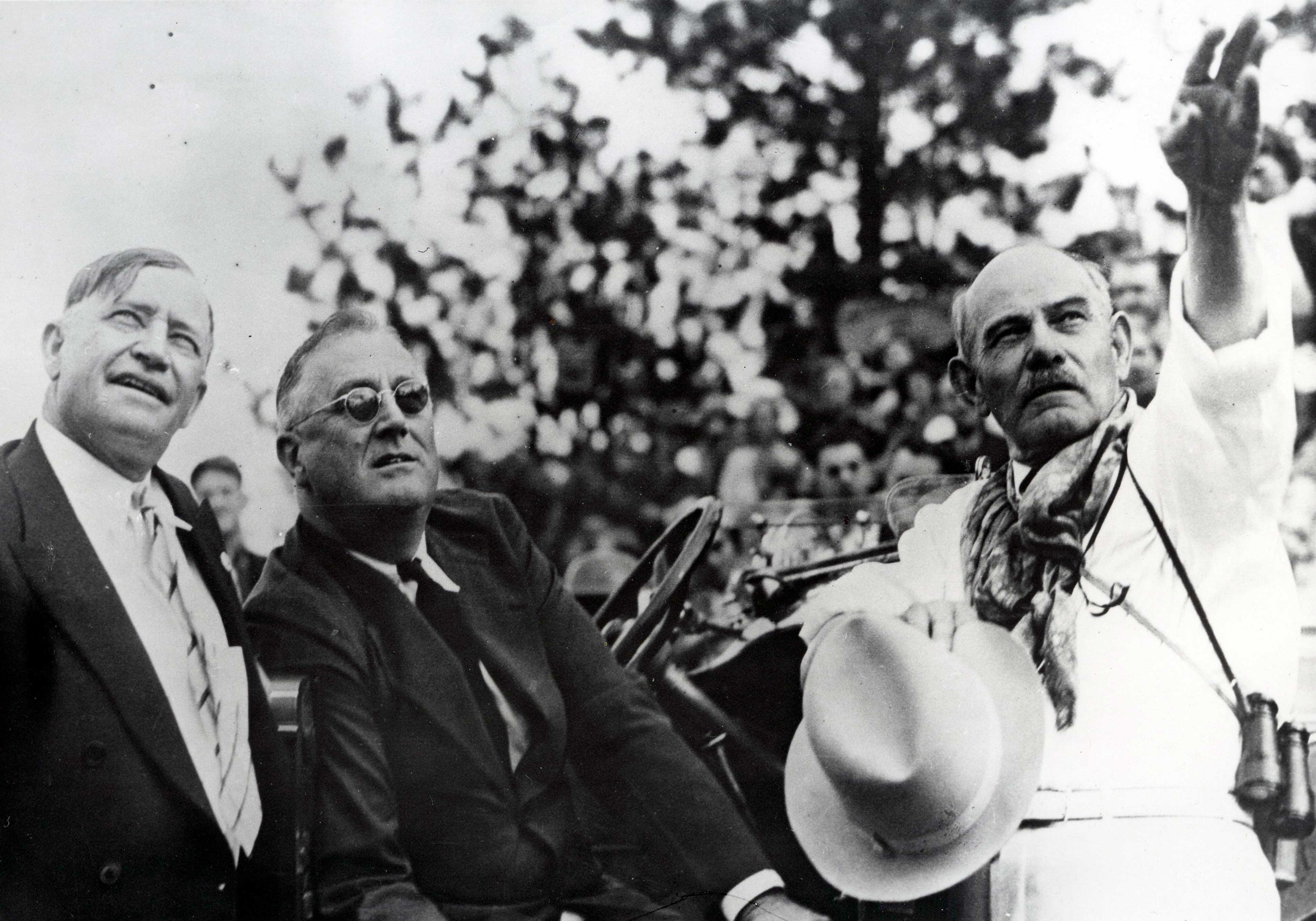
“This is the second dedication,” FDR declared, head tilted up, confident grin in place. “And there will be others by other presidents. And I think that we can perhaps meditate a little on those Americans ten thousand years from now…I think we can wonder whether our descendants — because I think they’ll still be here — what they will think about us. And let us hope that at least they will give us the benefit of the doubt, that they will believe that we have honestly striven in our day and generation to preserve for our descendants a decent land to live in and a decent form of government to operate under.”
Those words might have seemed empty if uttered by another politician, but Roosevelt’s inbred optimism — his confidence in his country’s future and his own ability to affect that future for the better — was genuine, unshakable, and infectious.
Those principles had been inculcated in him by his admiring mother, Sara Delano Roosevelt, who convinced him he would succeed at anything to which he put his mind, and by his old schoolmaster, Rev. Endicott Peabody, head of the Groton School, who told his boys “the great fact to remember is that the trend of civilization itself is forever upward; that a line drawn through the middle of the peaks and the valleys of the centuries always has an upward trend.”
His optimism survived its most severe test in 1921, when infantile paralysis seemed likely to end all his hopes. “Polio was a storm,” one of his physiotherapists recalled, “You were what remained when [the storm] had passed.” But Roosevelt’s personality would not allow him to accept that view. Instead, he spent seven years struggling to find a way to regain his feet unaided. He never did. He did eventually master a slow, halting gait that required him to wear rigid waist-to-shoe steel braces on each leg, hold a cane in one hand, and grip the arm of a sturdy companion to keep from toppling over. But his big smile and unfeigned air of breezy self-confidence made even this precarious, exhausting effort seem almost effortless.
“Optimism seemed to generate from him as naturally as heat from fire.”
When FDR was first sworn in as President in 1933, the fourth year of the Great Depression, it was by no means clear that the United States would survive ten more years, let alone the ten thousand he predicted in South Dakota. One out of four American workers was jobless; 9,000 banks had failed; farms were foreclosed, factories shut. The editor of Nation’s Business reported “fear, bordering on panic, loss of everything... Worst of all, no faith in ourselves, or the future.”
That sort of thinking was anathema to Franklin Roosevelt. “I have never known a man who gave one a greater sense of security,” Eleanor Roosevelt remembered. “I never heard him say [that] there was a problem that he thought it was impossible for human beings to solve… I never knew him to face life or any problem that came up with fear.”
He famously began his inaugural address by assuring his frightened listeners that “this great Nation will endure as it has endured, will revive and prosper. So, first of all, let me assert my firm belief that the only thing we have to fear is fear itself — nameless, unreasoning, unjustified terror which paralyzes needed efforts to convert retreat into advance.” At the end he reasserted his confidence. “We do not distrust the future of essential democracy. The people of the United States have not failed in their need...They have made me the present instrument of their wishes. In the spirit of the gift, I take it.”
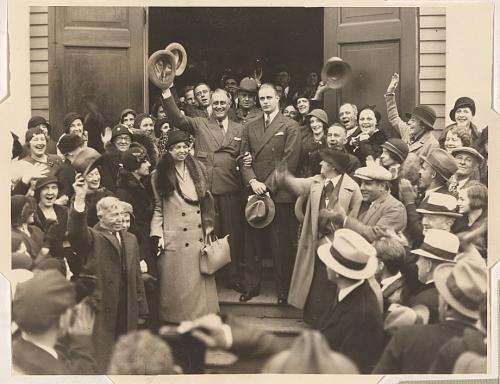
Roosevelt’s idea of the presidency, the political scientist Richard Neustadt wrote, was always “himself-in-office.” That conviction dated as far back as his time as a very junior law clerk on Wall Street when he had startled his officemates by announcing he had mapped out a political career that would lead him to the White House. Early on, Roosevelt’s easy charm and eagerness to please had caused others to underestimate him. His Oyster Bay relatives dismissed him as a “feather duster” unworthy of courting his cousin Eleanor. In the New Yorker on the eve of his presidency, the journalist Milton MacKaye suggested Roosevelt was “something of a grown-up Boy Scout...all light and no darkness; all faith and no skepticism; all bright and no despair. One expects shadow and depth in a great man.”
MacKaye was right that darkness, skepticism, and despair were genuinely foreign to FDR, but he was never a Boy Scout. He could be devious, vindictive, even ruthless — as the eighty thousand Japanese-American citizens he sent to internment camps after Pearl Harbor could attest. He remained largely unknowable, even to those closest to him. One long-time aide described his “thickly-forested interior.” Another, baffled by Roosevelt’s near-perpetual ebullience, claimed he “must have been psychoanalyzed by God.” And a New Deal official marveled that optimism “seemed to generate from him as naturally as heat from fire.”
FDR’s New Deal produced an ambitious and unprecedented array of agencies and initiatives aimed at improving the lives of Americans who found themselves, through no fault of their own, in economic distress: the Civilian Conservation Corps, the Public Works Administration, the Tennessee Valley Authority, Social Security. Yet in the columnist George Will’s estimation, “The best of the New Deal programs was Franklin Roosevelt’s smile. He had a Christian’s faith that the universe is well constituted and an American’s faith that history is a rising road.”
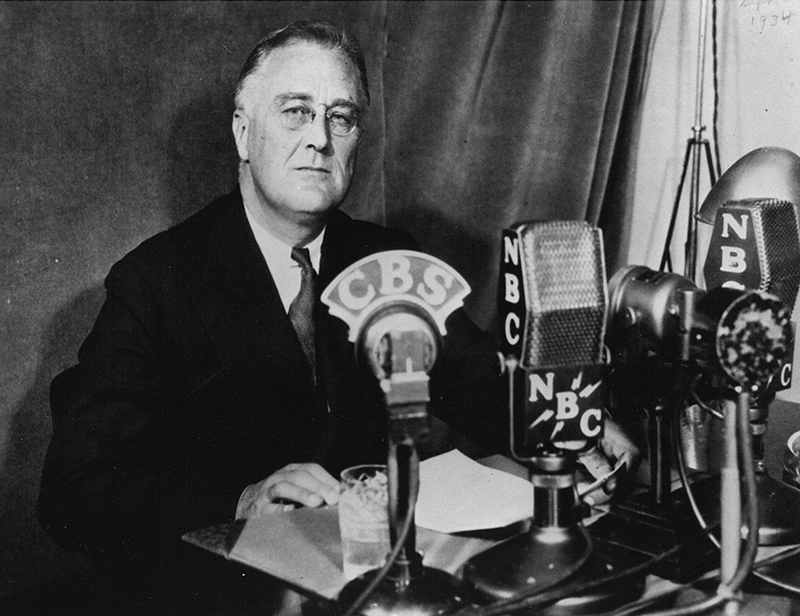
Theodore Roosevelt, FDR’s fifth cousin and boyhood hero, argued that no president could be considered great who had not faced and overcome a grave crisis — and was deeply disappointed that he’d never confronted one himself. Franklin Roosevelt was confronted by the two worst crises since the Civil War — the Great Depression and World War II. During his years in office, his contagious confidence rarely wavered even during the darkest days. In part because it didn’t, the confidence of the American people was restored, too, so that by the end of his time in office, in Winston Churchill’s words, the United States stood “at the summit of the world.”
FDR was just 63 in April 1945, but after twelve years in the White House — longer than any President had lived there before him and longer than any President ever would again — his body had simply worn out. Despite it all, his optimism remained undiminished. The day before he died, reviewing a speech intended for the annual Jefferson Day Dinner honoring the founder of his party, he added two lines in his own hand, the last words he would address to his fellow Americans in whose brilliant future he had never stopped believing. “The only limit to our realization of tomorrow will be our doubts of today,” he wrote. “Let us move forward with strong and active faith.”
“The only limit to our realization of tomorrow will be our doubts of today.”
- Franklin Delano Roosevelt
Check out the lesson on Substack to be part of the discussion. Share your views, respond to others, and help deepen our understanding.
View on Substack