Lesson #
25
• FROM
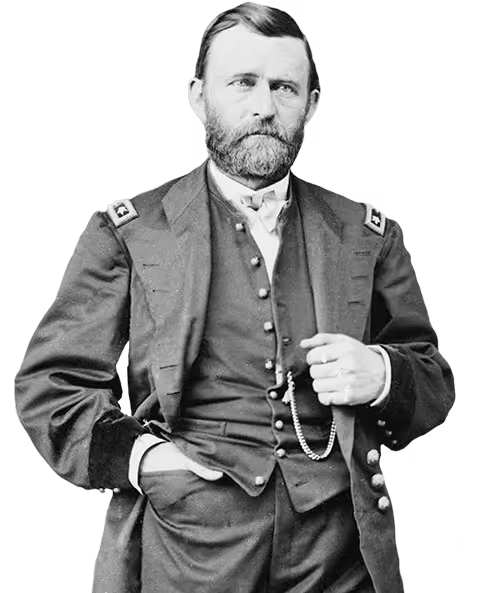
Ulysses S. Grant
For years, even his admirers have been inclined to end Ulysses S. Grant’s story at Appomattox. A familiar narrative portrays Grant as a brilliant general who stumbled badly as a national leader beyond the battlefield. He was, under this view, situationally great: a flawed man who succeeded only because war suited his temperament. His struggles with alcohol, his early business failures, and later corruption within his administration all seemed to confirm his limitations.
But the period between Lincoln’s assassination and Grant’s presidency tells a different story. At the center stands one episode that reveals everything about his character and that should speak to us today: the Stanton Crisis of 1868. During this pivotal moment for the country, Grant demonstrated that loyalty to principle is both harder and more vital than loyalty to power.
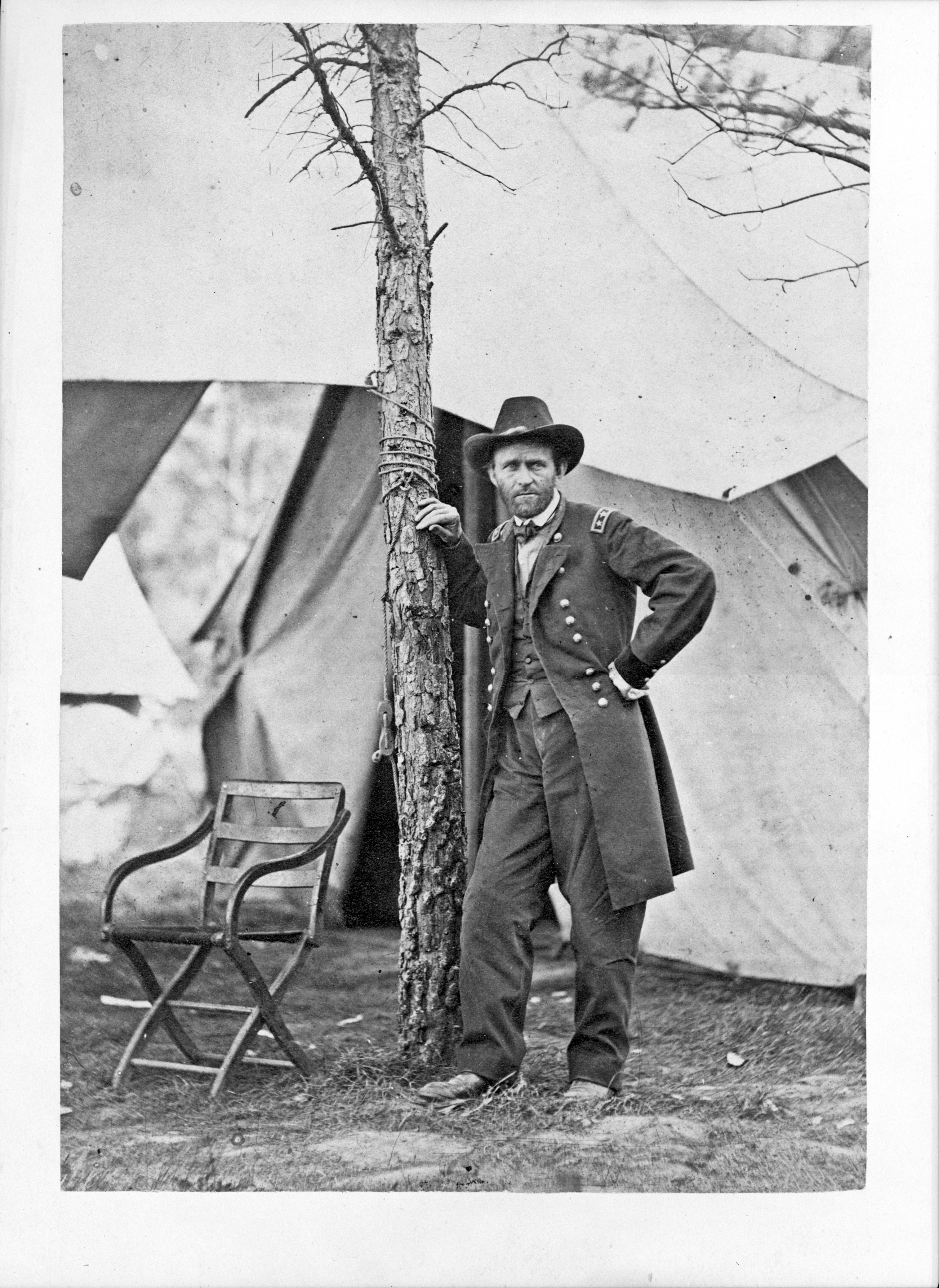
Like the nation he led, Grant’s real test came after the war. In 1865, the Union was intact in law but deeply divided in reality, fragile in spirit, and unsure of its own future. Freedmen sought promised rights while former Confederates resisted the new state of affairs. Congress and President Andrew Johnson clashed openly over Reconstruction. And Grant, still commanding the Army, found himself navigating a political landscape far more treacherous than any battlefield.
Grant had learned steadiness during years of failure before the war. After resigning from the Army in 1854, he cleared land and planted crops on hardscrabble Missouri soil, only to watch his harvests fail. He hauled firewood into St. Louis on a wagon, selling it on street corners for spare cash. Eventually he worked as a clerk in his father's leather store in Galena, Illinois—a 38-year-old former Army captain keeping accounts while his younger brothers managed the business and gave him orders.
Those years taught him humility and patience in ways that success never could. They gave him an inner calm that survived circumstance. When the Civil War came and he rose to command, officers and soldiers recognized these traits immediately. Those same qualities would carry him through challenges far more complicated than military campaigns.
In late 1867, Edwin Stanton’s position as Secretary of War became the focal point of the struggle over Reconstruction. Stanton was one of the few administration officials committed to enforcing congressional policies that protected freedmen and imposed meaningful conditions on the South. Precisely because Stanton stood in the way of the president’s vision for a swift and lenient restoration, Johnson wanted him removed.
When Johnson suspended Stanton in August 1867 and appointed Grant as interim Secretary of War, Grant reluctantly accepted. He recognized that refusing would allow Johnson to install someone willing to use the Army to undermine Reconstruction. Grant decided to stand in the breach, fully aware that he was placing himself at the center of a constitutional crisis.
For several months Grant balanced competing pressures from both ends of Pennsylvania Avenue. Claiming sole authority over Cabinet appointments, Johnson insisted privately that Grant should hold the office even if the Senate voted to restore Stanton to his position. Congressional leaders insisted Grant return the department to Stanton if the law required it. Grant understood that his choice would shape not only Reconstruction but the future of civil-military relations in the republic.
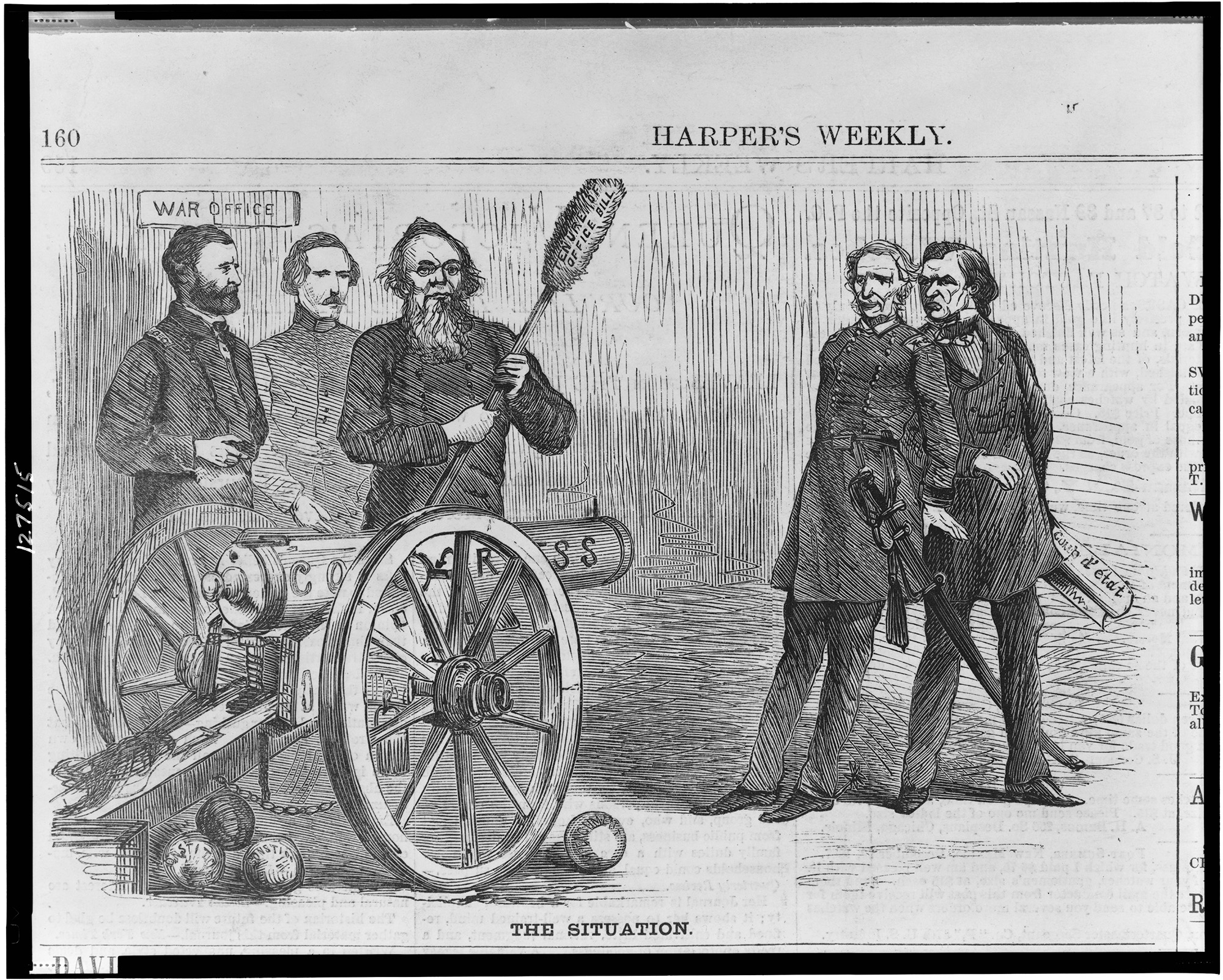
In January 1868, the Senate voted to reinstate Stanton. Johnson summoned Grant to the White House for a series of increasingly tense meetings. The president insisted that Grant remain in the position, framing the dispute as a question of executive authority. Grant responded in his typically direct way, saying he would follow the law and return the office to Stanton. Johnson pressed harder, but Grant remained unmoved.
On the morning of Stanton’s reinstatement, Grant walked into the War Department and transferred control back to him. There were no dramatic gestures or public statements, only a simple acknowledgment that the law had spoken and he would follow it. Grant understood that the question was not who held power, but whether power would remain constrained by law.
Johnson’s reaction was immediate and angry. He wrote a public letter accusing Grant of deception and betrayal. Grant answered with a measured, factual response that laid out their private conversations without accusation or embellishment. He made clear that his loyalty belonged to the Constitution and the laws of the country rather than to any individual occupying the presidency.
“His loyalty belonged to the Constitution and the laws of the country rather than to any individual occupying the presidency.”
By refusing to allow himself to be drawn into political combat, Grant protected both the military’s neutrality and the integrity of Reconstruction. He prevented the use of military force to settle a political dispute at a moment when the nation remained vulnerable to such a rupture. His steadiness helped contain what could have become a far more dangerous constitutional crisis.
When Grant became president the following year, he brought the same disciplined temperament to the role. He moved aggressively to suppress the Ku Klux Klan through federal prosecution and military intervention when necessary. He supported federal laws to protect the rights of freedmen and enforce the new Thirteenth, Fourteenth, and Fifteenth constitutional amendments. He understood that Reconstruction should restore dignity and build lasting institutions rather than impose temporary humiliation.
Grant also grasped something more subtle but equally important: the military could not serve as the permanent instrument of domestic governance. Power had to shift from force to legitimate civilian institutions. A commander can compel obedience on a battlefield through the clarity of orders and the authority of rank. A president must foster trust in the rules and structures that allow a diverse society to govern itself.
As the United States approaches its 250th year, Grant’s example is urgently relevant. He knew all too well the temptation for political leaders to use institutional authority for partisan purposes, to pressure senior military officers to align with political factions and be loyal to a person rather than the Constitution. Grant faced exactly these pressures in 1868. Yet he appreciated that the military’s integrity in a republic depends entirely on its commitment to constitutional principles, not whoever temporarily holds power. And he knew that when that line blurs or disappears, republics fail in ways that are difficult to reverse.
Grant’s greatest legacy, then, may be in helping to protect a fragile peace during years when the republic could easily have fractured again—or transformed into something altogether darker. The Union endured because at a critical moment Grant placed duty above personal interest and character above political convenience, provoking and absorbing the anger of the powerful to protect democratic institutions. He understood that moving a diverse nation forward requires patience, humility, and an absolute commitment to principles larger than personal ambition.
But the temptation to bend institutions toward personal power is not unique to Grant’s era. Our future still depends on whether our leaders choose law over loyalty.
Indeed, If America is to endure another 250 years, we would do well to remember the lesson Grant lived: leadership is the steady, often unglamorous work of holding people together and safeguarding the principles that make unity possible. That work never reaches completion, but it remains the only reliable path toward a nation that can still recognize itself.
“Our future still depends on whether our leaders choose law over loyalty.”

Check out the lesson on Substack to be part of the discussion. Share your views, respond to others, and help deepen our understanding.
View on Substack