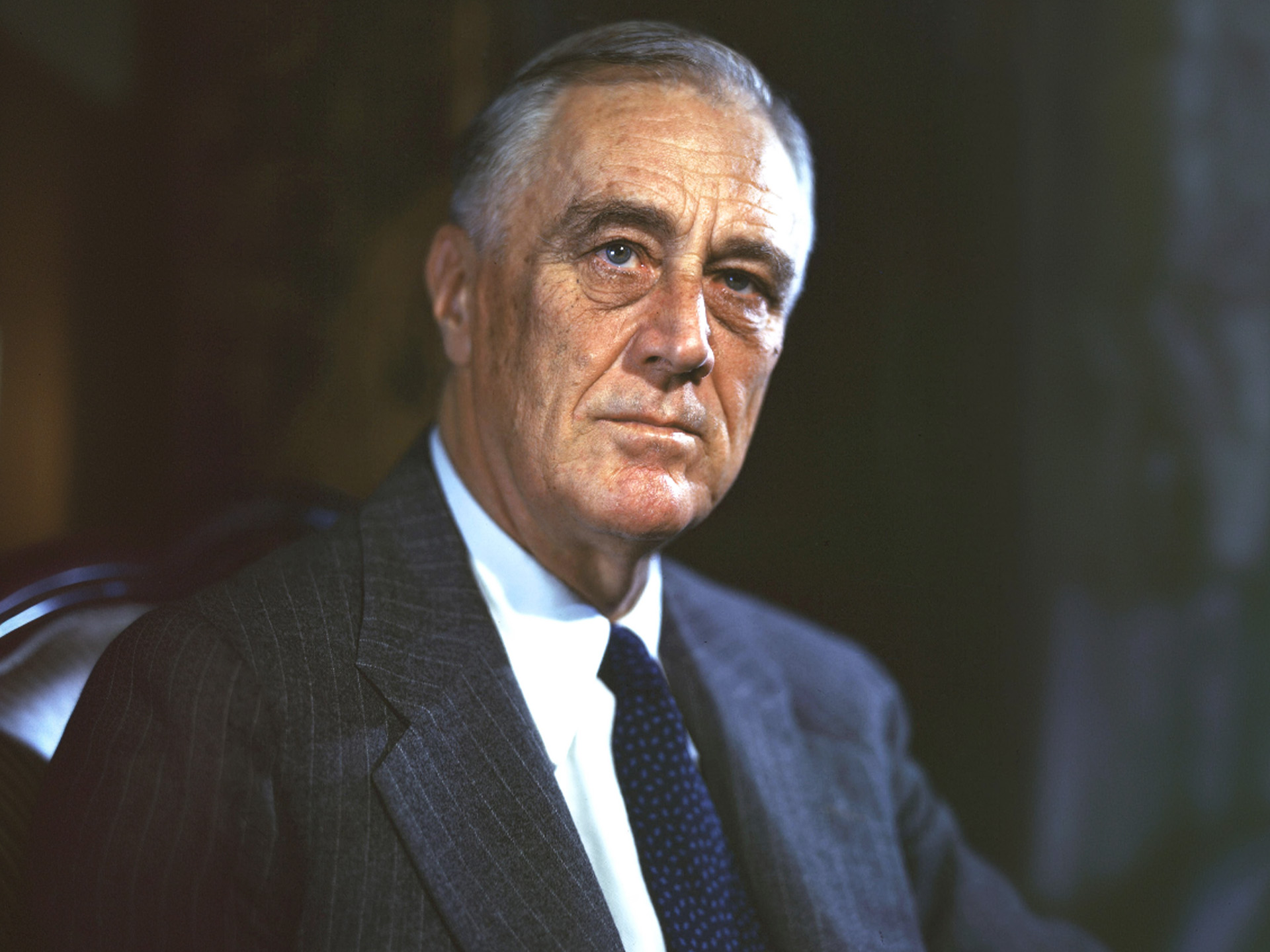
Lesson #
27
• FROM
Rutherford B. Hayes
Few presidents have entered office under less auspicious circumstances than Rutherford B. Hayes. His Republican Party, for 16 years the dominant force in American politics, had, by 1876, fallen into division and disarray. Its program for reconstructing the South was unpopular and faltering. More than that, the nation was in the midst of what would soon be dubbed “The Long Depression,” and the presidency, tarred by the scandals of the Grant era and controlled by the party bosses of the Senate, had itself sunk to new lows.
The manner in which Hayes, a three-term governor of Ohio, secured the presidency sharpened the perception of a system in desperate straits. His opponent, Governor Samuel Tilden of New York, was poised to lead the Democratic Party back to the White House for the first time since the Civil War. When the dust settled, Tilden had bested Hayes in the popular vote and come within a single electoral vote of capturing the presidency. But in Louisiana, South Carolina, and Florida—three rebel states where federal troops still enforced Reconstruction against so-called “redeemers” bent on reinstating white supremacy—allegations of fraud led Democrats and Republicans to submit dueling pairs of electoral returns.
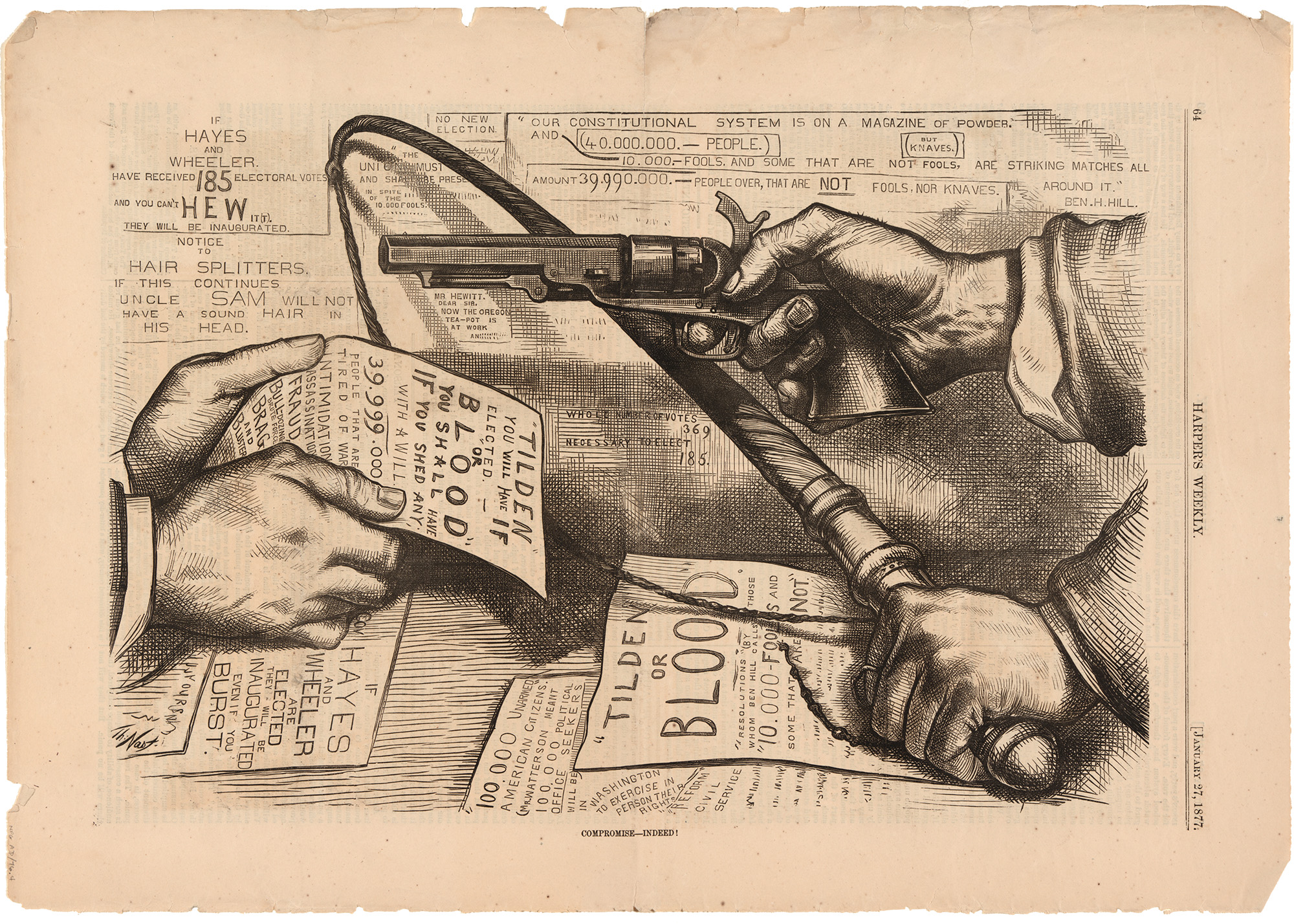
Frantic Republican operatives hatched an extraordinary plan to suspend the electoral count and authorize a special commission to adjudicate the disputed returns. In what became known as the Compromise of 1877, the commission awarded Hayes the presidency in return for certain concessions, chief among them a promise to withdraw federal troops from the South. Henceforth, disgruntled Republicans and Democrats would refer to Hayes with a sneering nickname: “Rutherfraud.”
Under the circumstances of Hayes’s ascent, mere political survival would have been an accomplishment. American politics has not, as a rule, been kind to presidents affiliated with time-worn, vulnerable establishments clinging to power. But Hayes did more than survive. He clawed back some lost executive authority and negotiated a political pivot that would set the nation on a new course. And he did those things in a singular fashion. He rehabilitated the old and faltering party with which he was affiliated, leaving it stronger than he found it.
“Mere political survival would have been an accomplishment.”
Hayes pulled off this feat with ruthless realism, measured action, and a willingness to play the long game. He charted a way forward, confident that fellow Republicans would eventually see the light and follow his lead. All along, he benefited from knowing when and how to pick a fight.
Hayes had three interrelated objectives: reorient the Republican brand without turning the party against him, staunch the Democratic resurgence without doubling down on his party’s unpopular Reconstruction program, and break the grip of the Senate bosses over the executive branch. Standing in the way of each of those goals was the “Stalwart” wing of his own party.
Hayes’ opening move was an act of self-denial. Aware of the tenuousness of his claim to the White House, he pledged to serve only one term. This promise signaled to other Republicans that his designs—if not benign—were not self-aggrandizing. He followed up with another bow to harsh realities. Abiding by the compromise that handed him the presidency, he accepted dubious pledges from the redeemers to uphold the Civil War Amendments and withdrew military support from the southern Republican governors who had just helped him win the White House. The abandonment of Black Americans to repression and terror remains a stain on the nation’s honor, but Reconstruction was already a faded dream, and Hayes’ ambitions were set elsewhere.
Determined to break the spoilsmen’s grip on the national government, Hayes chose to fight on the ground of civil service reform. Realizing that he was not powerful enough to confront the Stalwarts as a group, he instead targeted their most powerful member, Senator Roscoe Conkling of New York. The base of Conkling’s Republican machine was the New York Customs House, the government’s largest office and most lucrative port of entry. Stacked with Conkling’s henchmen, the port housed a formidable political workforce standing defiantly against the president’s plans for both the party and the nation. Hayes had his Treasury Secretary, John Sherman, appoint a commission filled with reformers to investigate personnel practices at the port. Its report called for a reduction in staff, an end to political assessments of appointees, and the liberation of the federal workforce from partisan control.
Conkling refused to submit. When Hayes issued an order to implement the commission’s recommendations, Conkling’s men in charge of the port ignored him. When the president ordered those officers removed and nominated replacements, Conkling bottled up his nominees in the Senate. To defeat Conkling and appoint the president’s nominees, Sherman had to improvise a impromptu coalition with Senate Democrats.
The Customs House battle was a national sensation and a signal victory for the President. Arguably, the symbolism outweighed the substance. Hayes’s targeted approach—along with his one term pledge—had eased the way for reform by giving ambitious Republican politicos like Sherman an interest in damaging Conkling, a rival for the succession. Conkling himself, though back on his heels, survived to fight another day, when Hayes’ successor, James Garfield, would deliver the final blow to Conkling’s career. But Hayes got what he wanted. Merit-based appointment and the separation of administration from politics gained a toehold at the commercial center of the nation. That elevated the cause of reform nationally and began the slow emancipation of the presidency and executive branch from the spoilsmen.
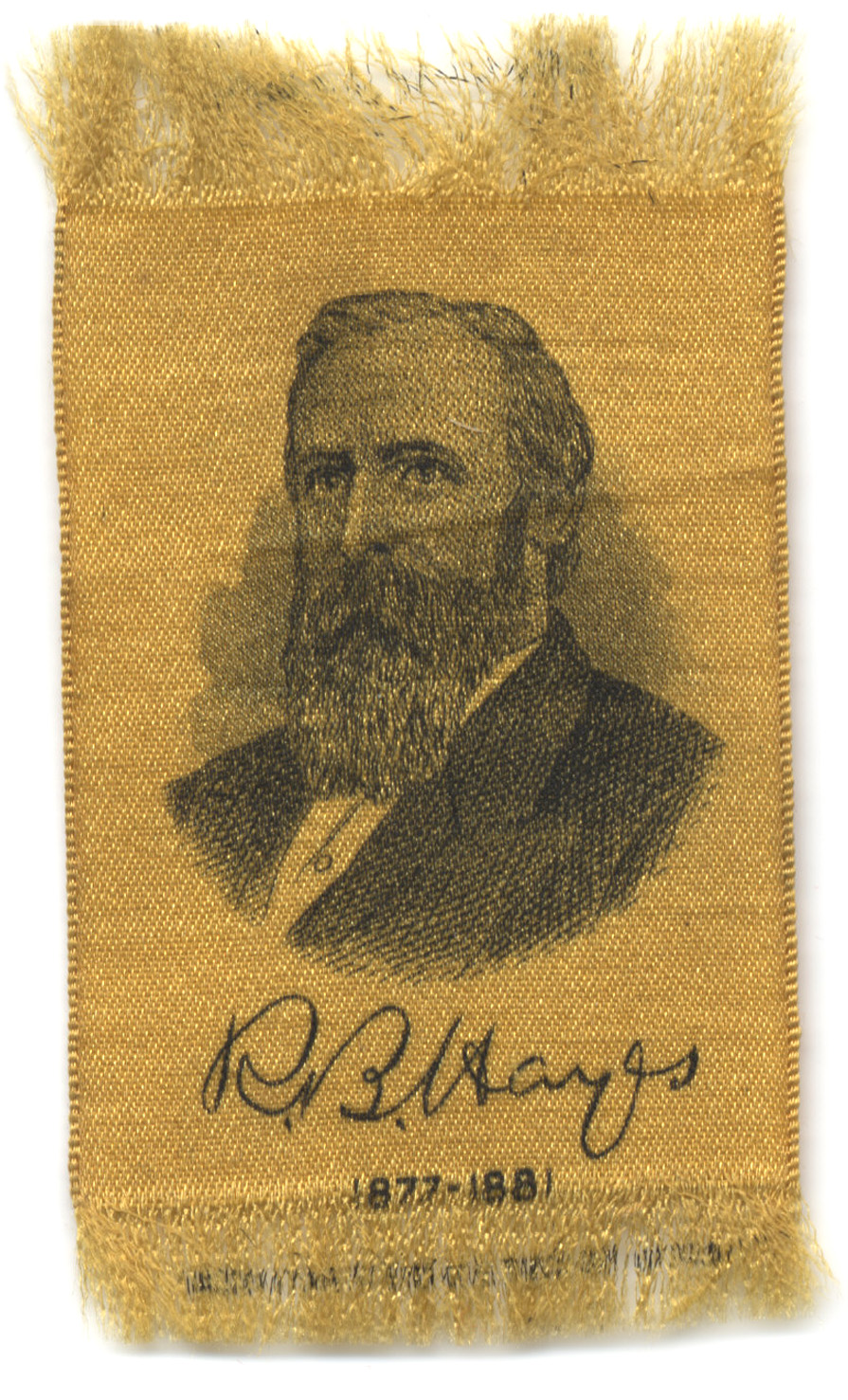
Hayes’s commitment to civil service reform was deep and forward looking. A merit based bureaucracy was instrumental to tackling the new challenges he saw on the horizon. Capable administration was essential if the national government was to attract investment in the new industrial economy. Hayes’ alliance with Sherman joined the cause of reform to the creation of a proficient Treasury Department and to the wider vision of a Republican Party reconfigured as the party of industry.
Hayes played his long game in the face of serious setbacks. Democrats took full control of Congress in 1878, and—breaking the terms of the 1877 compromise—quickly moved to disenfranchise the freedmen by cutting off funds for Justice Department supervision of elections in the South. Hayes saw this as an opportunity. He upped the ante, joining another high-stakes battle and rallying his troops. In a string of four stinging veto messages, he defended the newly-amended Constitution, accused the Democratic Party of subverting the achievements of the Civil War, and presented that subversion as proof that Democrats could not be entrusted with national power.
“Hayes played his long game in the face of serious setbacks.”
Hayes’s indictment of the Democratic Party, along with signs of economic recovery, buoyed Republicans heading into the presidential election 1880. At the Republican convention, Hayes’s preferred candidate, Secretary Sherman, fell short in the delegate count. But the eventual nominee, James Garfield, had served as Sherman’s convention manager and was friendly toward Hayes. That kept the president’s program alive. A Conkling operative, Chester Arthur, was put in the vice presidential slot, a fitting sign of the new balance of power.
Garfield won the general election despite losing all the southern states, and for Hayes, that was sweet vindication. By taking the long view—choosing his fights carefully and swallowing concessions when necessary—he had taken a party plagued by scandal and programmatic exhaustion and turned it into a northern powerhouse, a capable party of industry that would continue to dominate American government and politics for the next half century.

Check out the lesson on Substack to be part of the discussion. Share your views, respond to others, and help deepen our understanding.
View on Substack