Lesson #
49
• FROM
Eleanor Roosevelt
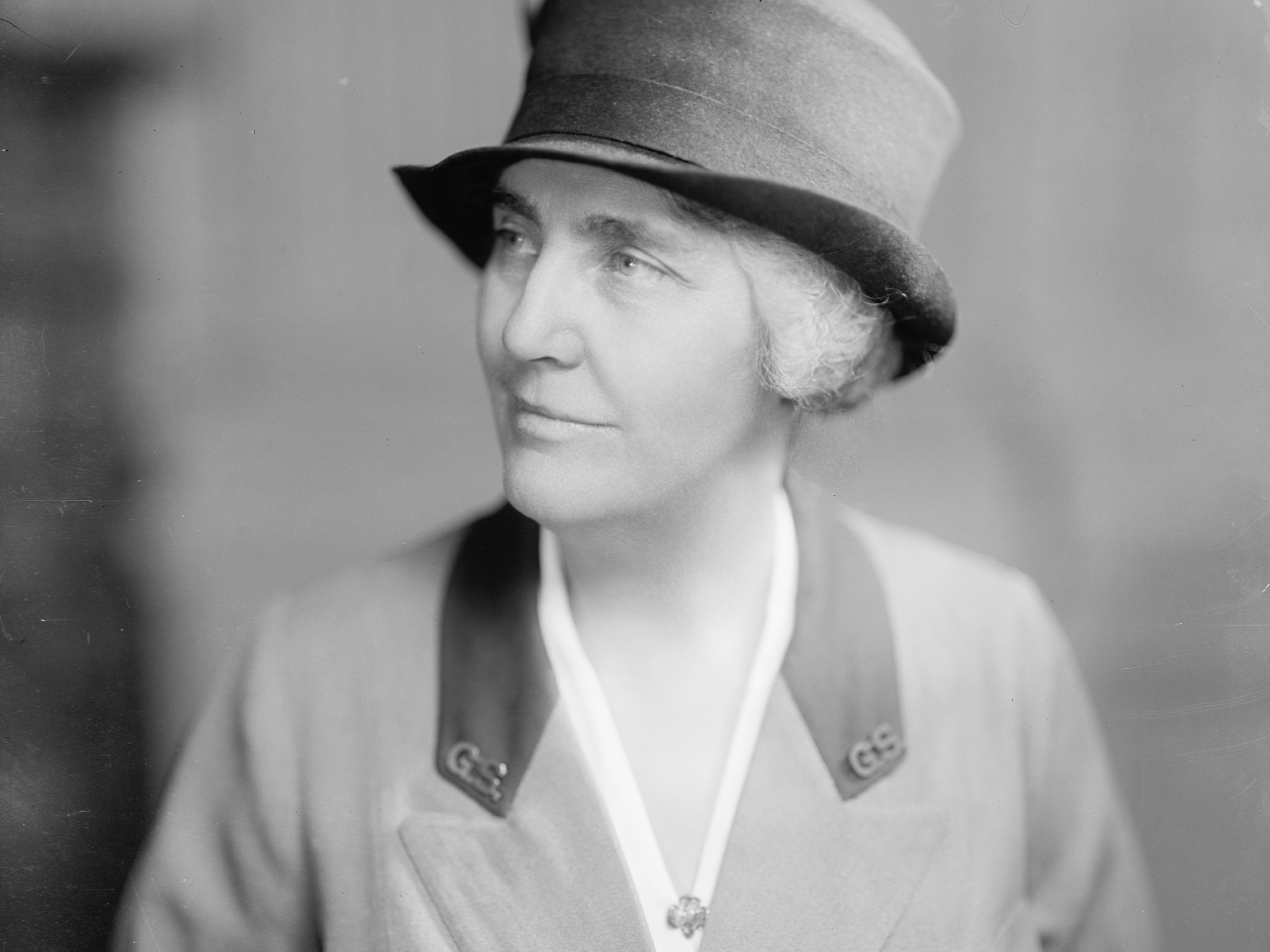
Challenges defined Eleanor Roosevelt’s public and private life. How she learned to confront fear shaped her understanding of politics and her commitment to democracy that left a lasting mark on the world.
She witnessed the greatest crises of the twentieth century: two world wars, the Great Depression, the Holocaust, the creation of the atomic bomb, and the rise of the Cold War. She experienced the century’s greatest social challenges: the resurgence of the Ku Klux Klan and the rise of the civil rights movement, the adoption of the Nineteenth Amendment and a women’s movement dedicated to equal treatment under the law, the birth of a human rights movement, and the oppression of McCarthyism.
These were not abstract events. She saw the impact these crises had on people and on nations. Deeply affected by what she saw and who she met, she struggled to respond in ways that met people’s needs and strengthened democracy.
This was not easy or safe work. She had no elected position. The more open she became about her work, the more notice, and ire, she drew. Death threats increased, bounties were placed on her head, and her fiercest critics tried to kill her.
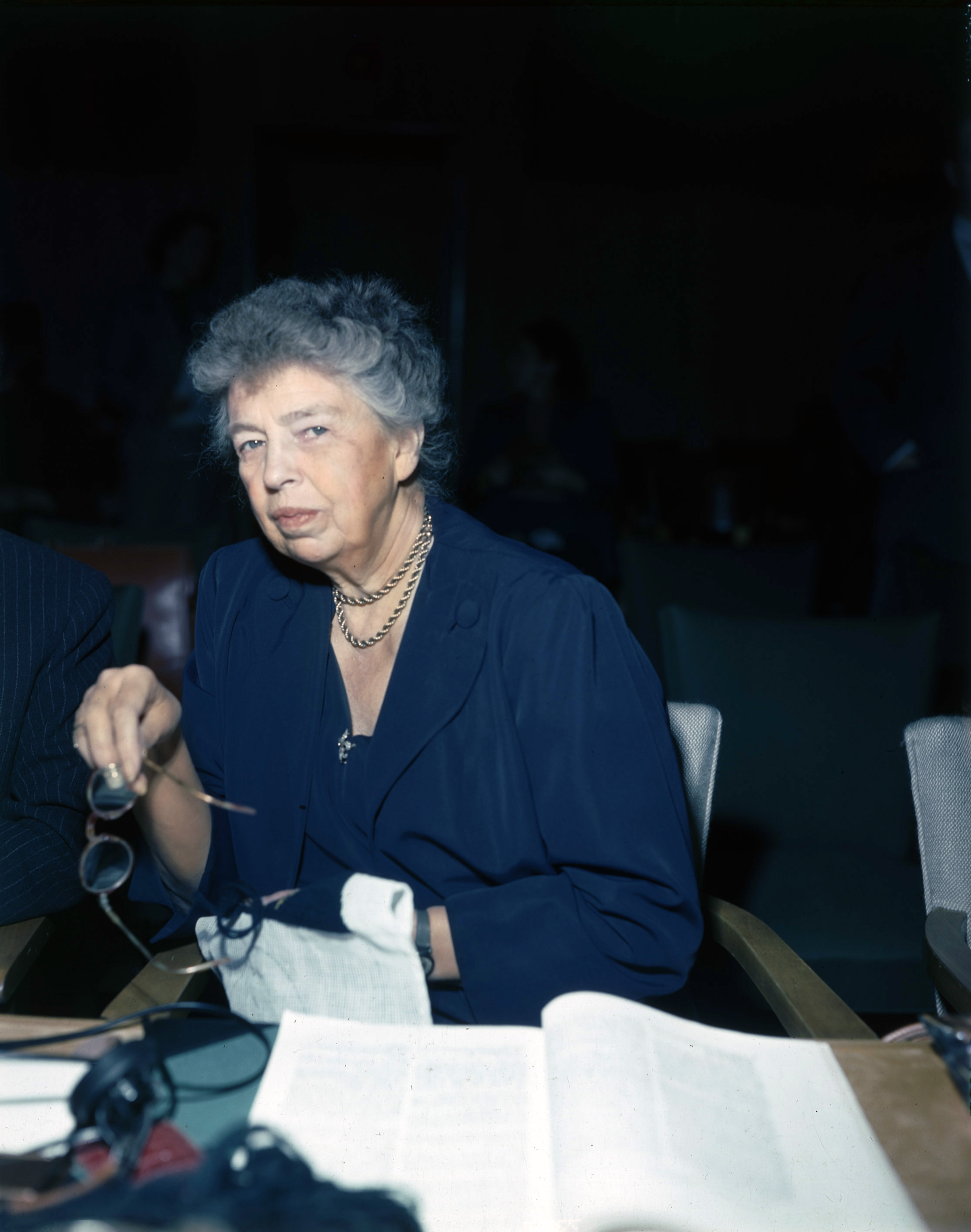
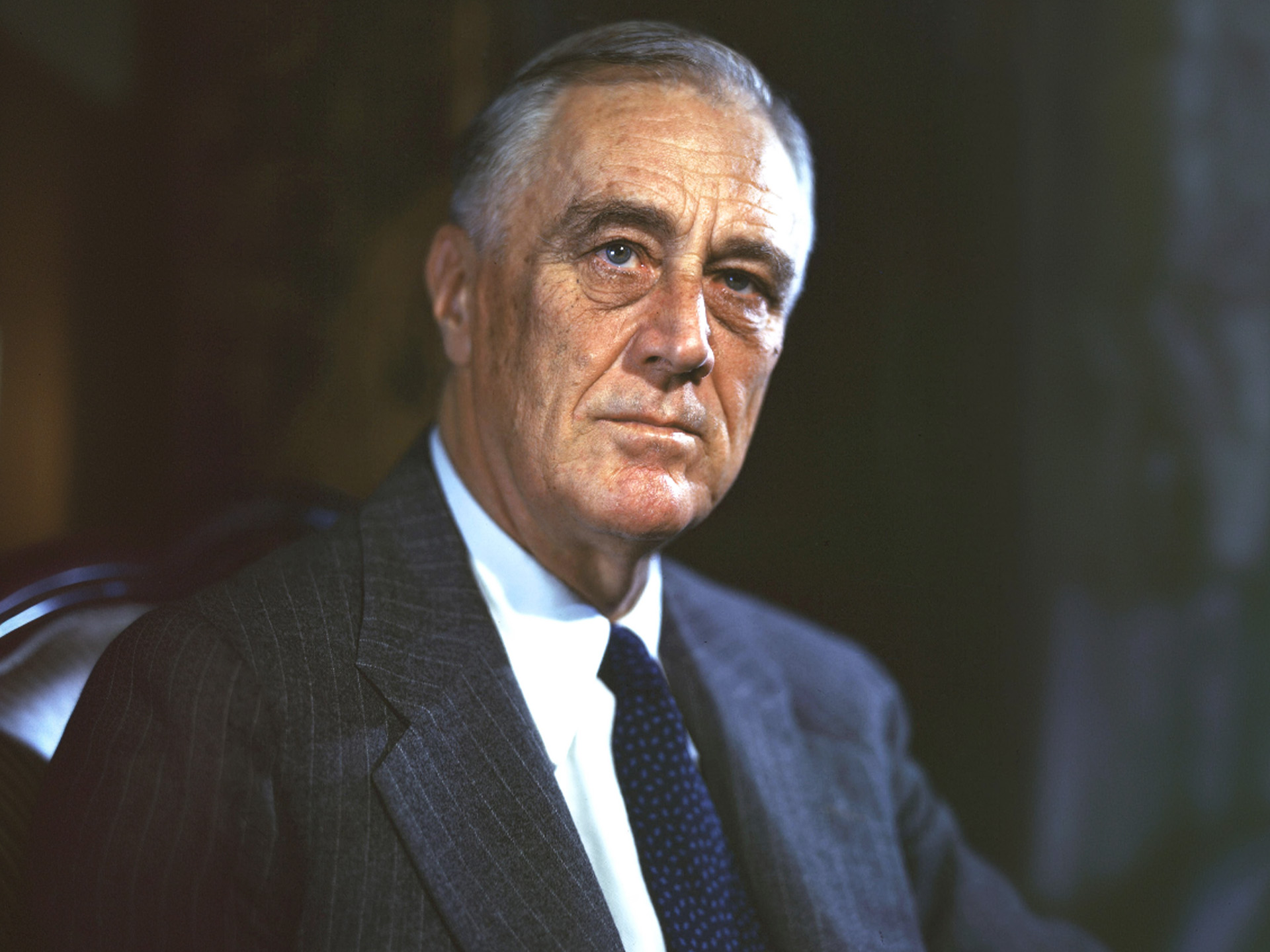
Eleanor Roosevelt – often referred to by her initials, ER – experienced a personal journey that was also riddled with sorrow. Orphaned at ten and intensely shy, she struggled to find friends she could trust while meeting the social demands her family placed on her. Her third child died in infancy, her younger brother struggled with addiction, and her husband Franklin Roosevelt (FDR) contracted polio, paralyzing him for life. As she aged and FDR’s political skills took him to the presidency, she struggled to carve out her own identity while meeting his expectations. Intensely private, she bore sadness silently, balancing her own tendency toward depression with a powerful sense of duty.
Eleanor Roosevelt had to learn to lead. She had to find her voice, speak honestly in ways that enhanced FDR’s political priorities. She had to read people, intuit their motives and interests, and decide whom to trust. She had to learn to keep people at the table when their egos and differences spurred them to leave. Above all, she had to have the confidence to think for herself and discount her critics.
Duty, empathy, and fear compelled her to act. FDR’s polio limited his ability to travel and make appearances, pushing her into the political arena. As First Lady during the Great Depression, ER spent half of each year crisscrossing the nation, often alone and always without bodyguards, talking with Americans of every stripe. When her husband famously described the sight of “one third of a nation ill-housed, ill-clad, ill-nourished,” it was in part through her eyes that he saw. She saw how farmers could not combat the massive dust storms that destroyed farmlands and suffocated livestock. She saw firsthand the discrimination Black Americans faced.
These visits taught her how fear and despair could either prompt resentment and wreck communities or inspire a brave resilience. She took policy ideas back to the White House. Her intensity alienated some of FDR’s advisors and energized his critics. By the time Hitler’s troops seized Europe and the US joined the war, she was the most admired – and the most hated – woman in the world.
Eleanor Roosevelt had been First Lady for twelve years when she left the White House in 1945. Serving as FDR’s “eyes and ears,” she had redefined the role from gracious helpmate to public advocate. She collected information about the real challenges the country faced, proposed solutions, traveled to battlefields and military hospitals, and made sure the president knew what she learned and what she thought. She used her daily newspaper column to tell America what she did – all while welcoming thousands of visitors to the White House.
“She was the most admired – and the most hated – woman in the world”
But her most significant personal work occurred after the White House. FDR died in April 1945, making Harry Truman – who had been vice president for three months – the president. ER returned to the Roosevelts’ home at Hyde Park, New York. Aware that she “had lived in FDR’s shadow,” she wondered what she “could achieve under [her] own momentum.” She rejected offers to run for the Senate and serve as Secretary of Labor. When pressed to reconsider, she assured people that her “voice would not be silent.”
Indeed, her voice would echo around the globe and for decades to come. In December 1945, Truman appointed her to the first American delegation to the United Nations (UN). She had criticized some of his decisions and his advisors thought this appointment was a way to sideline her. She initially refused, convinced that her lack of legal training would undermine the delegation. Her son challenged her to accept. On December 31, 1945, she boarded an ocean liner bound for England.
ER would represent America at the UN for the next three years. As the only woman on the U.S. delegation, she was initially treated more as a patriotic symbol – FDR’s widow – than as a negotiator. Haunted by her wartime trips to battlefields and hospitals, she outworked her colleagues, determined to live up to the sacrifices she had seen. She read all the material and talked frankly with other delegations.
As her colleagues from the U.S. delegation focused on the Security Council, she concentrated on the repatriation of refugees and matters before the Social and Economic Council. Other delegations took notice and chose her to lead the commission charged with drafting the human rights document mandated by the new UN Charter.
Drafting the Universal Declaration of Human Rights (UDHR) was ER’s greatest challenge. It was painful and painstaking work. Her committee, comprised of eighteen nations, agreed on little, other than they beat the Axis Powers. Crafted against the backdrop of the atomic bomb, millions of deaths and casualties, a lingering global depression, and challenges to segregation and colonialism, the delegates were instructed to define human rights.
Determined to give the world a vision that could prevent another world war, she drove the committee hard, chairing 300 meetings spanning 3,000 hours over two years. Its members fought over what governments owed their citizens, who citizens were, whether private property or God existed, and what sovereignty meant. She had to convince the United States to support social and economic rights (the right to food, education, wages) and the Soviet block to include political and civil rights (the right to dissent, vote, pray). To get to a final text, she made difficult compromises.
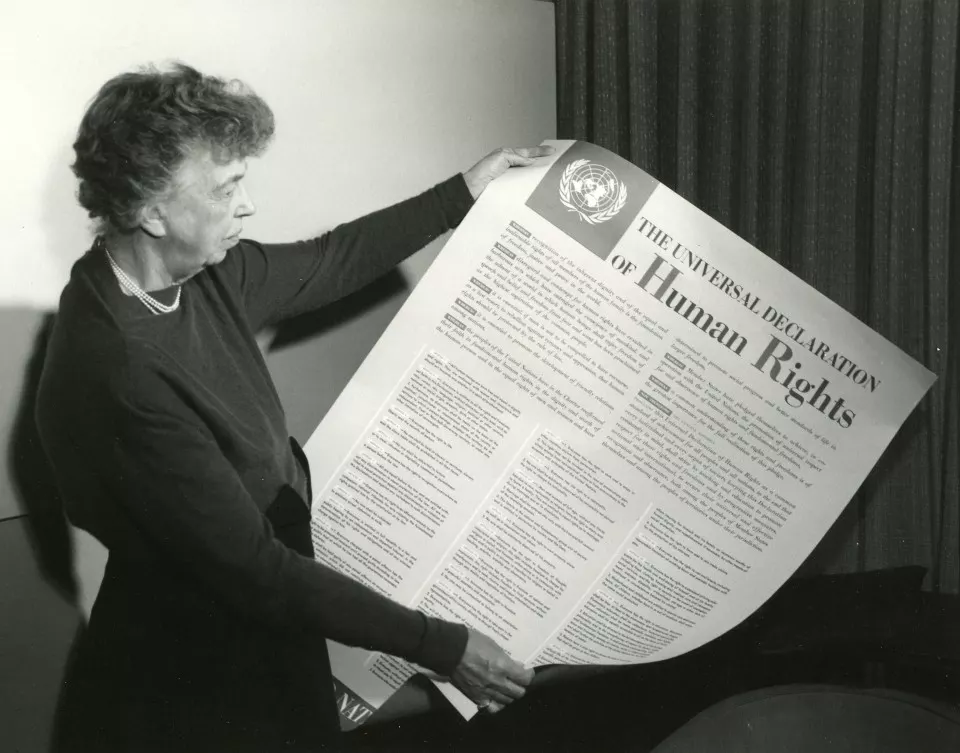
Finally, on December 10, 1948, the United Nations approved the thirty articles of the UDHR, endorsing “all human beings are born free and equal in dignity and in rights.” Everyone was included, a radical statement for its time that is still debated today. ER dedicated her final years to the Declaration’s implementation, combating critics who, inspired by McCarthyism and the Ku Klux Klan, challenged its application to every American. Death threats continued to intensify until her death in 1962 – and she continued to refuse a bodyguard.
As the UDHR turns seventy-eight, some nations question its intent, insisting it is a concept dominated by Western ideals. Others argue it is irrelevant given global power politics. Others insist it is more relevant than ever.
As this debate continues, the challenges Eleanor Roosevelt faced remain with us. The question that remains too is if we have the courage to address them. She showed what that courage looks like. Every day we have the opportunity to demonstrate our own. And as she often reminded us, “We are on trial to show what democracy means.”
“We are on trial to show what democracy means.”
- Eleanor Roosevelt
Check out the lesson on Substack to be part of the discussion. Share your views, respond to others, and help deepen our understanding.
View on Substack