Andrew Jackson was furious—or at least appeared to be. It was the winter of 1832-33, and South Carolina radicals were threatening to sever the Union by adopting a policy of “nullification” under which a state could choose, at will, which federal laws it would obey. Publicly, the seventh president of the United States was thunderous and threatening, vowing to march thousands of troops into South Carolina and hang the nullifiers “as high as Haman”—the great villain of the Book of Esther. Privately, Jackson was more restrained—and Machiavellian. At night on the second floor of the White House, he crafted careful instructions to his representatives on the ground, ordering them to take things slowly. If violence came, it would not come first from Andrew Jackson. He insisted that the radicals make the first move.
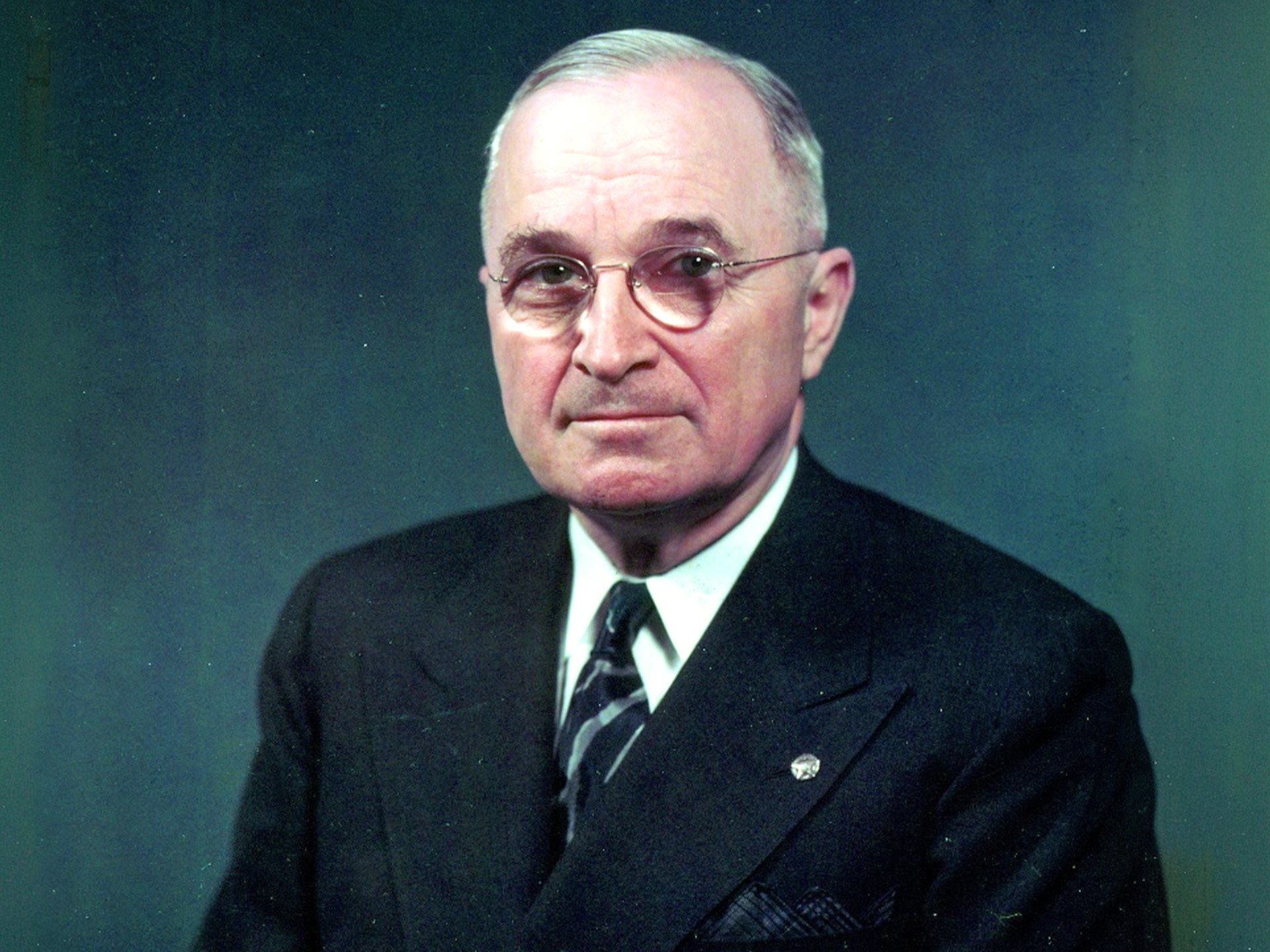
Soldier, brawler, and duelist, lover and politician, Andrew Jackson was the first American president to be the target of assassination, and the only one to attack his assailant. Tough and wily, passionate and canny, Jackson created the modern presidency, rewriting the script of American life to give the people a larger voice in its affairs than the Founding Fathers—who preferred government by elites over mass democracy—envisioned. Before Jackson it was possible to think of America without taking the role of the people into account. After him such a thing was inconceivable. As Harry Truman once said, “Jackson looked after the little guy who had no pull, and that’s what a president is supposed to do.”
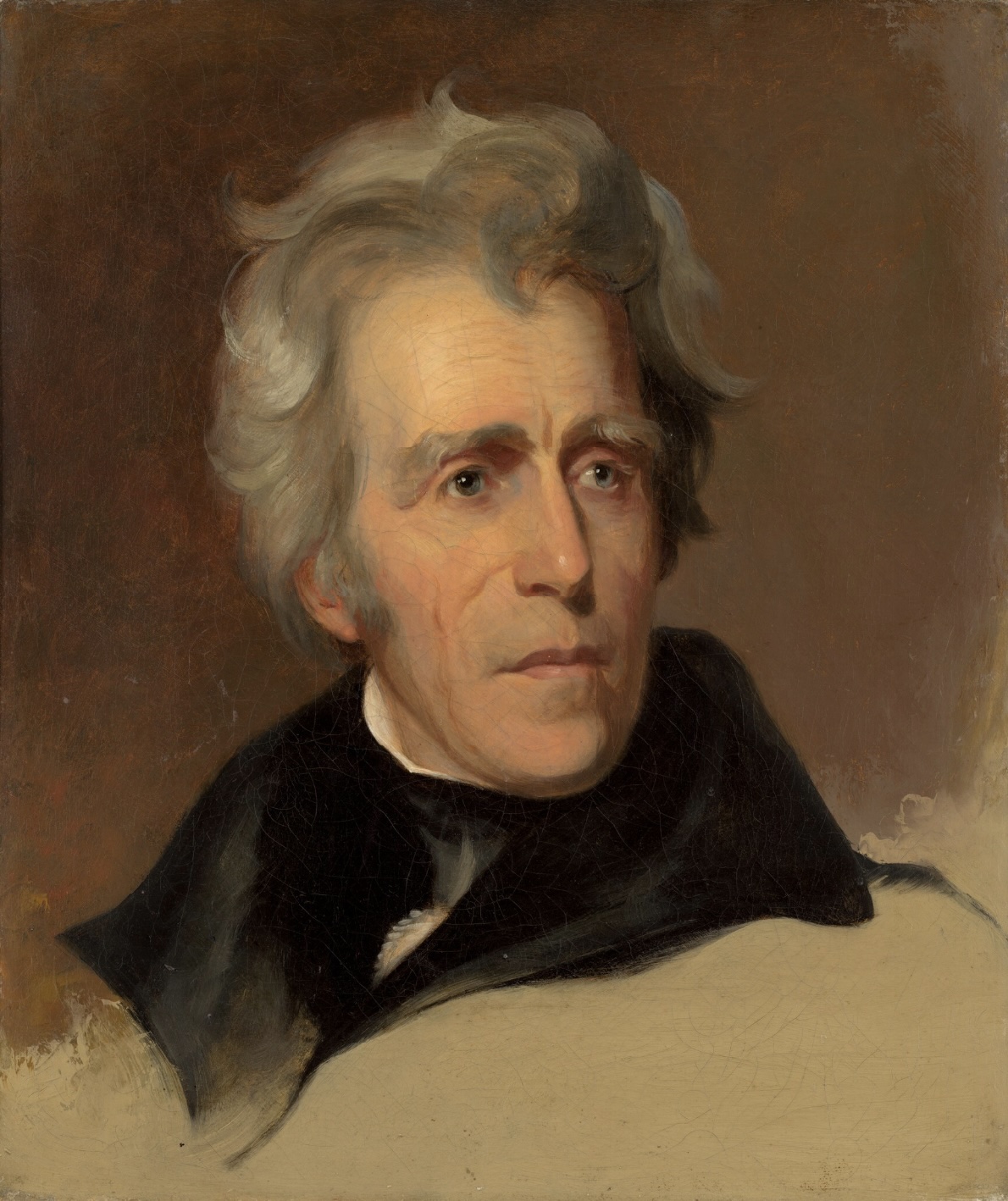
To understand Jackson is to understand ourselves—the good and the bad, the light and the dark. On certain matters, Jackson could be woefully wrong. He was an unapologetic defender of slavery and the main architect of Native American removal—a policy he carried out even before he was president, destroying much of tribal culture during his many Indian wars in a headlong grab for land. In each of these instances he was largely a creature of his time and place. This does not excuse his culpability in the twin American sins of slavery and of removal, but it does serve as a reminder that—if generations past could fall so short in the unending search to perfect the Union—we are forever vulnerable as well. What was true in the Age of Jackson is surely true in our own.
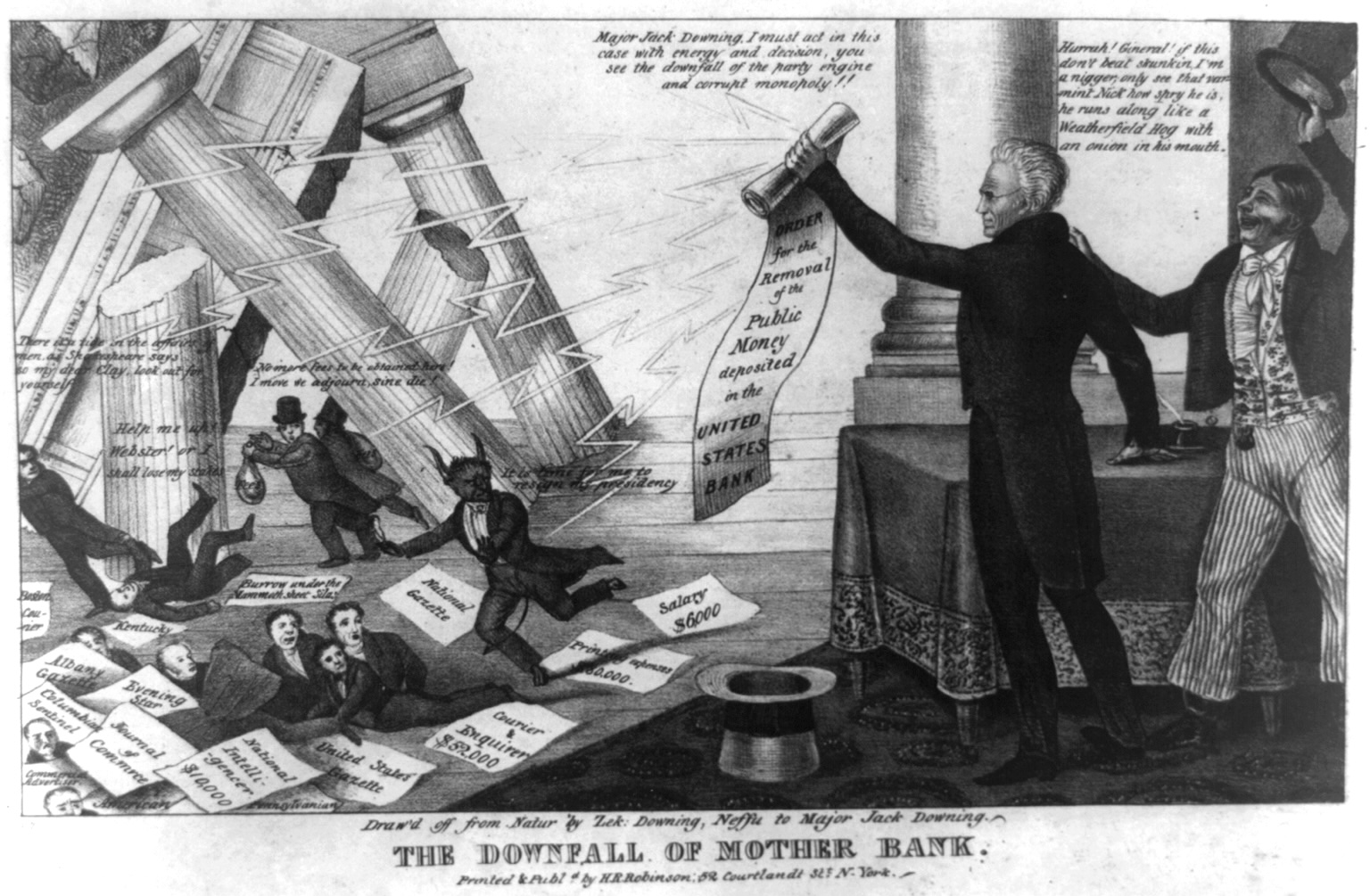
He believed the financial sector of the American economy was spoiled, corrupt and bad for the overall health of the nation, and so he destroyed, at great length, at great drama and at great cost, the Second Bank of the United States. He wanted the country to be respected around the world, and so he was quick to send forces to confront pirates and engaged in an epic diplomatic battle against France when the Chamber of Deputies refused to pay money it owed the United States. Jackson was convinced that church and state should remain separate, and so he resisted calls for the formation of a “Christian party in politics,” and was troubled by ministers who involved themselves in politics.
“To understand Jackson is to understand ourselves—the good and the bad, the light and the dark.”
His foes caricatured him. When Harvard University voted to give the seventh president an honorary degree in 1833, a Massachusetts newspaper wrote that he deserved “an A.S.S.” as well as an “L.L.D.” Yet Jackson could control his temper and turn vice into virtue. Once, during a crisis over the future of the bank, he frightened a group of callers who had come to ask for economic relief. They left, terrified that to cross the president was fatal, and thus they moved closer to his position. Afterward Jackson’s apparent fury evaporated instantly. “Didn’t I manage them well?” he smilingly asked an aide. It had all been for show—and he had got his way.
Generation after generation has chosen to see Andrew Jackson as the embodiment of raw power, of raw democracy, of raw will. The Jackson of popular memory is the swaggering, norm-defying executive who supposedly declared about the Supreme Court—“John Marshall has made his decision; now let him enforce it.” Presidents who wish to exert executive authority at the expense of constitutional strictures sometimes conscript Jackson to their cause, arguing, implicitly and explicitly, that they are acting in a Jacksonian tradition.
The real Jackson, however, was a far subtler and more complicated figure, a politician and a president who had an ultimate faith in—and ultimately worked within the bounds of—the Constitution and the Union to which he had sworn fealty. In truth, the fabled John Marshall quotation was invented by the Republican Horace Greeley many years afterward, and the case in question, involving the Cherokee Nation, was resolved before any showdown could take place. Jackson also refused to contest the 1824 presidential election, one in which he, though winning the popular vote and receiving a plurality in the Electoral College, was denied ultimate victory by the House of Representatives. Denounced as the “Corrupt Bargain” of 1824, Henry Clay agreed to throw his votes to John Quincy Adams, who then appointed Clay secretary of State—the office Jefferson, Madison, Monroe, and Adams had used as a springboard to the presidency.
Jackson’s finest hour in defense of the American constitutional order—not even half a century old in Jackson’s time—came in the standoff with South Carolina. As a matter of personal economic interest and cultural affinity, Jackson was closer to the Palmetto State planters driving nullification than not. But he had sworn an oath to “preserve, protect, and defend the Constitution of the United States”—the document that the nullifiers were seeking to undermine. And that he would not abide.
“The Constitution of the United States,” Jackson wrote in a proclamation dated Monday, December 10, 1832, “forms a government, not a league.” In stirring prose, drafted in the presidential office from which Lincoln would one day govern, Jackson declared:
“Contemplate the condition of that country of which you still form an important part; consider its government uniting in one bond of common interest and general protection so many different States—giving to all their inhabitants the proud title of AMERICAN CITIZEN—protecting their commerce—securing their literature and arts—facilitating their intercommunication—defending their frontiers—and making their name respected in the remotest parts of the earth! Consider the extent of its territory its increasing and happy population, its advance in arts, which render life agreeable, and the sciences which elevate the mind! See education spreading the lights of religion, morality, and general information into every cottage in this wide extent of our Territories and States! Behold it as the asylum where the wretched and the oppressed find a refuge and support! Look on this picture of happiness and honor, and say, WE TOO, ARE CITIZENS OF AMERICA.”
Jackson prevailed. The story, as most stories are, is complicated—the occasion for the crisis, the tariff, was amended—but vital principles had been defended. The Constitution reigned supreme. The Jacksonian stand of 1832 and 1833 gave the nation nearly thirty additional years to form what Lincoln would later call our “mystic chords of memory” before the cataclysm of the Civil War. The Union was not perfect, not uncomplicated, but it was sacred. And, for Andrew Jackson, it was worth defending, come what may.
“WE TOO, ARE CITIZENS OF AMERICA.”
- Andrew Jackson
Check out the lesson on Substack to be part of the discussion. Share your views, respond to others, and help deepen our understanding.
View on Substack