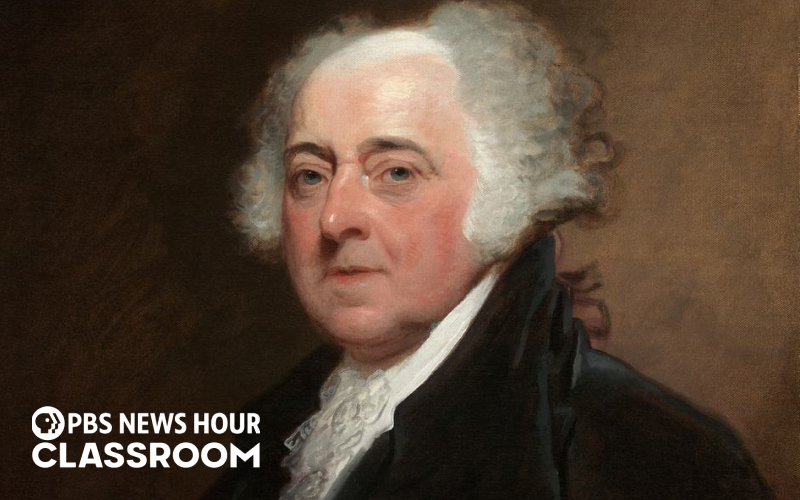
John Adams—the “Colossus of Independence”—was an acclaimed politician, lawyer, writer, and constitutional thinker. He started life as a bookish young man on a family farm in Braintree, Massachusetts, where his father was a deacon in the Congregational Church. Fiercely loyal to the cause of America, Adams would go on to serve as Massachusetts’s delegate to the Continental Congress during the American Revolution, negotiator of the treaty to end the War of Independence, the first U.S. ambassador to the United Kingdom, the first Vice President, and the second President of the United States.
Yet for all his impressive accolades, Adams arguably made his greatest impact through his choices of whom to place in positions of leadership and influence. In his years as a young lawyer in Boston, Adams developed the practice of writing down character studies of people he encountered. Independent-minded and cantankerous, he was nonetheless an exemplary judge of character and unafraid to delegate to those he deemed worthy. Beginning with the very creation of the new nation, Adams’ most significant achievements came from empowering others.
Since the fall of 1775, Adams—along with the Virginian Richard Henry Lee—had been pushing Congress to issue a declaration of independence from Britain. In June 1776, Congress decided to set up a committee to draft the declaration’s preamble. Many people would have jumped at the chance to articulate the principles that would define the American experiment. Instead, Adams ensured that Thomas Jefferson would be appointed head of the five-person drafting committee.
Why? It’s true Adams was one of the busiest members of Congress, ultimately serving on ninety different committees. His real reasons, though, went beyond workload. As Adams claimed to have put it in a conversation with Jefferson:
Putting aside ego, Adams selected the man he believed would best articulate the moral case for the nation—a case that Lincoln would pick up and reinvigorate four-score and seven years later.

Adams’ clear-eyed assessment of others likewise enabled the American Revolution to conclude on satisfactory terms. In 1782, Congress dispatched to Paris three American peace commissioners—Adams, the wealthy New Yorker John Jay, and the scientist-politician Benjamin Franklin—and charged them with keeping their French allies fully informed of all conversations with the British.
The French skillfully used this inside information to steer negotiations toward their own interests, even where those diverged from America’s. Franklin had been in Paris since December 1776. His wit and sociability made him a darling of French society, and he was on intimate terms with the French negotiators. As Jay and Adams saw it, Franklin’s social entanglements were making action on behalf of America difficult. Despite his protestations, Franklin had real conflicts of interest.
On October 29, 1782, Jay and Franklin argued about how to continue the negotiations with France and Britain. Jay proposed a different method and manner than Franklin’s relaxed approach. The commissioners, as Adams put it, needed “to be honest and grateful to our allies, but to think for ourselves.” Adams endorsed Jay’s proposal that they should start negotiating with the British without informing the French.
Outvoted, Franklin concurred. The three men delivered the preliminary articles of peace a month later, on November 30, 1782, after a full year of failed negotiations. It was Adams’ clarity about the character of those around him that enabled this breakthrough and put negotiations on a new path that finally led to peace.
Adams’ most significant achievements came from empowering others.
As president, too, Adams’ choice of personnel was a key to his success. Beginning in 1797, Adams’ tenure was defined by the challenge of navigating conflict with France. An important ally during the Revolutionary War, France had by this time overthrown its monarchy, descended into brutal violence, and plunged into war with Great Britain, Austria, Prussia, and Russia.
George Washington, Adams’ predecessor and the nation’s first president, had established that the United States would remain neutral in the conflict. Believing a standing military to be a threat to liberty, Congress had even disbanded the Revolutionary navy and army. After Washington concluded his two terms and returned to his Mount Vernon home, though, the country’s emerging political factions kicked against the neutrality decision. The Federalists, led for all practical purposes by Alexander Hamilton, wanted to ally with Britain and restore the French royal family—with many supporting a larger and more assertive American military. The Republicans, led by Thomas Jefferson, advocated defending the new French Republic but remained deeply concerned that a strengthened military jeopardized the underpinnings of the American republic and risked domestic coercion.
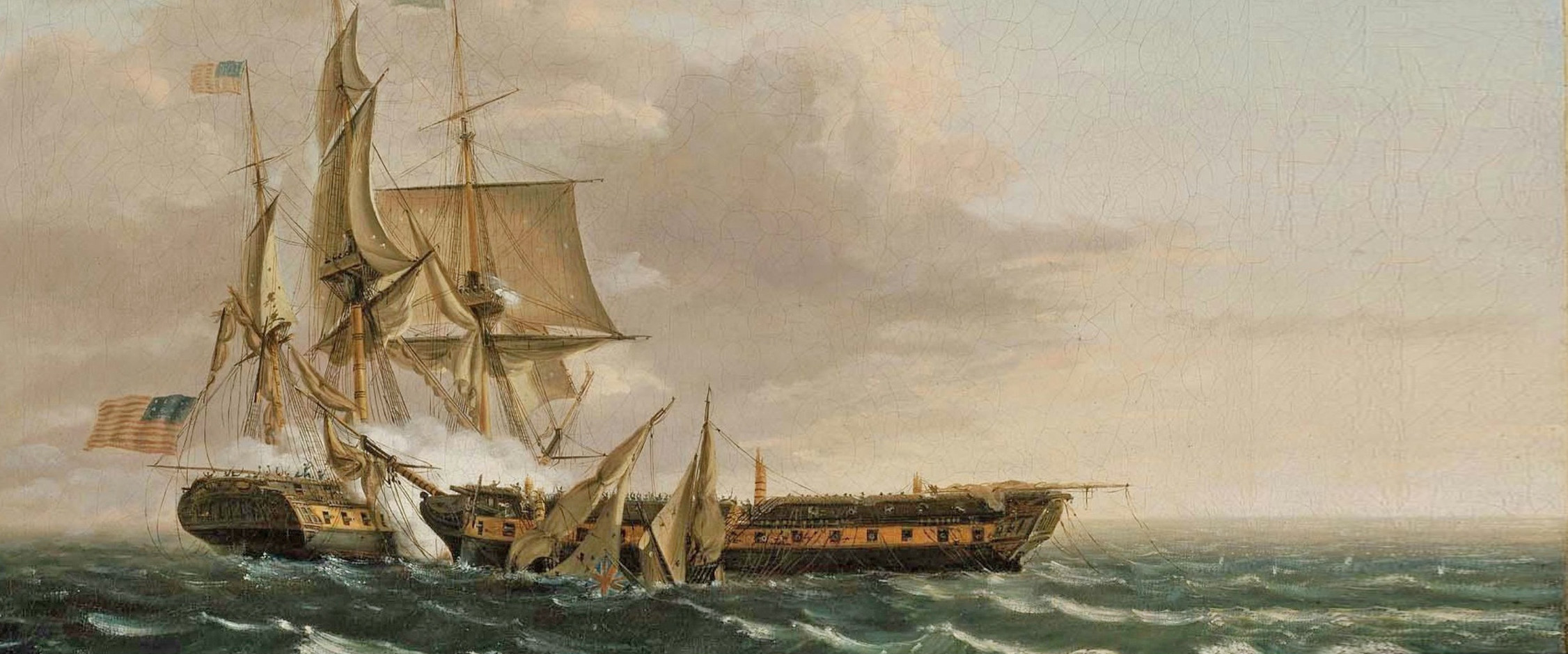
The actions of the French worsened matters. Frustrated by American neutrality and the American refusal to repay to the French Republic debts incurred earlier to the King, the French began attacking and capturing American merchant ships. From October 1796 to June 1797, they seized some 300 vessels—about 6 percent of the entire U.S. merchant fleet.
Adams knew French aggression had to be stopped, but was also keenly aware of the danger of being dragged into a larger European conflict while the nation was still fragile and underdeveloped. Threading the needle between factions, Adams sought Congressional authorization for a military call-up and a naval force—intending to put both to work to enforce neutrality. He sought strength without entering the war.
The canny New Englander faced the daunting challenge of how to help his fledgling nation learn to wield military tools without militarizing as a society—the Republicans’ great fear. Adams assuredly made mistakes—deciding to sign rather than veto the Alien and Sedition Acts, for instance, which permitted the government to prosecute Americans for speaking and publishing criticism of their leaders. Yet he mostly succeeded, once again, by installing the right people. He put George Washington back at the head of the army and Benjamin Stoddert—a resourceful and forward-thinking merchant and former Continental Army officer—at the head of the navy. Both men were characterized by impeccable personal self-discipline and respect for institutions. These choices ensured that the military build-up would be targeted and constrained, and that the country would accept a reduced military role after the end of the conflict.
In many ways, Adams’ most important judgment call was his earliest. On October 25, 1764, Adams had married the slender, serious, brown-eyed Abigail Smith, a woman of great intelligence, candor, and political attunement who matched him in love of learning. Over fifty-four years of marriage, they developed shared moral commitments—for instance, their rejection of slavery—through conversations and exchanges of letters. This long-running conversation with Abigail equipped Adams with a navigational compass as he led his fellow colonists toward Independence, through constitution writing, into a restored relationship with Britain, and onto a new political footing. The strength of their relationship enabled Adams—and the nation—to flourish.
After arriving at the “President’s House” on November 1, 1800—the first chief executive to inhabit the soon-to-be iconic White House—Adams penned to his cherished Abigail the exhortation that would one day be carved into the fireplace of the State Dining Room: “May none but honest and wise Men ever rule under this roof.”
That prayer called future generations to revere good character. Adams’ own ability to identify and empower honest and wise Men—and Women—played an essential role in shaping the trajectory of our young nation.
“May none but honest and wise Men ever rule under this roof.”
John Adams


Check out the lesson on Substack to be part of the discussion. Share your views, respond to others, and help deepen our understanding.
View on Substack