Thomas Jefferson described himself as “deeply practiced in the school of affliction.” He mourned the early deaths of his father, his wife, and several children. “The human heart knows no joy which I have not lost,” he wrote, “no sorrow of which I have not drunk! Fortune can present no grief of unknown form to me.”
Jefferson also experienced profound challenges as a public figure. He faced the wrath of the British empire and the insults and scandalmongering of his political opponents. When he reflected on his shortcomings, he saw a man—though a forceful, lifelong critic of slavery—who was too dependent upon the institution and too skeptical of Black equality to become a public advocate of abolition.
And yet, despite—or perhaps because of—his inability to solve many problems of the present, Jefferson placed his faith in the future. “I like the dreams of the future better than the history of the past,” he told John Adams in 1816.
Jefferson may have penned and aspired to the revolutionary ideals of the Declaration of Independence, but he trusted later generations to realize them fully. He understood that the citizen leaders of a democratic republic must breathe life into their nation through the practice of hope, optimism, and reason.
“I like the dreams of the future better than the history of the past.”
Thomas Jefferson
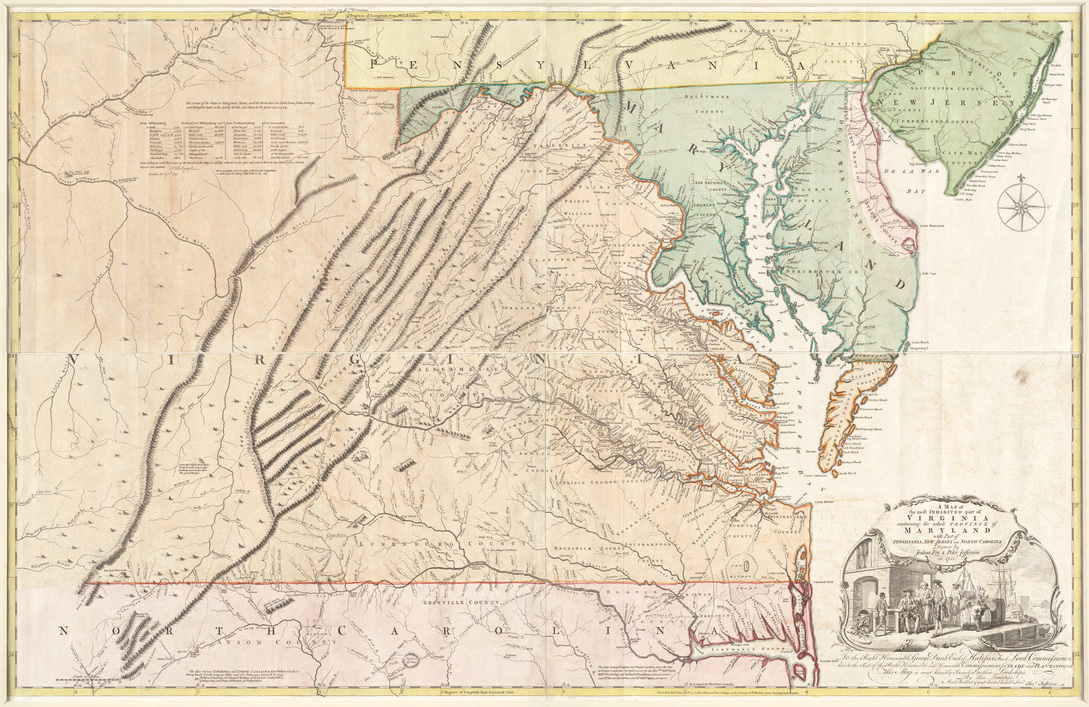
Born in 1743, on what was then the western frontier of British North America, Jefferson was a privileged member of the Virginia aristocracy. His father, Peter Jefferson, was a loyal subject of the British empire, an upwardly-mobile planter and surveyor before his death at the age of forty-nine. The elder Jefferson left behind a wife, eight children, and an estate of several thousand acres—along with dozens of slaves.
His son Thomas split the inheritance with his younger brother, receiving an unparalleled education at the College of William & Mary in Williamsburg before training as a lawyer. Like his fellow revolutionary George Washington, Jefferson made an advantageous marriage to a wealthy widow. From Monticello, the mountaintop home he designed and situated above his plantations, Jefferson vaulted into Virginia’s elite.
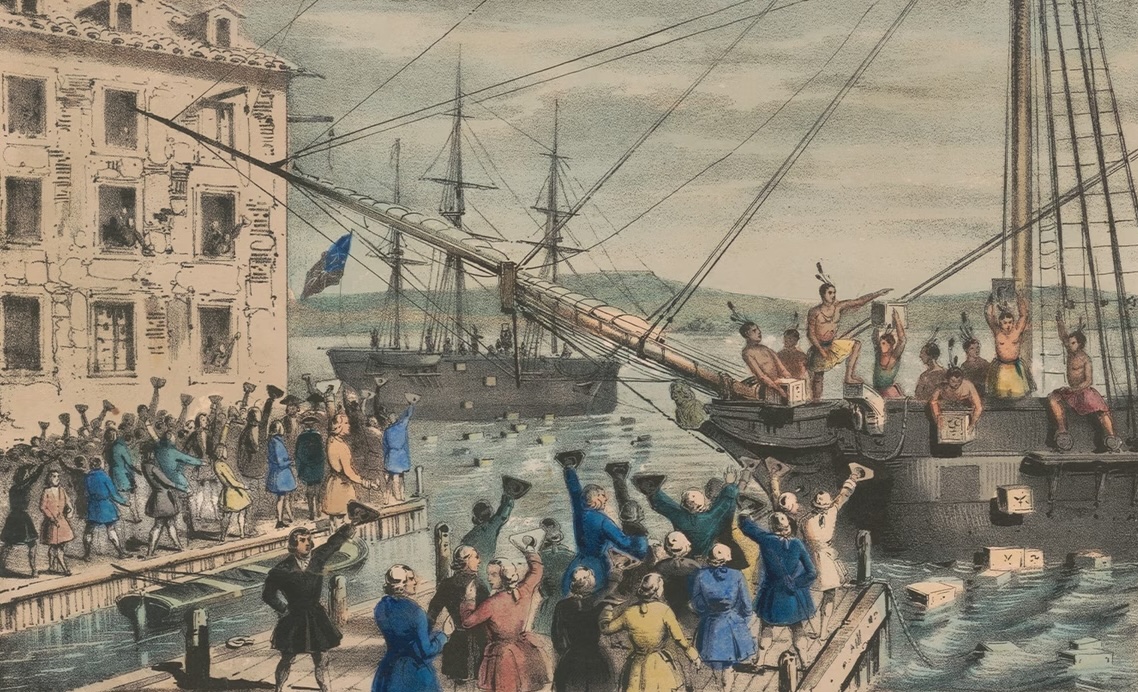
In the years before the Revolutionary War, Virginia’s homegrown political leaders chafed at Britain’s interference in their daily lives. They resented Westminster’s efforts to curb their control over local affairs. They bristled at the sudden imposition of taxes collected straight from their pockets. And they bemoaned new limits on their push westward into Native territories.
Initially, Jefferson trusted the empire to respond to the colonists’ pressure and reform itself. It was not to be. When King George III and his ministers escalated their campaign against the colonies, Jefferson and other patriot leaders pledged their lives, their fortunes, and their sacred honor to the common cause of American independence.
For the Declaration’s signatories, putting their names on that landmark document could very well have meant death; for the new nation they contemplated, it meant life. Despite the risks, Jefferson and the other founders of the United States believed in the blessings that a new, self-governing nation could bestow on posterity.
During the war to bring about that independence, Jefferson was torn between his duties to his new nation and to his family. The cumulative stresses of Jefferson’s wartime service as governor of Virginia and the birth of six children in ten years contributed to the early death of his wife, Martha Wayles Skelton Jefferson, at age 33. By all accounts, their marriage had been a happy one. After her death, an inconsolable Jefferson contemplated suicide. With the support of his friends, Jefferson overcame his grief to serve his country as a minister to France, charged with safeguarding the interests of the fledgling United States.
After Jefferson’s return from Paris in 1789, his future-oriented perspective helped him be appointed or elected Secretary of State, Vice President, and, ultimately, President of the United States. Despite Washington’s warning against “the baneful effects of the spirit of party,” Jefferson’s tenure in national politics coincided with the rise of intense partisanship. Jefferson himself sowed some of the seeds of division. He reacted viscerally against Federalist plans for a centralized government fueled by manufacturing and trade; even while serving in the Federalist administrations of George Washington and John Adams, he deliberately undermined aspects of their agenda.
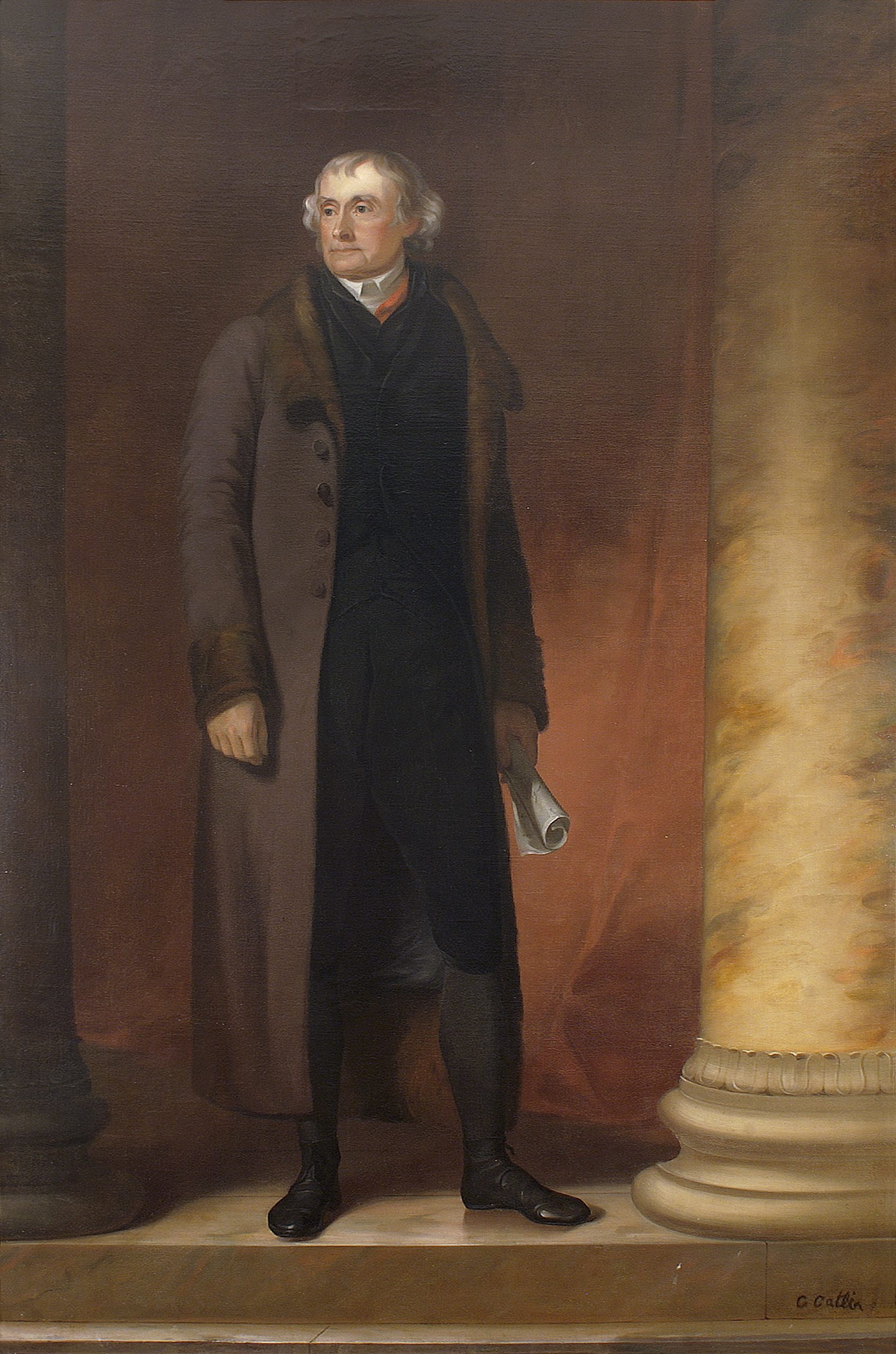
A political philosopher and natural scientist, Jefferson imagined an ever-expanding agricultural republic—a nation of innovation and experimentation, populated by yeoman farmers. He once reflected that “[n]ature intended me for the tranquil pursuits of science, by rendering them my supreme delight. But the enormities of the times in which I have lived, have forced me to take a part in resisting them, and to commit myself on the boisterous ocean of political passions.” Science and politics were not so mutually exclusive, however. Jefferson became a leading member of the American Philosophical Society, calling his election as its president “the most flattering incident of my life” up to that point. He believed the future of the nation rested on continuous advancements in knowledge of the natural environment.
Jefferson’s wager on the future contained a rather glaring loophole. It enabled him to entrust his day’s thorniest challenge—emancipation—to subsequent generations. He considered the American Revolution to be his generation’s lasting contribution, leaving abolition to those who would follow. In Jefferson’s reckoning, the United States was not prepared for the end of slavery. Limited by self-interest, financial pressures, and the law, Jefferson could not—as Washington did—free the human beings he enslaved en masse. Of the more than 600 people he held in bondage during his lifetime, he freed only ten or so, including his four surviving children with his enslaved chambermaid, Sally Hemings. Still, Jefferson’s aspirational words in the Declaration of Independence inspired countless African Americans and their allies to realize the multiracial republic Jefferson and so many of his peers could not envision.
Jefferson’s republican principles rested on a foundation of faith in his fellow citizens. Rather than merely trust others to carry forward his vision, in retirement Jefferson founded the University of Virginia to help instill those republican values in the youth of his young nation. “I am closing the last scenes of life by fashioning and fostering an establishment for the instruction of those who are to come after us,” he wrote. “I hope its influence on their virtue, freedom, fame, and happiness, will be salutary and permanent.”
Jefferson gave much to the United States: the ideals of self-government, freedom of conscience, and freedom of mind—not to mention his personal library, whose volumes helped reconstitute the Library of Congress after the British put it to the torch during the War of 1812. In the mass of Jefferson’s contradictions, his faith in the future is his most enduring characteristic—a deliberately and carefully cultivated outlook on life that undergirds the American experiment that Jefferson wrote into being.
Jefferson’s republican principles rested on faith in his fellow citizens.
More than a century after Jefferson’s death, President Franklin D. Roosevelt—an admirer of the Sage of Monticello—encouraged the U.S. Mint to engrave our nation’s third president on the nickel. Stamped with Jefferson’s stoic profile, the currency was passed hand to hand through the restless, inventive republic he’d championed. Shortly after the turn of the new millennium, the U.S. Mint updated the design of the coin. Jefferson’s visage now faced resolutely forward.

Check out the lesson on Substack to be part of the discussion. Share your views, respond to others, and help deepen our understanding.
View on Substack